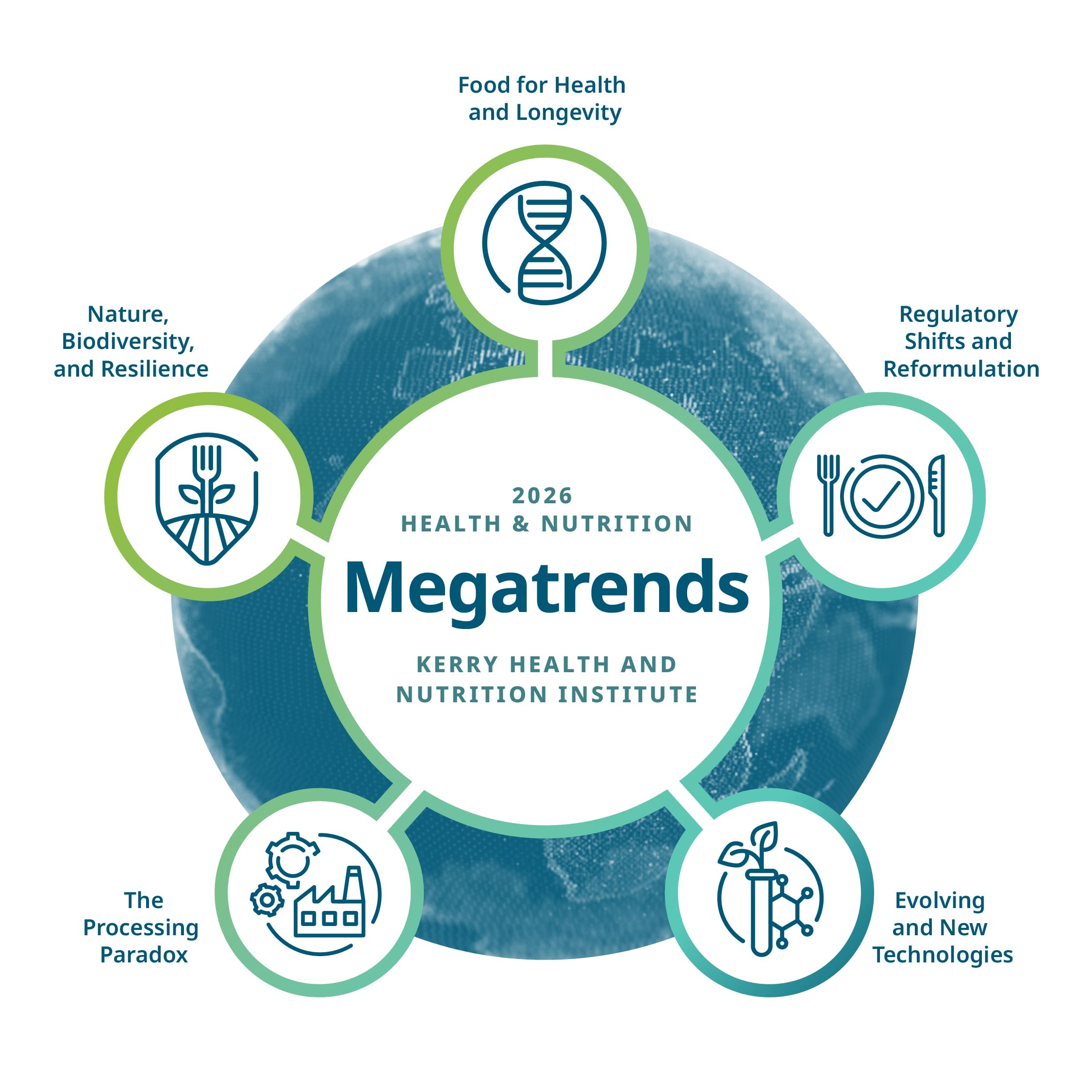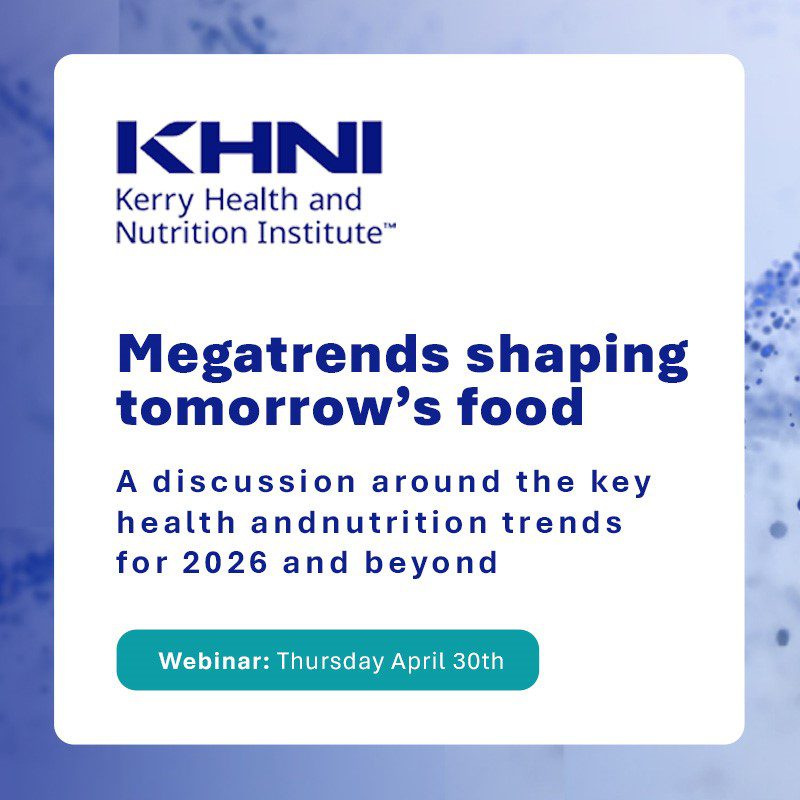
On 30 April 2026, the Kerry Health & Nutrition Institute (KHNI) hosted an expert scientific webinar on Megatrends Shaping Tomorrow’s Food. The panel featured the KHNI Scientific Advisory Council: Professor Imed Gallouzi, Dr Lisa Ryan and Professor Martin Bloem.
A central theme was longevity—defined not simply as living longer, but as enabling people to remain cognitively sharp, physically active and independent throughout extended lifespans.
The panel highlighted key nutrients that contribute to healthy aging, and that approaches to longevity differ significantly across socio‑economic groups, influencing both affordability and access to nutritious foods. Therefore, equitable longevity solutions must consider these disparities.
With the rapid rise of GLP‑1 medications, the panel discussed both their benefits and emerging concerns. The panel outlined nutrients and food formats that may be particularly supportive for GLP‑1 users. This led to a broader conversation about food processing.
While often viewed negatively, processed foods remain a practical necessity and an essential source of nutrition for many populations.
The panel also examined how AI and emerging technologies—such as wearables and smart health systems—are reshaping personalised nutrition. These tools may help individuals monitor stress, understand their nutritional needs and tailor dietary choices to their lifestyles.
However, the speakers stressed that the value of these tools depends entirely on the quality, accuracy and representativeness of the data that underpins them. As technology accelerates, ensuring robust, high‑quality data will be critical for delivering meaningful health outcomes.
To close the webinar, just before the Q&A session, each member of the Scientific Advisory Council shared a final take‑home message for the audience.
Professor Martin Bloem emphasised the importance of simplicity—whether in health or nutrition, consumers need straightforward practical solutions to help them stay healthy.
Dr Lisa Ryan highlighted that optimal health relies on both good nutrition and regular physical activity.
Professor Imed Gallouzi underscored the potential of technology, noting that emerging tools can support better eating habits, healthier routines and improved overall lifestyle.