

On 30 April 2026, the Kerry Health & Nutrition Institute (KHNI) hosted an expert scientific webinar on Megatrends Shaping Tomorrow’s Food. The panel featured the KHNI Scientific Advisory Council: Professor Imed Gallouzi, Dr Lisa Ryan, and Professor Martin Bloem. A central theme was longevity—defined not simply as living longer, but as enabling people to…
Contributor
Senior Nutrition Science Manager
Go To Contributor's Articles
Aisling is responsible for managing the Kerry Health and Nutrition Institute (KHNI). Her work centres on ensuring the scientific integrity of KHNI’s content and translating complex nutrition science into clear, actionable, evidence‑based guidance.
Aisling has more than two decades of experience spanning nutritional biochemistry, human health, science communications, and the interface between nutrition science and regulations. She holds a PhD in Nutritional Biochemistry and a BSc in Nutritional Sciences from University College Cork.
Aisling is a Registered Nutritionist (RNutr) with the Association for Nutrition, a Fellow of the Association for Nutrition (FAfN), a Fellow of the Institute of Food Science and Technology (FIFST), and a Chartered Scientist (CSci)—credentials that reflect her sustained contributions to evidence generation, scientific governance, and professional standards in nutrition science.
She has held multiple leadership roles across industry and professional bodies, including serving as current Chair of Nutritionists in Industry and previously as Chair of the Food Drink Ireland Public Affairs Group. In addition, Aisling is an Accredited Menopause Specialist supporting evidence‑based approaches to midlife women’s health.
Nutrition is inherently multidisciplinary, drawing from the physical sciences, medicine, public health, psychology, sociology, and increasingly, planetary health 1. Therefore, nutrition science research is essential for advancing our understanding of human health and supporting evidence based decision making. Research in this space aims to clarify how nutrients, bioactives, and other food components influence health, inform dietary…
Globally, there are approximately 2.1 billion adults who currently are overweight or have obesity. It is forecast that this will substantially rise to around 3.2 billion by 2050 – accounting for almost 60% of the adult population 1. This highlights that traditional approaches to curbing the prevalence of overweight and obesity have had limited success. …
The elderberry plant, Sambucus nigra L., possesses a rich history, deeply embedded in traditional medicine and folklore across continents for centuries 1, 2. Various parts of the plant, including the bark, leaves, flowers, and berries, were utilised by ancient and native cultures for a wide array of medicinal and practical applications. This long history as…
The role of hydration in the body The human body is composed of approximately 55 – 60% water, and it constitutes 95% of the eyes, 83% of blood, 75% of muscles and the brain, 22% of bones. This water is distributed between intracellular fluid (ICF), which makes up about two-thirds of the body’s water, and…
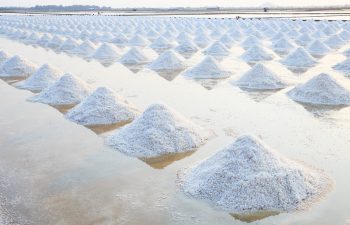
Salt intake is significantly higher than the daily recommendation in many countries. What is being done globally to reduce salt intake, and how effective have these strategies been?
It is estimated that the world’s population will reach 10 billion in the year 2060 1. Furthermore, with as much as 40% of food lost or wasted from production to consumption, a major inefficiency persists in global food systems — despite nearly one in three people experiencing food insecurity 2. Food sits at the centre…
There’s a global focus on reducing calories in foods to improve consumer health, but one question many have is ‘which products do we focus on?’ Kerry’s recent study, ConsumerFirst, revealed useful insights into calorie reduction strategies for the food and beverage industry. Specifically, the results give guidance about which product categories and sub-categories where calorie…
Media coverage on the role of red and processed meat in a healthy diet is a constant back and forth between claims it will cause cancer to claims it can improve health. We sat down with two of our nutrition experts, Aisling Aherne, PhD, RNutr and Aoife Murphy, PhD, to see what their guidance would…
Summary (scroll down for an infographic summary) Speakers Sugar Reduction Around the World – Consumer, Health & Legislation Demands: Aisling Aherne, PhD, RNutr, Nutrition Science Manager, Kerry Overcoming the Complexities of Reduced Sugar: Ashley Baker, VP RD&A, Kerry In a world that loves sugar’s familiar qualities…where do you start for its successful reduction? Sugar ranks at the…