Selenium is a mineral that is important for a group of proteins called selenoproteins, which have a few different functions in the body, ranging from helping our reproductive system function to storing selenium in the liver.
Some selenoproteins, called glutathione peroxidases, are important for the body’s antioxidant system, which protects DNA and cells from oxidative damage. This includes protecting the body’s immune cells from damage1, 2.
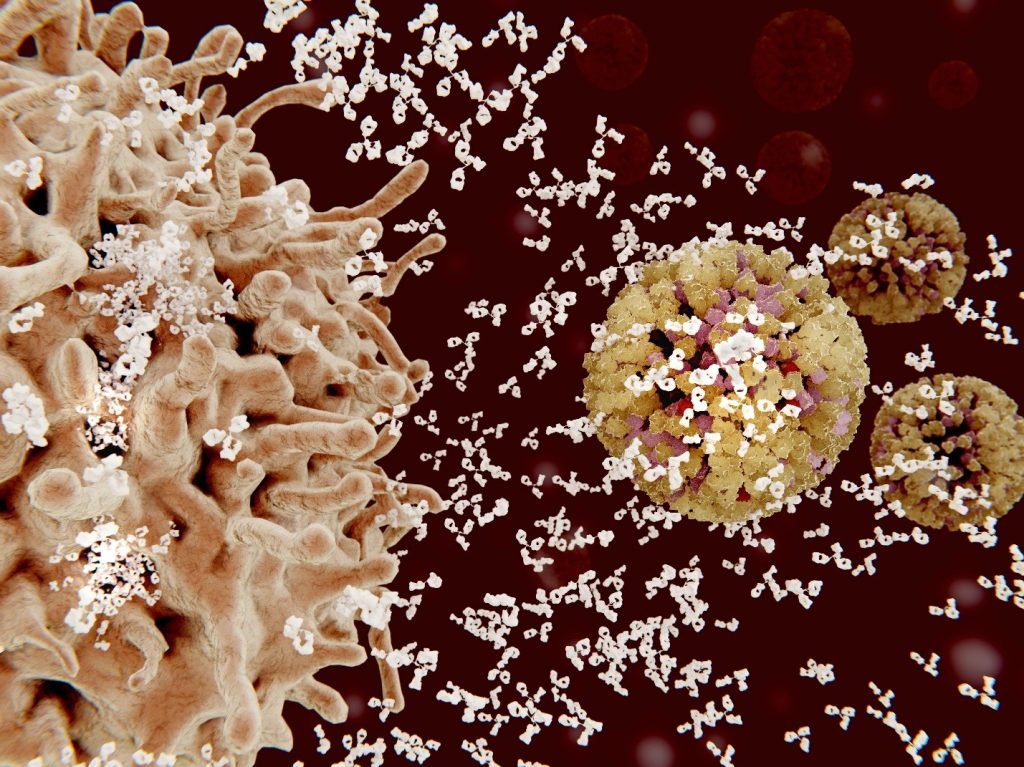
Selenium also plays a role in activating immune cells 1 and helping them function, such as assisting macrophages to more effectively destroy or engulf pathogens. The role of selenium in the response to vaccines continues to be investigated3.
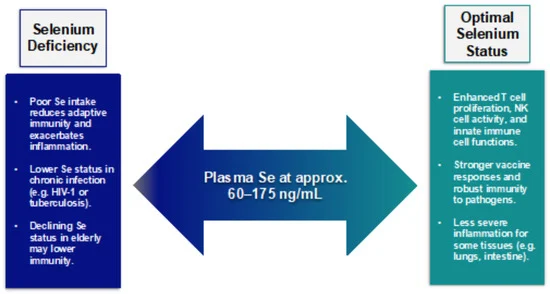
Figure 1. A summary of selenium and immune responses1. © 2018 by the authors 1. Licensee MDPI, Basel, Switzerland. Creative Commons Attribution (CC BY) license (http://creativecommons.org/licenses/by/4.0/).
Recommended Intakes
The recommended daily intake of selenium varies around the world2. The Chinese Nutrition Society4 set a Reference Nutrient Intake (RNI) of 60mg per day for adults. Similarly, in the US the Institute of Medicine has set a Recommended Dily Allowance of 55mg per day5. In addition, the European Food Safety Authority set an adequate intake (AI) of 70mg per day for adults6.
Dietary Sources
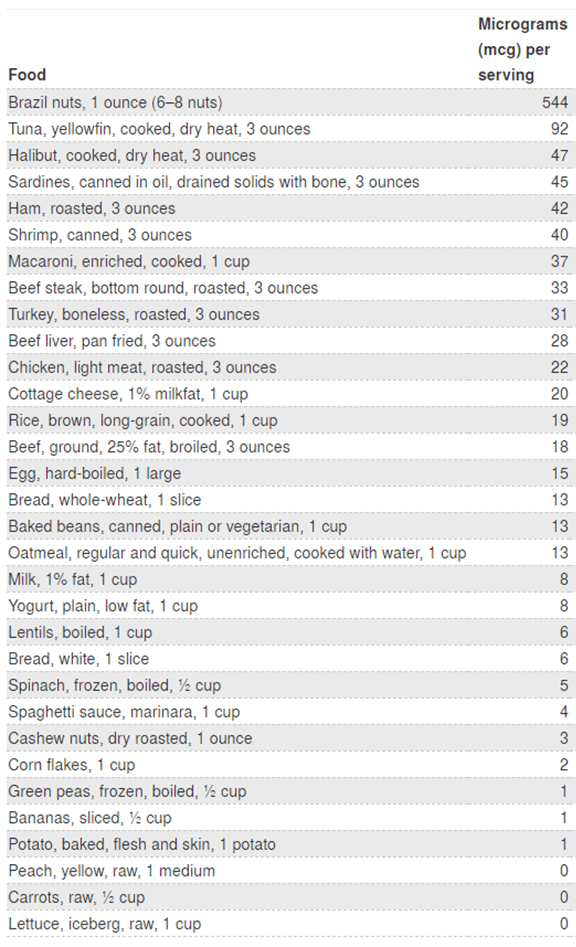
Meats, eggs, nuts, seeds, seafood and whole grains are good sources of selenium. The selenium content of foods is linked to the selenium content of the soil (see ‘Deficiency’ section below).
Table 1. Selenium content of common foods in the diet7
Deficiency
Selenium deficiency is expected to affect up to 1 billion people worldwide. This deficiency primarily affects people in areas where the soil is low in selenium7 and, as a result, the foods that grow in that soil are low in selenium.
The distribution of selenium in the soil is extremely uneven, with significant differences even within countries. Regions with lower selenium intakes8 include certain areas of New Zealand, China and Italy, among many others.
In areas where the soil is rich in the soil, selenium deficiency is rare. For example, the average daily intake of selenium in the US is almost twice the daily recommendation. Certain regions of China, where selenium is plentiful in the soil, also have high intakes of selenium9.
Excess Intakes
Selenium has a narrow window between adequate and toxic levels. Getting too much selenium can lead to symptoms like gastrointestinal or neurological symptoms, hair loss, nausea and fatigue, among others7.
For this reason, in the US a tolerable upper limit of selenium has been set at 400mg per day for adults3 . The EFSA recently revised their upper limit to 255mg per day for adults including pregnant and lactating women10. Lower limits are recommended for younger groups.
Selenium Supplementation
People who are deficient in selenium are shown to have impaired immune responses2 and studies show that reinstating selenium status through supplementation can improve the body’s ability to fight infection.
Those with adequate selenium intake through their diet are unlikely to see additional benefits. A recent meta-analysis of selenium11 supplementation trials showed a very mixed picture of effects but no conclusive evidence of an beneficial effect on the immune system beyond the recommended dietary intake.
This article was publishing in March 2020 and updated on April 07, 2026.