The Elderberry Market
In the wake of the COVID-19 pandemic, ‘natural’ proactive and immune health solutions have been highlighted as a growing area of consumer interest, with over half of global consumers outlining a willingness to use supplements if they had a greater understanding about the ingredients those supplements contain1.
As consumers continue to seek more natural, holistic health solutions and as the area of prevention over cure grows, traditional botanical and herbal ingredients have emerged as a key area of interest2,3.
While botanical extracts have been used in ancient Chinese and India medicine for centuries, this growing popularity has been spurred on by consumer desire for cleaner labels, more sustainable nutrition and ingredients that provide a halo effect4.
Globally, immune support has been outlined by consumers as the number one reason for purchasing healthy lifestyle products5, therefore making it unsurprising that botanical and herbal ingredients that are thought to support immune health have seen a growth spurt over the last number of years.
Elderberry is one of the most well-known botanicals that falls under this category, with a compound growth rate of over 25% observed in supplement launches with elderberry over the last 5 years6.
With over 50% of global consumers associating elderberry with improving immune health7, we look to explore the origins of the use of elderberry in immune health and the potential mechanism of action which mediates its suggested benefits.
Background and Potential Health Benefits
Elderberry is a plant native to both northern and southern hemisphere sub-tropical areas8.
With over 10 species within the genus, research into the structure and function of the species has assessed their effect, if any, on human health9.
Sambucus Nigra or black elder is one such species of elderberry commonly used in supplements. Sambucus Nigra has been found to be a natural source of bioactive compounds and therefore have a high antioxidant activity10.
In addition to the proposed anti-oxidant activity of elderberry, Mlynarczyk et al., 2017 have proposed other potential benefits of the plant and the way in which these are mediated through bioactive compounds (Figure 1)11.
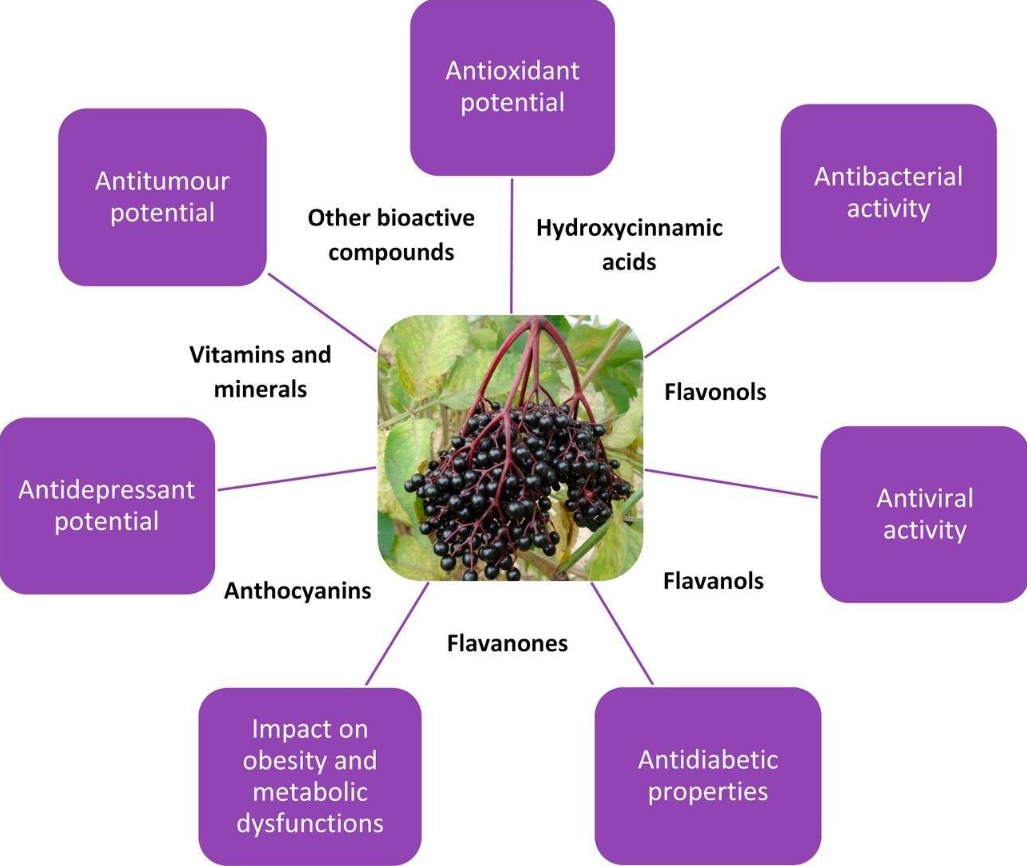
Figure 1. Proposed Potential Health Benefits of Elderberry11
While all parts of the plant (flower, bark, leaf and fruit) are a rich source of these bioactive compounds, the fruits and flowers of the elderberry plants are the most commonly used components in elderberry extracts12.
Extracts can concentrate the flavour, colour, nutritional value and active components of a fruit or plant into a smaller essence while maintaining these desired qualities.
The fruit and flowers from black elder have traditionally been used to prevent or reduce the effects of illnesses such as those relating to the respiratory tract and therefore elderberry and elderberry extract are thought to support immune health.
How Is This Health Benefit Modulated?
Elderberry extract has been shown to have antibacterial and antiviral properties in both in-vitro and in-vivo models, further positioning this as an immune modulating ingredient13.
These immune benefits are thought to be modulated through its unique composition, consisting of bioactive compounds such as phenolic compounds like anthocyanins and a variety of vitamins and minerals including vitamin C and Zinc10.
These compounds and nutrients have been shown to have antioxidant activity, demonstrating anti-inflammatory, antiviral and immunostimulatory effects in the research.
Overall, the research has shown elderberry to reduce the severity or delay the onset of oxidative stress and inflammation mediated chronic health conditions14.
In addition to this, clinical studies investigating the effectiveness of elderberry on the common cold and flu have resulted in a reduction in symptoms or reduction in the duration of illness15.
A study by Tiralongo et. al.14 found elderberry extract supplementation to reduce ‘common cold’ episode days in passengers of long-haul flights.
Passengers were given either elderberry extract or placebo, consuming this 10 days before travel until 5 days after arriving at their destination.
Those in the placebo group had a duration of 177 cold episode days collectively, versus 57 in the elderberry extract group, while over 580 symptoms were identified across the placebo group on these days versus 327 in the elderberry extract group (Figure 2).
On an individual level, this resulted in on average, a 2-day reduction in duration of the cold and decreased symptom load for those supplementing with elderberry extract versus placebo14.
This is just one study which highlights the potential effects of elderberry in immune health and improving quality of life.
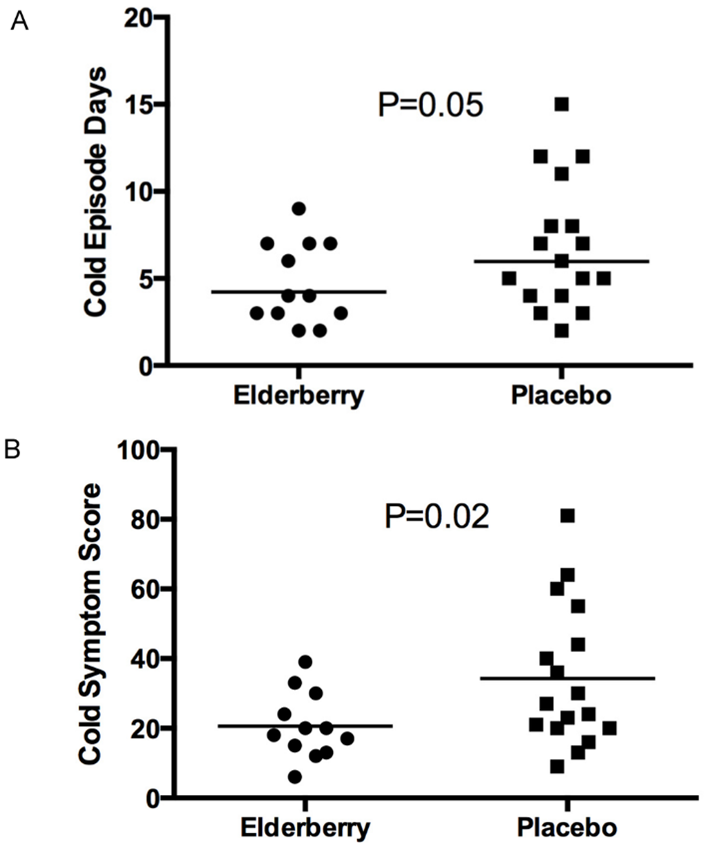
Figure 2. Cold episode days (A) and cold symptom score (B) of participants with a well-defined cold established from Jackson Score14
While future studies will be needed to further confirm its efficacy and clarify the way in which elderberry mediates immune benefits, the research has shown, that at a minimum, elderberry is a safe option with the botanical showing no evidence of over stimulating the immune system16.
In addition to this, organizations such as the German Commission E have approved the flower of Sambucus Nigra for cold and flu17, with the European Committee on Herbal Medicinal Products also concluding that Sambucus Nigra can be used in the relief of early symptoms of the common cold 18.
As consumer interest in more natural, proactive health solutions continues to grow, science-backed, botanical ingredients, such as elderberry have an opportunity to take a further foothold in this market and become the solution of choice when preventing common immune health conditions such as cold and flu.