What Do Emulsifiers Do in Food?
Emulsifiers in food are used to improve quality or shelf life through strengthening dough in baked goods, stabilizing foams, preventing food from getting stale, or making foods more freeze-thaw stable.
They can be derived from a range of products like soy and sunflower lecithin to propylene glycol alginate. Emulsifiers can bind to two liquids that usually do not mix well together.
A traditional example is mixing (or rather, trying to mix) oil and water. These fluids don’t like to mix because of their chemical properties. This is where an emulsifier comes into play.
Emulsifiers have water loving (hydrophilic) and oil loving (hydrophobic) regions that allow the two immiscible ingredients like water and oil to join. Therefore, emulsifiers in the product keep all of the liquids mixed smoothly.

In the continuing age of decreasing the amount of food additives, it is important to understand why some of them are utilised so heavily in the food industry.
Emulsifiers and their function in food allow the consumer to view their food in a consistent, smooth and quality manner.
Prior to the addition of an emulsifier like mono- and diglycerides to a product, it would need continuous mixing to prevent the oil and liquid phases from separating.
Food manufacturers add these ingredients to ensure a standard product across the board and to make it more convenient for consumers to use, ultimately saving time.
What Foods Contain Emulsifiers?
Baked Goods
Cake, yeast raised goods like doughnuts, icing, filling, bread and specialty cakes all utilise emulsifiers. When these baked goods lack emulsifiers they show quality defects and negative sensory attributes including tough, dry, stale or tasteless (Brandt 1996).
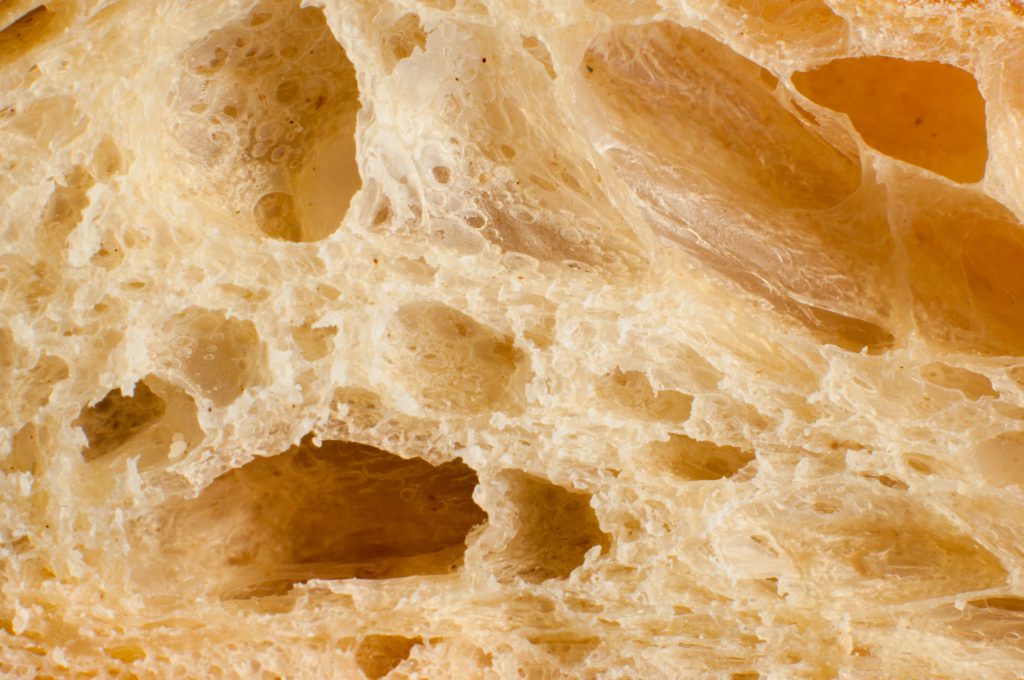
On top of the negative sensory attributes associated with baked goods, without emulsifiers, shelf-life is also reduced. So what do emulsifiers do in these delicious treats?
The answer is the same things eggs do when added to baked recipes, since the lecithin in egg yolks acts as an emulsifier.
Emulsifiers help the shortening ingredient in the dough of baked goods perform better.
Emulsifiers do this by improving tenderness, flavour release, volume, water absorption, texture and reduces the use of egg, shortening and mixing time (Orthoefer 2008).
Emulsifiers in baked goods not only increase positive sensory attributes in terms of flavour and texture, but also lend a hand in the sustainable movement.
They keep baked goods fresher for longer, thus reducing the amount of food waste.
Dairy Products
To support the stability and texture of dairy products including ice cream and processed cheese, the use of emulsifiers is necessary.
In ice cream, emulsifiers are used because the ice cream whips easier, does not melt as fast on a hot sunny day, has a smoother body and texture and the air particles within the ice cream are more uniformly spread across (Euston 2008).
In processed cheese, the final water content can go up to 58% water and around 15-25% fat (Euston 2008). The large portion of immiscible liquids within this product make it nearly impossible for this product to be made in a uniform and consistent manner without the use of emulsifiers, specifically emulsifying salts.
Infant Formula
When it comes to emulsifiers found in children’s infant formula there are two types, one protein-based and another non-protein based (McSweeney SL 2008).
Various by-products of bovine milk including skim milk powder, milk protein isolate, whey protein concentrate and more are considered the protein based emulsifiers. These emulsifiers work well due to their amphipathic (water and oil loving regions).
The non-protein based emulsifiers including lecithin, mono- and di-glycerides, citric acid esters of mono- and diglycerides of fatty acids and more are the main emulsifiers in infant nutritional foods (McSweeney SL 2008).
Both types of emulsifiers are utilised to improve the stability of products and help form a stable emulsion. The addition of these ingredients will help prevent defects including:
- Oiling off – Oil appearing on the surface of the infant product
- Creaming – Upward movement of droplets caused by gravitational force
- Sedimentation – Downward movement of droplets from having a higher density than the surrounding liquid
- Ringing – A white ring at the top of a container and
- Water and oil separation (McClements 2016).
Although these defects are a concern of quality and not of safety, observing these defects in an infant’s formula on a consistent basis would cause the consumer to think twice about purchasing these products.
Emulsifiers are there to ensure defects like the ones above do not occur and to make sure every ingredient is suspended in the food matrix uniformly.
Emulsifiers are there to improve and maintain the way consumers view their food while extending the shelf life of various food products.
What Are Examples of Emulsifiers in Food?
Table 1 shows examples of common emulsifiers, where they are found and what they do in that food or beverage.
Table 1. Emulsifiers and surfactants used within the food industry to decrease unfavourable sensory characteristics. (Reproduced from Hasenhuettl 2008)
Consumers are constantly on the lookout for more natural emulsifiers due to negative press emulsifiers have received over the years.
Some fibres, like gums, are used as emulsifiers while also providing fibre content and prebiotic benefits for gut health.
These may provide a solution as consumers seek to avoid more synthetically based emulsifiers.