What are Gut Microbiota?
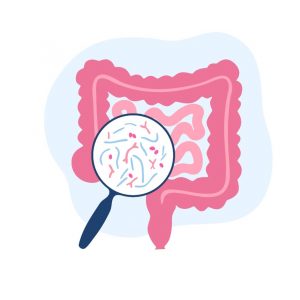
The ‘gut microbiota’ refers to the microorganisms (which may include bacteria, fungi and viruses) living in our intestines and they play a vital role in gut health and the management of several gastrointestinal disorders.
The term ‘microbiome’ refers to both microorganisms along with their collective genomes and metabolites (the molecules they produce)1.
The composition of gut microbiota can be affected by a wide variety of dietary components including carbohydrates, dietary fibres, fat, polyphenols, plant extracts and by ingredients such as fermented foods, prebiotics and probiotics2.
What are Probiotics?
Probiotics are defined as “live microorganisms that, when administered in adequate amounts, confer a health benefit on the host”3. Usually, this benefit is exerted in the gastrointestinal tract.
Probiotics influence health through non-specific, species-specific and strain-specific mechanisms. Non-specific effects—varying across strains and species—include inhibiting pathogenic microbes in the gut, producing bioactive compounds like short-chain fatty acids and lowering colonic pH.
Species-specific actions may involve vitamin synthesis, strengthening the gut barrier, bile salt metabolism, enzymatic functions and toxin neutralisation. Together, these mechanisms can broadly affect human health and disease4.
It is key to remember that the health benefits of probiotics are considered to be strain specific.
For more information on how probiotics work see this section.
How do Probiotics Impact the Immune System?
Immune health is one of the more commonly studied health outcomes of probiotics and the following mechanisms have been proposed4, 5:
- Probiotics have been shown to help protect against infection by improving the strength of the intestinal barrier. This reduces the ability of infectious microbes to enter the body via the gastrointestinal tract.
- Enhancing phagocytic activity (the process of engulfing and ingesting solid particles, such as bacteria by the cell membrane).
- Some probiotics, or the products they produce, can interact with immune cells of the human body to influence their effectiveness. For example, some probiotics can increase the production of cytokines (e.g. Interleukin-1 (IL-1), IL-2, IL-10, IL-12, tumour necrosis factor alpha (TNF-α)) in the intestine. These cytokines act as chemical messengers to regulate immune responses.
When it comes to researching aspects of immunity, studies often measure the frequency of the common cold or upper respiratory tract infections (URTIs) and the duration and severity of symptoms among study participants.
A 2022 Cochrane Review5 titled “Probiotics for Preventing Acute Upper Respiratory Tract Infections”, which included 23 randomised controlled trials, found that probiotics were significantly better than placebo or no treatment for reducing the number and duration of URTIs.
They also reduced the number of participants who used antibiotics for URTIs. This means that probiotics are likely working with the immune system to have a protective effect against the pathogens that cause URTIs.
Because studies have shown that probiotics may have an impact on upper respiratory tract infections (URTIs), there was significant interest in their potential role during the COVID-19 pandemic.
However, the International Scientific Association for Probiotics and Prebiotics (ISAPP) stated that no probiotics or prebiotics have been shown to prevent or treat COVID-19 or to inhibit the growth of SARS-CoV-26.
In the post-pandemic period, probiotics continue to be studied for their possible role in areas such as vaccine effectiveness and support for individuals experiencing post-COVID-19 syndrome7.
Antibiotics can disturb gastrointestinal microbiota and lead to reduced resistance to pathogens such as Clostridioides difficile and associated diarrhoea (CDAD). The use of probiotics for the prevention of Clostridioides difficile infection has been researched for many years.
A recent Cochrane meta-analysis concluded that probiotics may be effective for preventing CDAD in those receiving an antibiotic for any reason, suggesting that for every 65 people taking probiotics, one case of CDAD may be prevented8.
Large trials comparing probiotics with placebo in people with a low risk of CDAD are needed. This will be an interesting area to keep an eye on as the science progresses.
How to Choose a Probiotic
Resources from the International Scientific Association for Probiotics and Prebiotics (ISAPP)
The probiotic marketplace can be confusing for consumers. See for some basic information on how to choose a probiotic for healthy people. There is also useful information about how to read a US and hypothetical European probiotic label.

Here are some basic principles to guide your search:
-
- There is no one strain or one dose that is best. Sometimes lower dose products or products with fewer strains have the best evidence.
- Any health benefit claim made should be substantiated with a human trial. The types of claims allowed in the US on foods and dietary supplements are restricted by law. Contact the manufacturer to get information on what studies have been conducted, or consult Clinical Guide for Probiotic Products Available in the United States9 or the Guide to Probiotic Products Available in the United Kingdom10.
- One of the biggest challenges in the probiotic market is keeping the probiotic strain alive. Responsible manufactures go to great lengths to be sure their probiotics retain viability and deliver an efficacious dose through the end of the product’s shelf-life. Unfortunately, not all products on the market are responsibly formulated so consumers should buy products from companies they trust.
Resources for Healthcare Professionals
In addition to resources from ISAPP, in 2023, the World Gastroenterology Organisation published a resource for professionals working specifically in gastroenterology “WGO Practice Guideline. Probiotics and Prebiotics”11.
Resources for Researchers
Health benefits of probiotics can be strain-specific and meta-analysis may not represent the ‘gold standard’ for evidence in this area. This paper identifies common mistakes and offers expert panel recommendations for conducting meta-analysis for probiotic studies12.
This perspective literature review describes state-of-the-art tools for harnessing the microbiome for precision health and a corresponding future vision of healthcare13.
This article was first published in April 2020 and updated on March 11, 2026.
The KHNI Health and Nutrition Megatrends, now in its eighth edition, highlights the scientific, technological, and consumer-driven changes redefining global food systems.
The boom in microbiome research in recent years has led to a greater understanding of how we interact with the microbes that live in the human body. It has also brought a multitude of different ways to manipulate the microbiome to improve health along with it, including probiotics, prebiotics, and now the postbiotics.
Probiotics are beneficial microbes, officially defined by the World Health Organization as “live microorganisms that, when administered in adequate amounts, confer a health benefit on the host”.
Prebiotics are the food that feeds beneficial microbes, or “a substrate that is selectively utilized by host microorganisms conferring a health benefit.” as defined by ISAPP.
 Fermented foods have long been associated with health benefits, and phrase postbiotics reflects the next level of understanding in what may give fermented foods their beneficial properties.
The term postbiotics, although lacking a formal definition, is a term scientists have developed to describe the metabolites and compounds produced by microbes found in fermented foods and beverages that may have a health benefit.
Early research is showing potential links to reducing inflammation, improving immunity, or strengthening gut barrier function.
A recent article published in Today’s Dietitian summarizes the developing science of postbiotics. Mindy Hermann, MBA, RDN provides a summary of the most up-to-date research on postbiotics.
The article includes expert perspectives of microbiome and fermented food researchers, including Maria Marco, PhD, Professor of Food Science and Technology at the University of California-Davis and scientific advisor to the Kerry Health and Nutrition Institute, and Hannah Holscher, PhD, RD, Assistant Professor of Nutrition in the Nutrition and Human Microbiome Laboratory at the University of Illinois at Urbana-Champaign.
Read the full article on Today’s Dietitian to learn:
- The relationship between fermentation and postbiotics
- How postbiotics might work in the digestive tract
- How microbes used to produce fermented foods differ from probiotics
- Potential advantages of postbiotics over probiotics in food and beverage applications
- How postbiotics could be used to help food be more tolerable to those with sensitive digestive tract
An excerpt from the article below reveals how fermented foods may be delivering health benefits via postbiotics.
Sourdough bread appears to deliver health benefits, in part, from the impact of its fermentation process on the carbohydrate content of bread.
Fermentation lowers the content of FODMAPs because the sourdough yeasts Saccharomyces cerevisiae and Kluyveromyces marxianus degrade oligosaccharides during the sourdough process. This results in a sourdough bread that people with irritable bowel syndrome (IBS) and sensitivities to FODMAPs can more easily tolerate.
The high temperature for baking sourdough bread typically kills the live microorganisms, but metabolites and cell fractions remain intact. In comparison, fermented foods that aren’t processed after fermentation deliver both postbiotics and the live microorganisms that produce the postbiotics.
Learn more about the science of digestive health:
Fermented Foods: Stacking Up the Science (webinar)
This program qualifies for Certified Food Scientist (CFS) recertification contact hours (CH). CFS Certificants may claim a maximum of 1.0 CH for their participation in this program. For more information, please visit ift.org/certification or email ifscc@ift.org.
Fermented foods have appeared on countless food and nutrition trends lists this year, seemingly rocketing to a top industry priority in a very short period of time. We’re seeing the word ‘fermented’ find its way into all aspects of food and beverages, not just cultured foods or probiotics.
When a trend grows this quickly, confusion and misinformation can often grow with it, making it hard to understand the best way to navigate this space.
In this webinar, our experts answer some of the biggest questions created in the wake of the rapidly growing fermented food trend.
How are Fermented Foods Unique?
Did you know that “fermentation” has multiple definitions, but food fermentations have a very specific meaning and intent? Learn the science of how fermented foods are made, why fermentation is used, and the expert consensus on how to define and talk about fermented foods.
What do People Believe about Fermented Foods?
We review how perceptions about fermented foods are driving changes in the market, including:
- Foundational shifts in the industry landscape
- Consumer beliefs about the health benefits of fermented foods
- How fermentation technology is being used for taste
What can we expect in the near future?
Trends often get ahead of science and regulations, so we review the state of the science on fermented foods, existing and upcoming research on health benefits, and more to help you feel confident in your understanding of what fermented foods can really do.
Consumers across all psychographics and life-stages are seeking better digestive wellness.
Weighing the evidence on claims and technologies is the best way to know what benefits are being offered to consumers.
In this webinar, learn about established claims, dive into what consumers are seeking out in each region, and get a crash course on the background and scientific merit of some popular digestive health solutions such as probiotics and prebiotics from Dr Mary Ellen Sanders.
Watch this webinar to learn about:
- How to link science and research to industry trends
- Digestive health claims and marketing differences around the world
- The science behind probiotic and prebiotic claims
Topics & Speakers
Identifying Opportunities and Navigating Claims in Digestive Health
Leveraging the Scientific Merit Behind Probiotics and Prebiotics 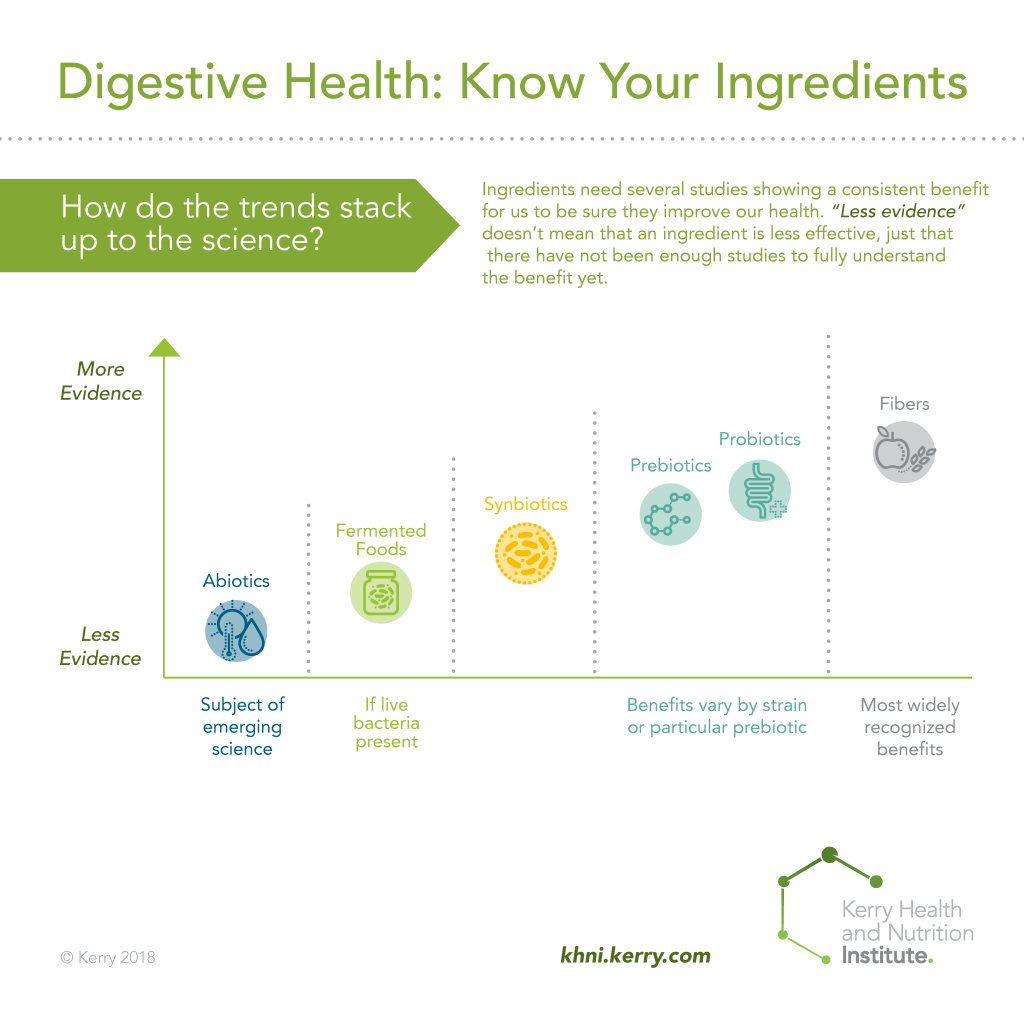
|
Get KHNI articles delivered to your inbox
|
Consider the fundamental change from milk to brie cheese or grapes to wine. Such is the power of fermentation.
Fermented foods result from the growth and metabolism of live cultures, transforming a precursor food (such as milk) into a fermented food (cheese).
The fermentation process may result in changes in taste, texture, aroma, nutritional value, microbial content and perhaps health benefits that extend beyond the basic nutritional value of the food.
Because of this last property, some call fermented foods ‘probiotics’, but in fact they are not (necessarily) the same.

Probiotics are live microorganisms that, when administered in adequate amounts, confer a health benefit on the host (Hill et al. 2014).
Unlike fermented foods, probiotics must have been tested in human studies and shown to have a beneficial health effect. Fermented foods don’t require such testing, although some have been.
Further, some fermented foods are treated after they are made (for example, sourdough bread is baked), and do not contain live microbes at the point of consumption.
To the extent a fermented food has been tested in human studies and shown to be beneficial and delivers a sufficient ‘dose’ of beneficial live microbes, it meets the bar of a probiotic. (See figure below).
This is the case with several probiotic yogurts and fermented milks on the market today.
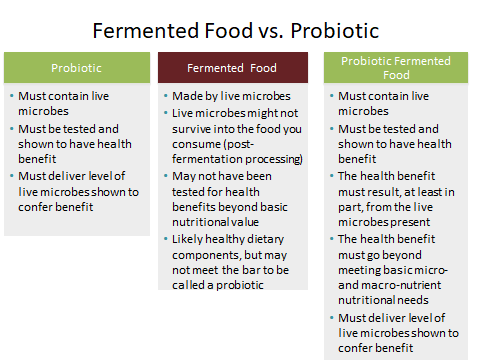
There has been a lot of publicity and testimonials about how good fermented foods such as kombucha or sauerkraut are for health. But this is not the same as evidence from controlled, human studies.
Many of these foods may be good for gut health or immune system, but in the absence of studies, we can’t confidently say.
Scientists are now speculating that any source of live microbes may turn out to be beneficial and are even suggesting addition of an RDA for live microbes as part of a healthy diet.

For a comprehensive dive into the science of probiotics and human health, head to this review.
The body of evidence substantiating benefits of probiotics is quite extensive. Over 1800 human trials have been conducted using probiotics.
Table 1 lists some benefits of probiotics shown in human trials. Keep in mind that benefits are tied to specific strains.
Table 1. Overview of some benefits of probiotics in humans as established in randomized, clinical trials. Consult individual references cited for strains and doses. Adapted from Sanders, Merenstein, Merrifield and Hutkins, Nutrition Bulletin.
| Benefit | Population | Reference |
| Treat colic in breastfed infants | Infants | Sung et al. 2018 |
| Prevent atopic dermatitis/food hypersensitivity | Infants | Zhang et al. 2016 |
| Prevent necrotizing enterocolitis | Premature infants | AlFaleh & Anabrees 2014 |
| Treat acute diarrhea | Infants, children | Szajewska et al. 2013 |
| Manage symptoms of occasional constipation | Adults | Eskesen et al. 2015 |
| Manage symptoms of lactose intolerance | Children, adults | EFSA Panel on Dietetic Products 2010 |
| Reduce incidence and duration of common infectious diseases (upper respiratory tract and gastrointestinal) | Children, adults | King et al. 2014 |
| Prevent antibiotic-associated diarrhea | Children, adults | Goldenberg et al. 2015 |
| Extend remission of ulcerative colitis | Adults | Naidoo et al. 2011 |
| Improve therapeutic efficacy of antibiotic treatment of bacterial vaginosis | Adult women | Martinez et al. 2009 |
| Reduce low density lipid cholesterol | Adults | Jones et al. 2012 |
| Prevent Clostridium difficile diarrhea | Children, adults | Goldenberg et al. 2017 |
| Reduced prevalence of dental caries and gingivitis | Infants, children | Martin-Cabezas et al. 2016 |
It’s easy to grasp this concept by looking to the animal world.
Different breeds of horses, for example, have quite different strengths and functions. Similarly, different strains of even the same species of a probiotic may have different benefits.
In some cases, more than one independently tested probiotic product confers the same benefit. In other cases, only a single probiotic product has been shown to be effective.
The best evidence for probiotic use is for prevention of antibiotic-associated diarrhea and C. difficile infection, management of certain gut symptoms, and prevention of necrotizing enterocolitis in preterm infants.
People often wonder if probiotics have any benefit for healthy people.
Benefits such as improved tolerance of dietary lactose for lactose intolerant people, management of blood lipids, improved oral health, reduced incidence of common infectious diseases such as the common cold, and management of gut symptoms all are demonstrated in reasonably healthy people.
The probiotic marketplace can be confusing for consumers.
See here for some basic information on choosing a probiotic and reading a probiotic label. Some basic principles to guide a search:
- There is no one strain or one dose that is best. Sometimes lower dose products or products with fewer strains have the best evidence.
- Any health benefit claim made should be substantiated with a human trial. But the types of claims allowed in the USA on foods and dietary supplements are restricted by law. Contact the manufacturer to get information on what studies have been conducted, or consult Clinical Guide for Probiotic Products Available in the United States.
- One of the biggest challenges in the probiotic market is keeping the probiotic strain alive. Responsible manufactures go to great lengths to be sure their probiotics retain viability and deliver an efficacious dose through the end of the product’s shelf life. Unfortunately, not all products on the market are responsibly formulated. Consumers should buy products from companies they trust.
For product manufacturers interested in offering consumers fermented foods, adding research-supported probiotics can ensure consumers are getting the health benefits they expect from fermented foods.