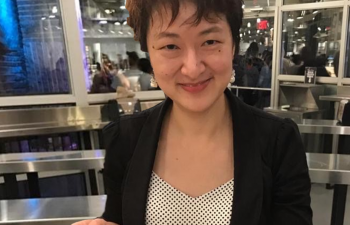
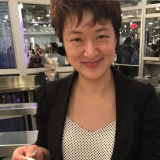
Meet Celia Chee, a taste scientist responsible for development of new flavor modulators and flavor building blocks with the Taste Innovation Discovery Group at Kerry.
What sparked your interest in science?
For as long as I can remember, I have always been a foodie. Growing up in Malaysia, I was lucky to be immersed in various cuisines such as Peranakan Chinese, Chinese, Malay, South Indian, Thai, Korean, Continental etc. Those experiences always made me wonder how simple local ingredients, when combined in different ratios, would lead to different taste experiences. This passion for food and interest in science made food science a very natural choice for me when selecting a course of study for my undergraduate degree.
What drew you to your current field?
During my undergraduate studies at University of Leeds, I had the opportunity to work on a research project focused on understanding the impact of sulfhydryl group activity on milk powder functionality, as sulfhydryl groups can impact the gelation properties, storage stability, and flavor of milk powder. That was my first exposure to research and how experiments are conducted. That experience helped me to pursue my career further into food/flavor science. My masters research focused on the enrichment of dairy products with omega-3 fatty acids, which brought many flavor challenges. This highlighted how vital flavor was in the development of food products, especially when improving the nutrition of foods and beverages, and piqued my interest into further specializing in flavor research.
What is a scientific achievement you’ve been a part of that stands out in your mind?
No scientific achievement happens without working as a coherent team. I have had the privilege throughout my career to work with some amazing scientists. In one of my past projects, my research contributions were focused on producing new and unique flavor ingredients using techniques in enzymolysis, process reactions, microbial fermentations, and related biochemical/ biotechnological methods. That work helped successfully launch 5 new flavor ingredients (currently sold as part of sweet, savory and dairy flavors) and 2 novel technologies (leveraging Millard chemistry).
At Kerry, my research currently focuses on flavor modulation via bioprocessing and Maillard reaction chemistry. As part of the Taste Innovation team, we have launched 6 flavor modulators so far focused on protein masking, sweetener masking, savory enhancement and mouthfeel. These projects have been key as the industry moves toward a health and nutrition focus, as nutrition-forward ingredients can come with major taste challenges.
What are the major challenges you work to overcome in the current industry landscape?
I keenly follow how meat-alternative and non-dairy alternative food offerings are evolving in the market.
As a food scientist, the ability to develop novel flavor modulators and flavor ingredients that help meat and dairy alternatives have a more authentic profile is very exciting. While there is good progress being made in this area, a lot more research, sensory analysis and collaborations with teams focused on consumer perspectives are needed to reduce the gap between animal and plant-based offerings.
What advice would you give newcomers to your field?
There is a lot you can learn from you coworkers, keep learning from everyone you meet.
If you had a crystal ball, what problems/challenges do you think will be solved 5 years from now in your specialty?
Protein-related off-notes would be greatly improved as protein ingredient processors gain a better understanding on how to optimize protein extraction while yielding better flavor outcomes. This would probably lead to better-tasting meat and dairy alternatives in the market.
What would you recommend on KHNI that is relevant to learn more about your field?
My article “Using Natural Flavors to Deliver Taste with Nutrition” provides some insights to issues that come up in many projects I’m working on – “how can we adapt taste to fit the needs of changing consumer preferences?” as well as “how can taste solutions help improve the nutrition of a food?”
Meet Sonja Nodland, PhD, RD&A Senior Scientist, Wellmune® in conversation with Anne-Marie O’Sullivan from the Kerry Health and Nutrition Institute
Our scientists bring a unique blend of experience and insight to the work they do. We caught up with Sonja Nodland, who is part of the team responsible for developing the science supporting the immune health ingredient Wellmune®, to talk to her about how she came to work in the area of human immunology and what keeps her curious.
Anne-Marie: Tell us about your area of focus and your role.
Sonja: At Kerry, my responsibility is to coordinate the research program that provides the scientific backing for the functional ingredients within our ProActive Health group, which is the group at Kerry responsible for ingredients like Wellmune® and the probiotic GanedenBC30®. I was originally brought in to coordinate the human immunology research showing Wellmune’s efficacy and to find markers in blood (biomarkers) that indicate Wellmune is working. My role has expanded to include work with GanedenBC30®.
What sparked your interest in science?
Sonja: It’s just always been part of who I am, and I think I’m a naturally curious person. As a child, I was diagnosed with leukemia (a cancer of the immune system), and so I was exposed to biomedical science at an early age. Luckily, I was treated and have been completely healthy and cancer-free ever since. This formative experience did leave me with a deep curiosity about how the human body works, or sometimes doesn’t work. My experience was a natural bridge into the field of human immunology.
The human immune system is very complex and there are many open questions, so working in this area has filled a need for me to always have a new unanswered question and a new challenge to work on.
Why did you choose the specialty that you’re in, what was the pathway?
Sonja: Because I was only three years old when I was told that I had cancer, it was described to me by saying that my blood was sick. As a curious person I immediately wanted to know why.
Even at that early age, I realized I first had to learn all about the cells that were sick in order to understand why they got sick, which is really all about immunology. Blood is a key part of the immune system, so I had a natural transition from my personal experience to learning about immunology – both from the curious kid perspective and then, as I got further into science, the physiology of how the body works. And how sometimes it doesn’t work – how it becomes diseased. As I moved forward in my education I chose to train in the areas of human immunology and cancer biology, where these two fields really intersect.
Looking over your career so far, what have been particular highlights for you?
Sonja: One highlight for me has been the research I did during my time as a graduate student and postdoc, which focused on how the cells that became cancerous in my leukemia got that way. We researched how these cells develop in normal, healthy people which helps other researchers understand how the cells become cancerous in childhood leukemia. Being able to contribute knowledge that is the basis for understanding why some childhood leukemia is curable, and other kinds are not, was a very powerful and gratifying experience. I feel I have been able to “pay forward” the previous research that had invented a cure for me decades ago because my research is still contributing to finding better treatments for childhood leukemia today.
Looking at the food and beverage landscape in your field of work, what’s stimulating your curiosity now?
Sonja: One of the things most interesting to me – and I’m not a food scientist, I come at this from a very different angle – is the recognition of the importance of the human microbiome (not just the gut microbiome) to human health. Also interesting is that humans are really a superorganism made up both of human cells as well as bacteria, viruses, and fungi. I think the realization that essentially everything we put into our body – the majority, of course, is what we eat – affects these organisms one way or another is a powerful insight and opens the door to a lot of questions.
I think the most interesting questions in food and beverage right now are about how the food choices we make – everything from eating raw foods to what sorts of fortified foods and specifically designed foods that are ‘better for you’ –affect our health. And, each of these choices has a daily effect on our microbiome. It’s a bit dizzying when you stop to think about it.
In the area of human immunology, what’s most exciting in terms of research right now?
Sonja: I am fascinated with the research exploring how the immune system is exquisitely integrated into every system in the body as well as in a very close relationship with all the “foreign” members of the human microbiome. Everything that we eat is affecting the microbiome, and because of the microbiome’s close relationship with the immune system, what we eat is likely affecting our immune system.
This idea of ‘nutritional immunology’ – which has been developing for 10 years or so but is now really starting to come to the forefront – is one of the most exciting developments in immunology. Previously, trying to affect the immune system has been the realm of pharmaceutical companies. Now, I see a paradigm shift in the way people think about affecting the immune system, being led out of Western Europe. Food is not necessarily medicine, but food has very important health effects beyond providing calories and has direct effects on the immune system.
Looking ahead, if you had a crystal ball, what problems do you think will be solved in immunology over the next 5 years?
Sonja: In the next 5 years, I think we’re going to have a general outline of what a healthy microbiome looks like and, with that, a general outline of what a healthy immune system looks like. This means we will be better able to determine when it is not functioning properly, which is the first step to fixing any problem. I suspect these developments will pave the way for innovations in personalized nutrition.
Thinking of newcomers to your field – what advice would you give them?
Sonja: I think in general, science is becoming ever more inter-disciplinary, especially when compared to decades past when researchers were more narrowly focused in a particular field. So the advice I would give is to read broadly, in a lot of different fields, because you never know where the next insight will come from that might inspire not just your solution but the next health innovation.
Look and read outside of the field of immunology. Don’t just read immunology, but also read about topics like physical chemistry, or computer science, biostatistics, neurology, and genetics.
What content would you recommend on Kerry Health & Nutrition Institute in the realm of immune health?
I think the following articles are useful and clear and give a good overview, I’d recommend them if you want to learn more about immune and digestive health.:
What Does Digestive Health Really Mean?
The Role of Food in Maintaining Immune Health in Ageing
And tell us about some key current reading for your discipline?
Sonja: The journal article that has had the greatest influence on what I’m working on today is:
Quintin, J., et al., Candida albicans infection affords protection against reinfection via functional reprogramming of monocytes. Cell Host Microbe, 2012. 12(2): p. 223-32.
And your top ‘must-read’ science books?
Sonja: These have really expanded my thinking about my field, even though many of them are completely outside it:
‘Hyperspace’ by Michio Kaku, ‘Fermat’s Last Theorem’ by Simon Singh and not least ‘The Medusa and the Snail’ by Lewis Thomas.
Meet Dr. Maria Marco, in conversation with Nathan Pratt from the Kerry Health and Nutrition Institute
Nathan: What is your focus within microbiome research?
Maria: My goal is to take our understanding of probiotics, fermented foods, and the microbiome to the next level. This means not just understanding health benefits certain probiotics may have, but how they actually interact with the environment of our gastrointestinal tract.
Probiotics are living organisms that we introduce to our bodies’ living, dynamic environments. The more we understand about how they interact with this environment, the microbes that already live there, and the food we eat, the better solutions we can find for human health and food safety.
What sparked your interest in science?
The first thing that comes to my mind is my love of astronomy in elementary school. I remember being so excited by the space shuttle launches and learnings in the 1980s, and even kept a notebook of facts and newspaper clippings about the galaxy. I didn’t want to be an astronaut. I was just fascinated by the galaxy, and that people could study something so nebulous and far away.
I think this attraction to the mystery and complexity of the natural world has been the driver of my lifelong interest in science. In high school biology, I learned that animals and cells can hold the same complexity as outer space, despite being on a much smaller scale. That is when I really began my path on the career I have today.
Why did you choose to study microbiology?
When I began learning about microbiology, I realized it allowed me to apply science to something practical, something beyond the theoretical parts of science. It’s fascinating to me to learn about microbiology at a cellular level, but the fact that it links directly to disease and medicine, environmental science, food safety, and more was the reason it drew me in.
As I began learning about fermented foods, I connected with the link this area of science has to ancient food preservation practices, processes humans were using long before modern times. I love to think about the role of women in developing these processes so long ago, and how women are now involved in all aspects of science with a much greater scope.
What are the most exciting discoveries you’ve contributed to?
The most exciting discovery I’ve been a part of is investigating the way probiotics respond to being in the digestive tract.
Think about going to a new place, like a new city or country. There’s a lot to take in and adjust to, like changes in temperature or weather, different landscapes like mountains, different languages or cultures, and so on.
In much the same way, probiotics have a journey through our digestive tract. A microbe has its own way of sensing what’s going on around it. Are there other microbes around that it needs to defend itself against? Is there food around?
By using certain scientific techniques, we’re able to sense how a microbe changes its gene expression and protein synthesis in real time to adjust to its environment.
For example, a probiotic might sense other bacteria in our small intestine, and create antimicrobial peptides, which are tools it might create to defend itself. But these peptides can also signal our small intestine to improve its barrier integrity, meaning it’s better able to defend against pathogens from invading our bodies. By understanding how microbes react in our GI tract, we’re better able to understand their role in health.

How does the popularity of the microbiome trend in the food and beverage industry impact your work?
I love seeing the boom in interest around fermented foods and probiotics. It creates great feedback and interest between the public and scientific community. There’s enthusiasm for scientists working in this field, students are excited to become a part of it to learn more, and so on.
This really drives a sense of applied learning and science.
What’s the most exciting thing right now in microbiome research?
The most exciting thing in my field right now is the fact that we are learning more and more about the link between our resident microbiota (the microbes we have living in our GI tract) and probiotics. The more we learn about one, the more we can learn about the other.
What will we know about microbiome research in 5 years that we don’t know now?
I think we will be much closer to understanding what a healthy gut microbiome looks like. Right now, we know that certain probiotics, fibers, foods, etc can impact the microbiome in a certain way, but we are still trying to learn what a healthy microbiome looks like, which is extremely challenging.
Once we know this, we will be able to identify which people will benefit from which probiotics, specifically, to a much deeper level.
What advice would you give to newcomers in your field?
- Diversify your skills. You need skills outside of your immediate discipline to make significant advances in science. 20 years ago, you would see research grants with a single investigator, but now these grants consist of a multidisciplinary team of investigators.For example, if you only study microbiology, how can you study their impact on humans in a way that goes beyond understanding the microbes themselves? You need human nutrition, immunology, informatics, physiology, etc to understand the whole picture.
- Be prepared to collaborate. This links closely with #1. You can’t be an expert in everything, but diversifying your skills helps you speak the language you need to with different collaborators, and also allows you to ask deeper questions of them.
What are good resources to learn more about the microbiome, fermented foods, and health?
Are Fermented Foods the Same as Probiotics? is an expert-written piece on the nuances between a fermented food and a probiotic, and their links to health.
The Value of Fermented Foods for Health is a great at-a-glance reference for why fermented foods are gaining popularity.
For anybody wanting to understand fermented foods – Robert Hutkins, “Microbiology and Technology of Fermented Foods” 2nd Ed. is a great resource. It tackles the right questions on the topic and looks at the ancient practice of fermented foods with a modern perspective.”
Meet Michel Aubanel, MSc, Global Flavour Ingredients Manager with Kerry, in conversation with Anne-Marie O’Sullivan from the Kerry Health and Nutrition Institute
Anne-Marie: Tell us about your area of work
Every day at Kerry, I get to work with Mother Nature. Working with the team, my job is to explore potential new raw materials from all over the world. On any one day, that can be Açaí from the Amazon in Brazil for use in carbonated beverages, to Grain of Paradise, a kind of pepper used in West Africa.
Our work involves constantly looking for opportunities to optimise ingredients on yield, on sustainability, and on alternative extraction technologies. We are looking for new ways to improve not just the health of people, but also the planet. For example, this might include whether to use ‘forward’ osmosis to purify water in a more energy-efficient way than ‘reverse’ osmosis. Or looking at new ways to optimise yield in various raw materials such as cocoa beans, flowers and plants, using only water as extraction solvents or looking at how using side-streams more effectively, such as raspberry seeds in Ravifruit.
What I love about my job is that it means I get to meet and work with farmers all around the World –sometimes in exotic places. For example, I visit Kerry’s farmers twice a year in Madagascar, and work with them to improve the quality of the vanilla bean crop.
The program linked to these actions is named “Tsara Kalitao” meaning ‘Good Quality’ in Malagasy. For example, I get to be a part of some initiatives Kerry is working on with people in the remote villages in the Sava region in the north of Madagascar including:
- Working with local agronomists to optimize vanilla bean crop, and income, of local farmers.
- Farmer Income: Advising on vanilla bean crop optimisation – working with two agronomists on the ground
- Supporting budget and finance training for women
I also get to work on an Education Programme. We recognise that support is required for the educational system in the region, to ensure that children attending school can realise their potential. In close cooperation with local officials, teachers and school directors, Kerry has set up an improvement programme together with a local NGO specialising in micro-educational projects. Through this programme, we support and recognise teachers and school management for their increased efforts designed to provide a better standard of education for all children.
What inspired you to choose this career ?
I remember my father coming home with smelling strips in his wedding ring – smelling strips are pieces of paper used to smell a liquid.
He was a perfumer and he often brought me into the forest for walks where we would enjoy the scent of flowers & eat fruit. It was the first step for me in getting “connected” with Mother nature.
Growing up, I was a member of a choir that got to travel all over the world, and I got the opportunity to see and experience new cultures, ways of eating, drinking and perspectives on health.
I was fascinated by what we can do with Mother Nature’s natural raw materials and how to magnify the possibilities using extraction technologies.
So, I started to learn pure chemistry in France and Germany to get the building blocks of understanding before moving on to extraction work.
What projects excite you right now?
Most recently, I have been working with my team on the science of discovering a new tracer to identify whether cooa has been authentically extracted. The tracer is called luteolin, which we described in a scientific paper and presented recently to a congress in Italy in a talk titled “New Component in Cocoa Extract: Luteolin-O- β-D-glucoside.” This work allows me to explore and optimize the benefits of the raw materials we are using.
I also learn a lot and enjoy my role as a member of the IOFI Science Board, as it allows me to learn and exchange with scientists working across the industry and in the world’s most important companies in the area of taste. Our role there is to discuss and better understand how we can address the key challenges facing our industry in the coming years.
Looking at the food and beverage landscape – what is something unique you are working on?
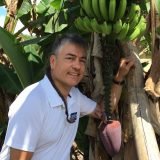
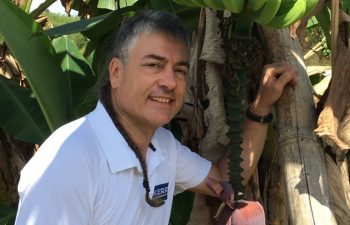
I am really stimulated by new food identified around the Globe such as banana flowers in The Philippines. The banana flowers have a similar aromatic profile as banana fruit, but it’s much more delicate and much less banana-like when still in the blossom form.
When you understand the “why” of such consumption, you can imagine how other raw materials such as flowers, that are not eaten now, could potentially provide a great taste profile.
What research break-throughs excite you at the moment?
Working on water-based extraction is exiting because we are ending up, product by product, with taste profiles that are unique. For instance, a ginger root extracted with water is providing a completely different taste experience than one extracted with ethanol.
Finding ways to blend plants to mimic the taste of endangered plants or botanicals, such as angostura, is another exciting area.
What advice would you give newcomers to your field?
To be curious and really listen, to a farmer in Amazonia growing pineapple, for example, so that you can understand the “why” of the sweet taste of such a fruit.
To learn from your mistakes. Most of the time “mistakes” are a way to open your brain and find an alternative way of working.
To be patient & willing to learn step by step. It takes time in a field like this to really understand the “bigger picture”.
What would you recommend is relevant to learn more about your field, on the Kerry Health and Nutrition Institute?
I was really impressed by the “The Future of Food Preference – What You Should Know from the 13th Pangborn Sensory Science Symposium”
At this conference, The Kerry Health and Nutrition Institute co-organised a workshop entitled ‘Sensory Science as the Bridge between Consumer Behaviour, Nutrition and Health’. This was a great way to explore how sensory research is uniquely positioned at the nexus between food science, nutrition and consumer behaviour to better understand how perception can influence food intake, and be used to moderate the flow of energy and nutrients through our diets.
What are your 3 favourite science books or sources?
I would recommend
Flavour Development:
https://www.amazon.com/Flavor-Development-Various-Industry-Experts/dp/1932633510
Innovation in Food Engineering:
Food Chemistry:
https://www.springer.com/gp/book/9783540699330
Ever wonder how you make beverages out of plants like oat or soy? Whether it’s called oat milk, milked oats, or oat-based milk alternative, depending on which part of the world you’re in, there’s no denying that it’s a trend that’s front-and-center in the food and beverage world. In this podcast, Kerry Health and Nutrition Institute experts walk through the science that occurs behind-the-scenes to bring you dairy alternative beverages.
Learn insights into:
- Why the oat beverage market is growing so quickly
- The science behind why some oat-based beverages taste better than others
- The reason plant-based beverages can be gritty, and how it can be reduced
- How technologies like enzymes are key to a great-tasting product
- What the future will bring for the plant-based beverage space
Press play to listen or click this link
Speakers
In conversation with Anne-Marie O’Sullivan, Kerry Health and Nutrition Institute.
Liz Lalor, MSc is the Global Marketing Lead for Kerry’s enzymes team. She holds a Bachelor’s degree in Pharmacology from the National University of Ireland, Galway and a Master’s degree from the UCD Michael Smurtfit Graduate Business School.
Josh Taylor, PhD joined Kerry in 2016 as part of the enzymes research and development team developing new enzyme systems to improve yields and quality for customers in food and beverage products all over the world. Prior to joining Kerry, Josh completed a BSc (Hons) in biotechnology in National University of Ireland Galway. Josh also worked in European Molecular Biology Laboratory (EMBL) Grenoble, France on the structure of Piwi Proteins during his BSc. Josh then completed a PhD in Food Science and Technology from University College Cork, Ireland. The PhD research was focused on developing a toolbox of methods for reducing levels of gluten in beer and managing the University research brewery.
Billy Ryan, PhD joined Kerry’s team in 2014 and has since held roles in RD&A, technical sales support and business development within Kerry’s Enzymes business. Dr Ryan is responsible for Kerry’s Business Development activities for enzymes globally. Dr. Ryan completed his PhD and BSc degrees in University College Cork, Ireland where he specialised in Microbiology.