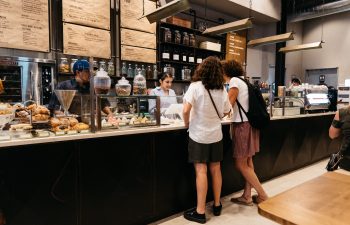

Dining out of home and calorie-rich restaurant menus are often blamed as a main driver of the obesity issue worldwide.

The World Health Organisation global estimates that more than 1.9 billion adults aged 18 years and older are overweight (WHO,2018).

What if we could make healthier choices in restaurants more obvious and easier to make for consumers, with minimal effort on their part?

In a lot of cases, obesity is preventable. However, our current food environment makes this challenging. Behaviour change measures can be an effective means of changing consumer dietary habits.

Consumer dietary choices are influenced by personal preferences, habits, nutrition information, availability, cost, and placement, among other reasons (Glanz & Bishop, 2010).


What can Operators do to Enhance Healthier Behaviours? 

Research on behaviour change is showing the following 3 strategies are helpful tools to help encourage healthy behaviours.

Read on for the ‘how’ behind these strategies.

  1. Ensure their menus provide visible and meaningful nutritional information to the consumer.
  2. Nutritionally optimise their recipes and provide healthier alternatives that motivate consumers to make healthier choices.
  3. Add environmental cues that encourage the healthy choice, such as signage at point-of-purchase, appealing pictures of healthy menu choices, etc.


Motivating Choices

Behaviour change can refer to a transformation or alteration of human behaviour or patterns.  Approaches focusing on the individual, community and environmental influencers can support behaviour change.

Buying a car is one example. A person may be considering an energy efficient car as a more beneficial choice for the environment. Environmental influencers like awareness campaigns and financial incentives can motivate this individual’s purchase intent.

There are many credible models for behaviour change, one of which is the Capabilities, Opportunity, Motivation and Behaviour model (COM-B) of behaviour change.

Behaviour (B) occurs as the result of interaction between three necessary conditions:

  • Capability (C): do you have the means available to do it? Money, time, or knowledge are examples.
  • Opportunity (O): has the situation presented itself for you to make the change?
  • Motivation (M): do you want to make the change?

Each of these conditions can influence each other, as well.

The below figure shows there can be potential influences between components in the model; opportunity can influence motivation or capability. (Michie, Stralen & West, 2011).


COM-B Model of Behaviour Change. Michie, Stralen and West (2011).


Applying this Model to Restaurants and Away-from-Home Eating

Capability is defined as the individual’s psychological and physical capacity to engage in the activity concerned.  It includes having the necessary knowledge and skills (Michie et al. 2011).

For example, the visibility of nutritional information can enable a consumer to make the healthier choice.

  • Calorie labelling on menus when eating out of home,
  • Front of pack labels such as the Keyhole logo used in the Nordic countries,
  • Callouts of low-calorie options for example: “Under 600kcals”.

Calorie labelling on menus is an intervention that is being widely analysed and implemented in various countries such as USA, Australia and UK.

A study by Bollinger et al, 2011 assessed the effectiveness of calorie labelling in 222 chain restaurants and found the labelling led to a 6% reduction in calories per transaction.

Calories were posted on menu boards and menu in a font and format that was as prominent as the price.

The reduction was a result of consumers changing their food choices, possibly due to the calorie information making them more capable to make the healthy choice.

The study also grouped consumers data into one of three categories of calories purchased: less than 125, between 125 and 250, or greater than 250 calories purchased.

The data suggests that calorie labelling had a greater influence on consumers that tend to make high-calorie purchases with an average reduction of 26% calories per transaction.

A Cochrane review assessed the effectiveness of calorie labelling at point of consumption in restaurant settings. This intervention provided promising results that nutritional labelling on menus may reduce energy purchased.

However, a wider set of measures would be recommended to tackle obesity (Crockett et al. 2018). Calorie labelling remains one tool in the toolbox to help tackle obesity.


Opportunity is defined as all of the factors that lie outside the individual that make the behaviour possible or prompt it (Michie et al. 2011).

For example, the availability and accessibility of healthier products vs. unhealthier foods so that the consumer can easily make a healthier choice.

If there are no healthy foods available when making a decision, there’s no opportunity to make the healthy choice.

Increasing availability of healthy foods was one of the top three interventions suggested in the McKinsey Global Institute report on Obesity (Dobbs et al, 2014).

A review by Grech & Allman-Farinelli (2015) evaluated interventions in vending machines and found that sales of healthier items were increased when made available in five of the six identified studies, with no loss of overall sales volume.

Increasing the amount of no added sugar beverages, low calorie snacks could change consumers purchase intent. In this example, people may have had sufficient capability to make the healthy choice but did not have the opportunity to do so until the healthy foods were added to vending machines.


Close up of red apples


Motivation

Capability and opportunity feed into motivation, which is defined as the brain processes that energize and direct behaviour, not just goals and conscious decision-making.

It includes habitual processes, emotional responding, as well as analytical decision-making (Michie et al. 2011).

For example, promotional advertising of the healthier choices to entice and enthuse the consumer on digital platforms, social media or menu boards, or printed posters located near checkouts or within the consumers eye line can influence motivation by providing the right stimulus at the right time.

Advisory prompts through digital platforms or employees when a consumer selects their food of choice is another nudge tactic that can motivate healthier options (e.g. “would you like this without cream?”).

A study focusing on the interaction between food choice and food advertisement exposure  suggest that health-conscious consumers opted for the healthy snack following exposure to health message advertising (Dovey et al. 2017).

There are limited studies focusing on a combination of behaviour change interventions specific to dietary consumption when eating out of home.

One pilot trial study involving 18 worksites in England evaluated three interventions assessing the impact on calories purchased.  The interventions altered one of (a) portion size in six worksites (b) availability of healthier options in six worksites and (c) energy (calorie) labelling in six worksites.


People ordering food at cafe


The three intervention studies showed the following results:

Portion size – reducing portion sizes (by 10% or more) may be effective in reducing energy purchased and consumed from targeted food categories such as main meals, sides, desserts and cakes (Holland et al. 2018).

Availability of healthier options, like offering more low-calorie options on a menu, could be a promising strategy to reduce calories purchased (Pechey et al. 2018).  For example, lower calorie beverages or healthier side options incorporating fruit and vegetables or alternative cooking methods like baked vs. fried.

Calorie Labelling – only one out of the six sites showed a reduction in calories purchased when calorie labelling was implemented in menus.  However, the lack of a significant reduction in calories purchased in five out of the six worksites may have multiple explanations relating to barriers to calorie labelling implementation (Vasiljevic et al. 2018).  The use of bigger fonts or differentiation through colour could highlight and make the calorie information more meaningful for consumers. In this case, enabling consumer capability by adding calories to menus may have not been enough to strongly motivate behaviour change.

The first two interventions, reducing portion sizes and increasing availability of healthier options, showed promising results for reducing calories purchased.  These pilot study gives some positive indications that using these interventions in combination could promote healthier dietary patterns compared to using one of the strategies alone.  However further research on a larger scale is needed to evaluate the optimal implementation and combination of these interventions.


Knowing is Only Part of the Battle

Changing consumer behaviour takes time and can be very challenging, especially when eating out of home.

Often, changes that do not require conscious decision making are the most effective.  For example, reformulation to nutritionally optimise recipes is a method widely used by the food industry and recommended in many public health initiatives worldwide.

It is an effective method of improving nutrition as it does not require any behavioural change from the consumer.

Evidence is growing to suggest that changing small cues or slightly tweaking the physical environment may provide an effective way of changing behaviour, in ways that do not require a lot of cognitive processing by a consumer.

These are commonly known as “nudge” interventions for example slight reduction in portions sizes or the placement of products near checkouts or on digital ordering systems to change the consumption behaviour of consumers (Vasiljevic, M et al. 2017).


Key Takeaways

Three things operators do to enhance positive, healthy behaviours in their food environments:

  1. Ensure their menus provide visible and meaningful nutritional information to the consumer.
  2. Nutritionally optimise their recipes and provide healthier alternatives that motivate consumers to make healthier choices.
  3. Add environmental cues that encourage the healthy choice, such as signage at point-of-purchase, appealing pictures of healthy menu choices, etc.

Establishing a food environment that combines these approaches could potentially help shape the way in which food operators support consumers to promote healthier dietary behaviours.

It’s hard to focus on eating healthy when we’re traveling, whether it’s flying across the country on a business trip or driving 7 hours to see family for a holiday visit. The mood is hectic and to-do lists are long, so eating healthy often becomes an afterthought. Even worse, food often feels out of our control when traveling; you can end up feeling like the victim of whatever choices are available in an airport or get hungry on a 200 mile stretch of road where less healthy choices may seem like the only option.

It’s not a big deal if it happens here or there, but if you’re someone who travels a lot, this can add up in the long run. Here are some helpful tips to avoid having your health be disrupted by travel.

Image of coffee with airplane in the foam

1. Time your meals and snacks to be consistent with your normal routine

One important strategy is to try to keep your food intake as close to normal as possible. Our bodies like consistency, so when we shake up our schedule it can take some time for our hunger signals to adjust. This means planning to eat meals at times you’d normally eat. If you’re in a hotel, set your alarm to wake up at a time close to when you’d usually wake up and have breakfast. Plan to have snacks at the times you’d usually eat snacks. If you’ll be on the road when you’d usually be having something to eat, try to plan ahead for what food choice you’ll make so you’re ready when your normal mealtime comes around.

Clock with food surrounding it

This gets a lot harder when crossing multiple time zones. If time changes mean you’ll end up sleeping during a time you’d normally have a meal, try to have a snack before you go to sleep so you don’t wake up as hungry. High protein snacks (yogurt, nuts, cheese, etc) are great choices since protein can help us feel full longer.

The more hunger we feel, the harder it is to make a healthy choice. Staying consistent with our usual eating patterns can not only help us make the right food choices, but also gives a sense of normalcy while traveling and is a great way to improve mental and physical well-being on the go.

2. Be prepared

Packing meals and snacks helps tremendously with tip #1. You never know when you’re going to be stuck on a plane or not have access to food during a time you’d normally be eating, and for me that added desperation makes the hunger feel so much worse.

If you have kids, you probably know how chaotic it can be when their snacktime rolls around and you find you forgot to pack anything for them to eat. A hungry kid can often be more easily upset, especially when young, can bring all kinds of unpredictability to your day.

Deep down, we are still like that as adults, we have just learned to repress our screaming and tantrums – instead we just silently suffer with hunger. The phrase ‘hangry’ comes to mind. Treat your hunger just like you would treat your kid’s!

Hungry kid looking upset at mealtime

3. Choose the right foods

Most dietary recommendations suggest people should get more fruits, vegetables, and whole grains, so these are great to focus on when deciding what snacks to pack or meals to prepare ahead of time. Convenience is often the #1 priority when traveling, so be realistic with your food choices. It’s not safe to eat a salad while you’re driving, and the nose of your neighbor on the plane probably won’t be thrilled if you somehow managed to pack yourself some grilled fish.

Dried fruit and nuts can make a great snack, as long as you are aware of the proper portion sizes. It’s easy to end up eating 500 calories after a few handfuls before you realize it! Convenient fruits and vegetables like bananas, apples, or carrots can be good choices for cars or planes. Fruit and vegetable 100% juice blends can offer fruit and vegetable servings in a convenient package, although this can also be easy to consume too much of – aim for 4-6 oz rather than an entire bottle. High protein, whole grain snack bars can also be a good option.

Image of carrots, bananas, apples, and pears

More and more products are offering fruits, vegetables, nuts, and whole grains in convenient formats like dried, poppable bites, scoops, bars, and beverages, so keep your eye out for these if you’re looking to try new things.

At breakfast time, one trick is to add more protein, since many people don’t get enough protein early in the day. Most breakfast foods are high in carbohydrates and low in protein, like cereal, bagels, pastries, muffins, and things like that. Adding more protein to breakfast helps people feel full longer, and it also helps our bodies hold on to our muscle mass when we’re losing weight. If you’re facing down a hotel breakfast buffet, try to choose some protein-boosting strategies like adding peanut butter, protein powder, eggs, or dairy foods like milk or yogurt to your breakfast.

One of the biggest challenges when traveling can be eating out at restaurants, where large portion sizes loom. These aren’t bad every once in a while, but if you’re traveling for a few days the feeling of being stuffed can wear you down.

Some tips for dining out might include:

  • Ask the server to put half of your dish in a to-go container, so you’re only eating a half portion. If where you’re staying doesn’t have a refrigerator, share a meal with someone.
  • Choose smaller dishes, like salad paired with an appetizer, or choose a few plates to share among the table.
  • Use menu nutrition information, if it’s available, to help guide your choices.

The hardest time to eat healthy is when we’re unprepared. We lose a lot of the control we normally have over our lives when traveling, so use these tips to try to gain some of it back.