APC Microbiome Ireland is recognised globally as a leader in microbiome research. Located at University College Cork, APC’s work focuses on understanding the complex interactions between the microbiome and human health.
Their pioneering research has led to significant discoveries in the areas of gut health, immunity, and the gut-brain axis.
APC’s deep scientific expertise and its ability to translate research into practical health solutions make it a valuable collaborator for industry leaders like Kerry.
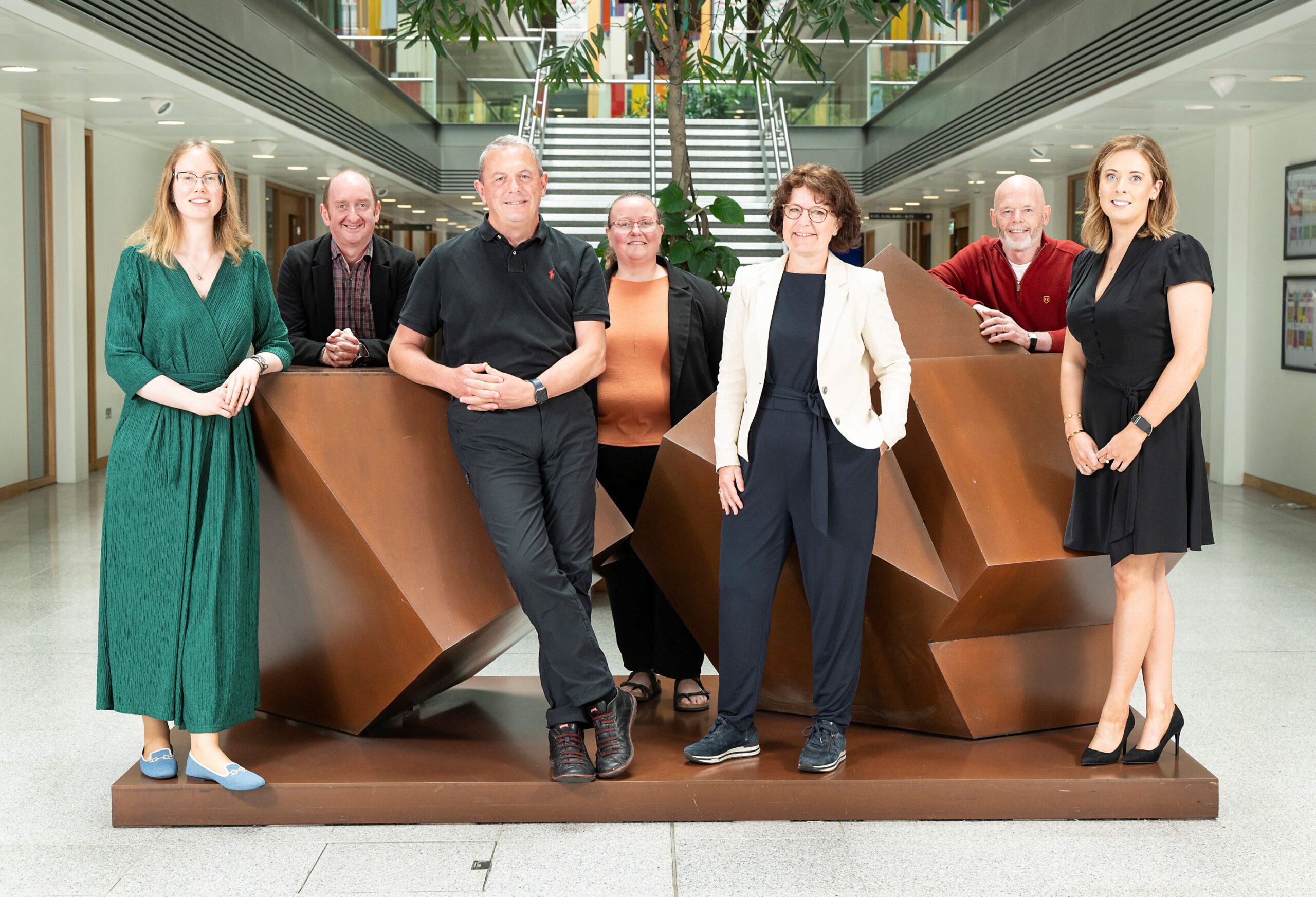
The collaboration between Kerry and APC Microbiome is centred on exploring new concepts in gut-brain health, a field that is rapidly gaining attention for its potential to improve both mental and physical well-being.
This partnership leverages Kerry’s market reach and product development capabilities with APC’s scientific insights and research excellence.
Together, they aim to develop innovative solutions that can support mental health through targeted gut health interventions.
“The gut-brain axis has come to the forefront in recent years as a critical piece of the puzzle when it comes to improving cognitive health” says Laura Collins, PhD, Cognitive Health Lead for Kerry’s ProActive Health division.
The collaboration between Kerry and APC extends beyond this recent partnership. Recently, APC Microbiome supported the Kerry Health and Nutrition Institute (KHNI) in hosting a webinar focused on postbiotics — a growing area of interest in gut health.
The webinar, which featured insights from Dr. Colin Hill, highlighted the importance of postbiotics in overall well-being and their potential role in gut-brain interactions.
This webinar underscored the shared commitment between APC and KHNI to advancing knowledge and innovation in nutrition science.
As the understanding of the gut-brain axis continues to evolve, the partnership between Kerry Group and APC Microbiome Ireland is poised to make significant contributions to this emerging field.
By combining Kerry’s and APC’s scientific leadership, this collaboration promises to deliver innovative solutions that enhance both mental and physical health.
The future of gut-brain health is bright, and this partnership is at the forefront of driving that innovation forward.

Research partnerships are essential to innovation because they bring together complementary expertise, resources and perspectives that no single organisation can typically provide on its own.
By connecting universities, industry, government and other stakeholders, partnerships accelerate the journey from discovery to real-world impact.
Innovation often occurs at the intersection of different disciplines. Academic researchers contribute deep scientific knowledge, while industry partners bring market insights, technical capabilities and practical implementation experience. This combination helps generate more robust and applicable solutions.
Research partnerships create channels for sharing ideas, data, technologies and best practices. Collaborative research, co-development projects, spin-offs and joint intellectual property activities help move discoveries from the laboratory into products, services, and societal applications more quickly.
Innovation can be expensive and complex. Partnerships allow organisations to share funding, infrastructure, equipment, datasets and specialist talent, reducing costs and enabling projects that might otherwise be impossible.
Many of today’s challenges, such as sustainability, health, nutrition, food security, climate change and digital transformation, require expertise from multiple sectors. Research partnerships enable cross-sector collaboration to address these multifaceted problems more effectively.
When organisations collaborate, they can share technical, financial and operational risks. Different partners contribute unique perspectives that help identify potential issues earlier, improving the likelihood of successful innovation outcomes.
Partnerships ensure that research addresses real-world needs. Industry involvement can help shape research questions around practical challenges, while academic rigor ensures scientific validity.
The result is innovation that is both evidence-based and commercially or socially relevant.
Strong partnerships create networks of researchers, businesses, investors, policymakers and communities. These ecosystems foster continuous learning, talent development, entrepreneurship and future innovation opportunities.
In nutrition science, partnerships between academia, healthcare institutions, food companies and technology providers can accelerate the development of evidence-based nutritional solutions.
Academic researchers generate scientific insights, industry provides product development expertise and healthcare partners help validate outcomes in real-world populations.
Together, they can bring innovative nutritional interventions to consumers faster and at greater scale.
Bottom Line
Research partnerships are essential because they transform isolated knowledge into impactful innovation.
By pooling expertise, resources, and perspectives, they accelerate discovery, reduce risk, improve relevance and increase the likelihood that research delivers meaningful benefits for society and business.
For the industry, this partnership provides new insights into good science coming down the pipeline, identifies new ingredients to put into food that delivers health benefits to consumers and can help frame an innovation pipeline spanning multiple years.
For university researchers, the partnership provides the opportunity to bring their research to life in real products that reach consumers.
Hear straight from university research experts and industry professionals about the benefits of partnership for advancing science and health in this video, taken as far back as 2017: