The FODMAP diet is an eating pattern designed to help people with irritable bowel syndrome or other gastrointestinal discomfort choose foods that can help them with their symptoms like bloating and abdominal pain.
Many consider it to be the next wave of the gluten-free trend. Researchers from Monash University in Australia have conducted much of the work around understanding FODMAPs and that research is the basis for many of the answers in this Q&A.

What are FODMAPs?
FODMAPs are a family of carbohydrates that cause gas, bloating, diarrhoea, constipation, distention and pain. FODMAPs are fermented by the bacteria living in your intestines.
They draw more water into your stomach and intestines, which can cause more gas to be produced. This gas can lead to bloating and distension in the intestine, which can then cause the muscles in your gut contract, resulting in pain, diarrhoea, and constipation.
What Does FODMAP Stand For?
Fermentable
FODMAPs are broken down by bacteria producing gas in a process called ‘fermentation’. This produces more gas in your intestines and can cause discomfort.
Oligosaccharides
Oligosaccharides are a number of small carbohydrates found in foods like wheat, onion, garlic, pulses and legumes. They are poorly absorbed by some people and can cause gastrointestinal upset.
Disaccharides
Disaccharides are two simple sugars that are attached to one another. A common disaccharide is lactose, which is found in dairy foods. Many people are intolerant to lactose due to a lacking of the lactase enzyme present in their gut to help break it down.
Monosaccharides
Monosaccharides are simple sugars such as glucose and fructose. Consuming foods that are low in glucose but high in fructose can cause an individual to mal-absorb fructose, which can cause cramping. Such foods include honey, apples and high-fructose corn syrups.
Polyols
Polyols are sugar alcohols, such as sorbitol and mannitol, that are found in some fruits and vegetables. Polyols are often extracted for use as an artificial sweetener and can be found in many manufactured foods in place of sugar. Polyols are known to cause diarrhoea at high intake levels.
Everyone is Different
Among each of these types of carbohydrates, different people have different sensitivities. The goal of the FODMAP diet is to help each person find which FODMAPs they are specifically sensitive to so they can eliminate those foods from their diet.

Are FODMAP Diets Backed by Science?
Yes. The low-FODMAP diet was developed by doctors and dietitians at Monash University in Australia. Clinical trials of people with Irritable Bowel Syndrome (IBS) has been shown to help IBS suffers reduce their symptoms in up to 75% of patients.
Does Cooking Make FODMAPs Easier to Digest?
Studies have found that in canning food under acidic conditions, water-soluble FODMAPs can be leached out. So, if you’re eating a low FODMAP diet, you can discard the canning water and wash your legumes before use to reduce your exposure to FODMAPs.
It is also possible that very high temperatures may also break down FODMAPs. However, the extent of this reaction can vary greatly depending on the food being cooked, and the cooking conditions.
Currently, the most reliable approach to reduce FODMAP symptoms is to use low FODMAP diet.
What Foods are Best for IBS?
Low-FODMAP Vegetables
- Green beans
- Bell peppers
- Carrots
- Cucumbers
- Lettuce
- Potatoes
- Tomatoes
- Zucchini
Low-FODMAP Fruits
- Blueberries
- Cantaloupe
- Citrus fruits
- Grapes
- Kiwi
- Pineapple
- Raspberries
- Strawberries
Low-FODMAP Grains
- Corn
- Oats
- Buckwheat
- Millet
- Quinoa
- Rice
- Seeds (chia, pumpkin, etc)
- Sorghum
Low-FODMAP Proteins
- Eggs
- Tofu
- Protein concentrates or isolates
- Certain cheeses (cheddar, brie, cottage, mozzarella, parmesan)
- Meats & Seafood
- Peanuts
- Walnuts
Are Meats Low in FODMAPs?
Animal proteins such as chicken, meat, eggs and fish are low in FODMAPs. However, ingredients used in the preparation of meat foods such as onions, garlic, bread crumbs, marinades and sauces, may contain levels of FODMAPs.
What Happens if I Take a Break from the Diet?
The goal of the FODMAP diet is to reduce symptoms and to resume you normal diet slowly at quantities that you can tolerate.
Intake of FODMAPs may not induce symptoms when the overall load of FODMAPs is reduced.
If you do experience gastrointestinal symptoms after consuming FODMAPs, resume the low FODMAP diet and symptoms should improve within one week.
Is this the Low FODMAP Diet for Life?
No, the goal of the Low FODMAP Diet is to help your gut heal and to reintroduce certain foods back into your diet over a period of time. Ideally a low FODMAP diet is followed for 2-6 weeks.
After the initial low FODMAP diet, individuals are able to return to their usual eating habits, while only having to avoid very specific high FODMAP foods.
Navigating the Trend
Digestive health is one of the top 10 trends in nutrition for 2019 and previous years, meaning plenty of people will be seeking diets like the low FODMAP diet, as well as plenty of companies creating low FODMAP solutions for these people. For both of these groups, there are some watch-outs to keep in mind as well as opportunities to capture.
What are the Watch-Outs?
The most important watch-out for the FODMAP diet is making sure the diet is still healthy. You may have noticed already, but many high FODMAP foods are also considered healthy foods.
Apples, onions, artichokes, yogurt, and more are all foods that might come to mind when someone asks ‘what foods are healthy?’, yet here we see them listed as high FODMAP foods to be avoided for people with IBS.
For people following the low-FODMAP diet, this means replacing healthy high-FODMAP foods with healthy low-FODMAP foods, rather than trying to avoid FODMAPs altogether.
For companies trying to create low-FODMAP solutions, it’s essential to make sure these solutions provide similar nutrition to the foods they are replacing rather than just removing FODMAPs.
This means being sure to include vitamins and minerals people would normally be getting from high-FODMAP foods they are eliminating in their diet, as well as polyphenols and non-digestible fibres, when possible.
What are the Opportunities for Industry?
Food and beverage companies that can create great tasting solutions while also formulating with low-FODMAP foods like those in the table above have a great opportunity get out ahead of a trend that could be as big as the gluten-free trend has been in recent years.
Companies who make strong, science-backed healthy solutions have consistently been able to garner strong followings from consumers on specific diets in the past, and this will continue for the low-FODMAP diet as it spreads across the world.
Low-FODMAP certifications do exist for companies wanting to draw consumer attention to their efforts in creating low-FODMAP foods.
Gluten-free can be a strong driver of food choices for some consumers, but what is the science behind this dietary pattern?
Gluten can be a serious concern for some consumers, while others pursue gluten-free for alternative reasons.
Here is an FAQ to help navigate this landscape but this FAQ is not intended to diagnose, treat, cure, or prevent any disease.
What is Gluten?
In general, the term “gluten” refers to specific proteins found naturally in grains (1).
These are tenacious elastic proteins that are important for the texture of foods like bread, condiments, beverages and soups.
Where is Gluten Found?
Grains like wheat, rye, barley and their varieties (e.g. spelt, farro, bulgur) contain the proteins that make up gluten (2).
What Grains are Gluten-Free?
Gluten-free grains include corn, oats, quinoa, rice, sorghum, millet, buckwheat, amaranth and teff.
It is important to note that although these grains are inherently free of gluten, they are sometimes processed in facilities which also process gluten containing foods which can lead to contamination (see below).
Why Do People Eat Diets That Are Gluten-Free?
Individuals with diagnosed challenges to gluten must totally avoid these proteins.
Other individuals feel better on a low gluten or no-gluten diet and still other individuals may avoid gluten for the perceived benefits, like weight loss or skin health (these benefits are unproven in people without gluten challenge).
What is Gluten Challenge?
Gluten challenge refers to two conditions: Coeliac Disease and Gluten Sensitivity.
In general, both Coeliac Disease and Gluten Sensitivity can be defined as conditions where consumption of gluten-containing foods results in intestinal and extra-intestinal damage by the immune system (3, 4).
In some people, the proteins in gluten are highly antigenic, especially gluten’s sub-component gliadin, meaning they can activate the immune system.
This results in inflammation of the intestines and which can decrease nutrient absorption, promote diarrhoea and cause general weakness and weight loss, depending on the severity of the response (5).
However, Coeliac Disease and Gluten Sensitivity have substantial differences.
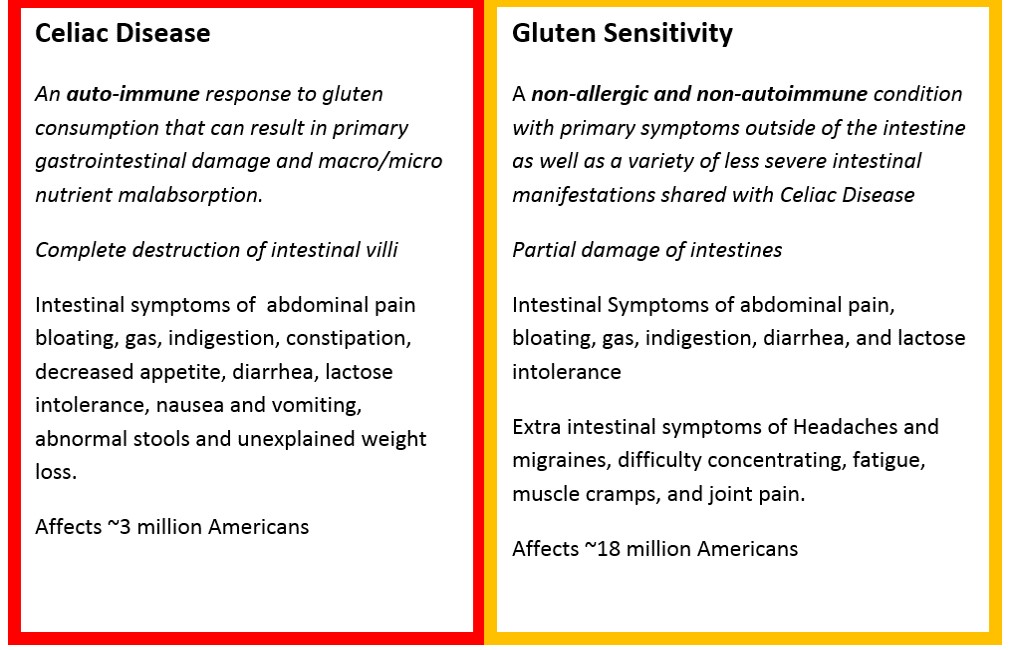
Coeliac Disease is an autoimmune condition that damages the lining of the small intestine and prevents it from absorbing parts of food that are important for staying healthy (3).
Gluten Sensitivity is a non-allergic and non-autoimmune condition with one or more of a variety of intestinal manifestations similar to those seen in coeliac disease, as well as extra-intestinal symptoms not seen in Coeliac Disease (4).
What are the Symptoms of Coeliac Disease and Gluten Sensitivity?
In Coeliac Disease, gastrointestinal symptoms are often characterised by abdominal pain, bloating, gas, indigestion, constipation, decreased appetite, diarrhoea, lactose intolerance, nausea and vomiting, abnormal stools (float, smell foul, bloody, or white) and unexplained weight loss (7).
In contrast, Gluten Sensitivity’s gastrointestinal symptoms are limited to abdominal pain, bloating, gas, indigestion, diarrhoea and lactose intolerance (common when the person is diagnosed, usually goes away after treatment) (8).
Both Coeliac Disease and Gluten Sensitivity have extra-intestinal issues.
However, in Gluten Sensitivity these extra-intestinal issues are more prevalent and include head aches and migraines, difficulty concentrating, fatigue, muscle cramps and joint pain (8).
It should be noted that in Coeliac Disease, most of the symptoms outside of the intestines are secondary to vitamin and mineral malabsorption resulting from destruction of the intestinal villi (3, 4).
Gluten Challenge at-a-glance
What are the Nutritional Concerns for Individuals with a Gluten Challenge?
In 20-38% of those suffering from Coeliac Disease, intestinal damage can lead to malabsorption of macronutrients (carbohydrates, protein and fat) and micronutrients (vitamin and minerals).
At initial diagnosis, most Coeliac sufferers need nutritional intervention including extra calories/protein, fibre, iron, calcium, magnesium, vitamin D, zinc, folate, niacin, B12 and riboflavin.
In Gluten Sensitivity, absence of extensive intestinal damage makes vitamin and mineral malabsorption less likely (3).
However, gluten-free diets are typically lower in dietary fibre, folate, niacin and B12. Individuals eating a gluten-free diet long-term will want to take extra care to ensure they are meeting their needs of these essential nutrients (3).
What does Gluten-Free Mean?
Gluten-free is defined by the FDA as a food which is either inherently gluten-free or does not contain an ingredient that is:
- a gluten-containing grain (e.g., spelt wheat, rye),
- derived from a gluten-containing grain that has not been processed to remove gluten (e.g., wheat flour),
- derived from a gluten-containing grain that has been processed to remove gluten (e.g., wheat starch),
if the use of that ingredient results in the presence of 20 parts per million (ppm) or more gluten in the food.
Also, any unavoidable presence of gluten in the food must be less than 20 ppm (2).
Why didn’t FDA adopt zero ppm gluten rather than less than 20 ppm gluten as one of the criteria for a food labelled gluten-free?
Most coeliac disease researchers and epidemiological evidence suggest that most individuals with coeliac disease can tolerate trace amounts of gluten in foods less than 20 ppm gluten without suffering from adverse health effects (9).
In addition, analytical methods that are scientifically validated to reliably detect gluten at a level lower than 20 ppm are not currently available (2).
How do Manufacturers Test for Gluten in Their Products?
Testing for gluten refers to the presence or absence of the proteins that make up gluten in the food we consume.
Manufacturers who elect to analyse their foods for gluten can select the test methods most appropriate for them, considering the type of foods they manufacture.
Manufacturers are not obligated to use any one specific method to check for gluten in their foods.
The FDA recommends the use of scientifically valid methods in order for the gluten test results obtained to be reliable and consistent.
It is of note that many test kits detect gliadin, which is a component of gluten, so manufacturers must be aware that the measurement must be adjusted to represent gluten (e.g. 6ppm gliadin represents 12ppm gluten).
Can Gluten-Free Foods Become Contaminated by Gluten or Wheat?
Yes. Although whole-grains or seeds like oats, amaranth, buckwheat and quinoa are generally viewed as gluten-free, they may be processed in facilities that also process wheat, leading to recommendations to avoid such foods (10).
This is most common with oats. In addition to being in the whole grain/seed, gluten peptides can be found in processed foods even where the majority of protein has been removed (starch, for example).
The levels of gluten peptides in these products, when consumed as food (gram quantities), may not be sufficiently low to be safe for gluten challenged individuals to consume.
This makes labelling a challenge for food and supplement companies and creates frustration for individuals and companies alike. In these cases it is most important to identify these grains with labels indicating that have been tested to be gluten-free.
If someone does have a gluten challenge, it is important for them to pay attention to the foods they are eating, even if the package claims the product is gluten-free, due to the possibility of contamination.

Some Individuals are Avoiding Gluten But Still Have Symptoms. What is Wrong?
Individuals may be eating food that contains hidden gluten or that is contaminated with gluten.
Although the FDA published the definition of gluten-free in August of 2013, it did not take effect until August 5, 2014.
Companies may want to suggest that consumers choose only trusted brands of food and supplements that use rigorous and validated testing protocols to verify the “gluten-free” label claim.
Also, consumers should be aware that FDA does allow statements on labels like, “made with no gluten-containing ingredients” and “not made with gluten-containing ingredients.”
However, the FDA cautions that unless the phrase “gluten-free” also appears on the label, “…consumers should not assume that the food meets all FDA requirements for the use of the “gluten-free” claim.” (2)
Does Eating a Gluten-Free Diet Have Any Side Effects?
Gluten-free diets are typically lower in dietary fibre, folate, niacin and B12.
Individuals eating a gluten-free diet long-term will want to take extra care to ensure they are meeting their needs of these essential nutrients (3).
Providing these nutrients in gluten-free products is an opportunity for companies producing these products to help consumers eating a gluten-free diet meet their nutrient needs.