The importance of hydration lies in its role in allowing the body to perform our internal processes effectively and efficiently.
Water is involved in a number of essential functions in the body. For example, it helps maintain our body temperature and acts as a primary material for our cells (the building blocks of our bodies). This means that staying hydrated is essential for our bodies to do their job to ensure that we can keep ourselves going1.
The Function of Water in the Body
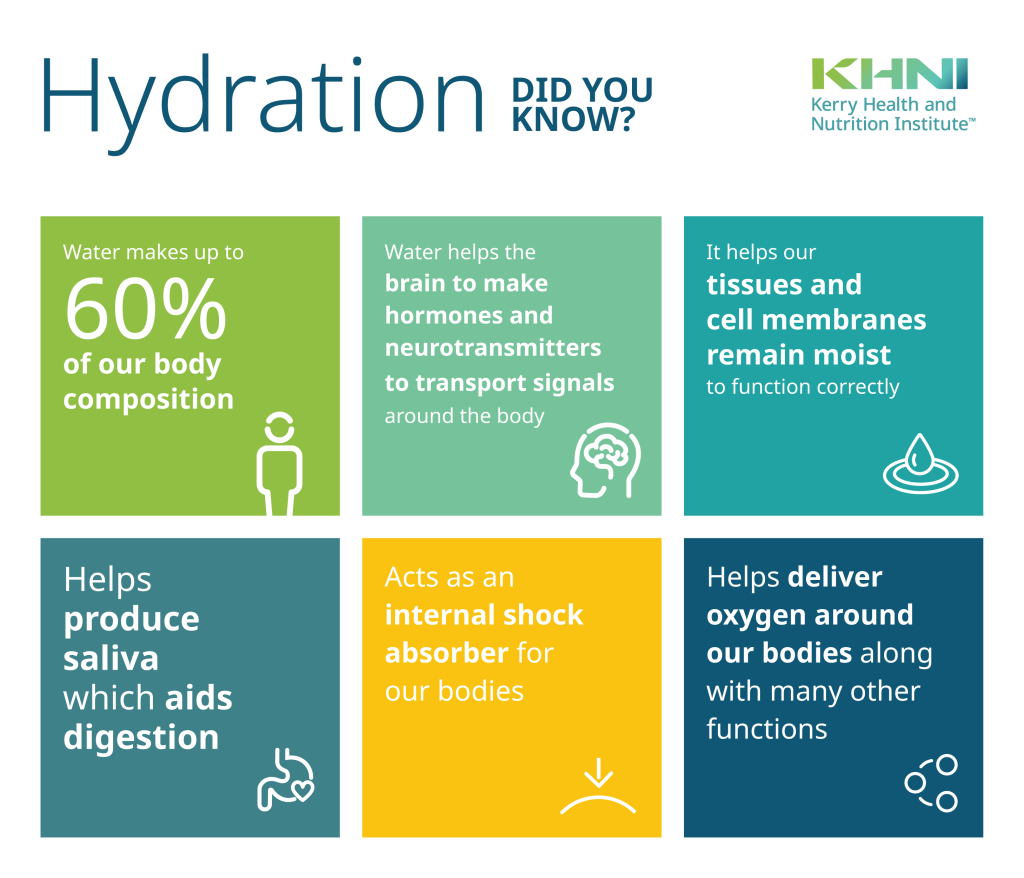
Water maintains our body temperature, helps transport signals to our brain, flushes out waste and helps deliver vital oxygen around the body. This, along with many other actions, is why water plays such a big part in our everyday lives.
Up to 60% of the human body is composed of water. This water is shared between our different organs (most organs contain up to 70% water).
The brain and kidneys contain the highest percentage of water compared to other organs within the body. By ensuring that we are hydrated we can assist with the function of these vital organs2.
The composition of water in our bodies changes with age. Research shows that the bodies of older people consist of approximately 55% water, whereas the water composition of infants lies at about 75%3.
As we age, the decrease in fluid composition of our bodies can cause issues such as urinary tract infections and constipation. Older people may be less aware that they aren’t getting enough fluids, and this can exacerbate issues with hypohydration, which we will explain in the following section.
Dehydration vs. Hypohydration
Simply put, dehydration is the process of losing water, whilst hypohydration is the end result, when the body is in a water deficit4. This means that the body is losing more fluids than it is taking in.
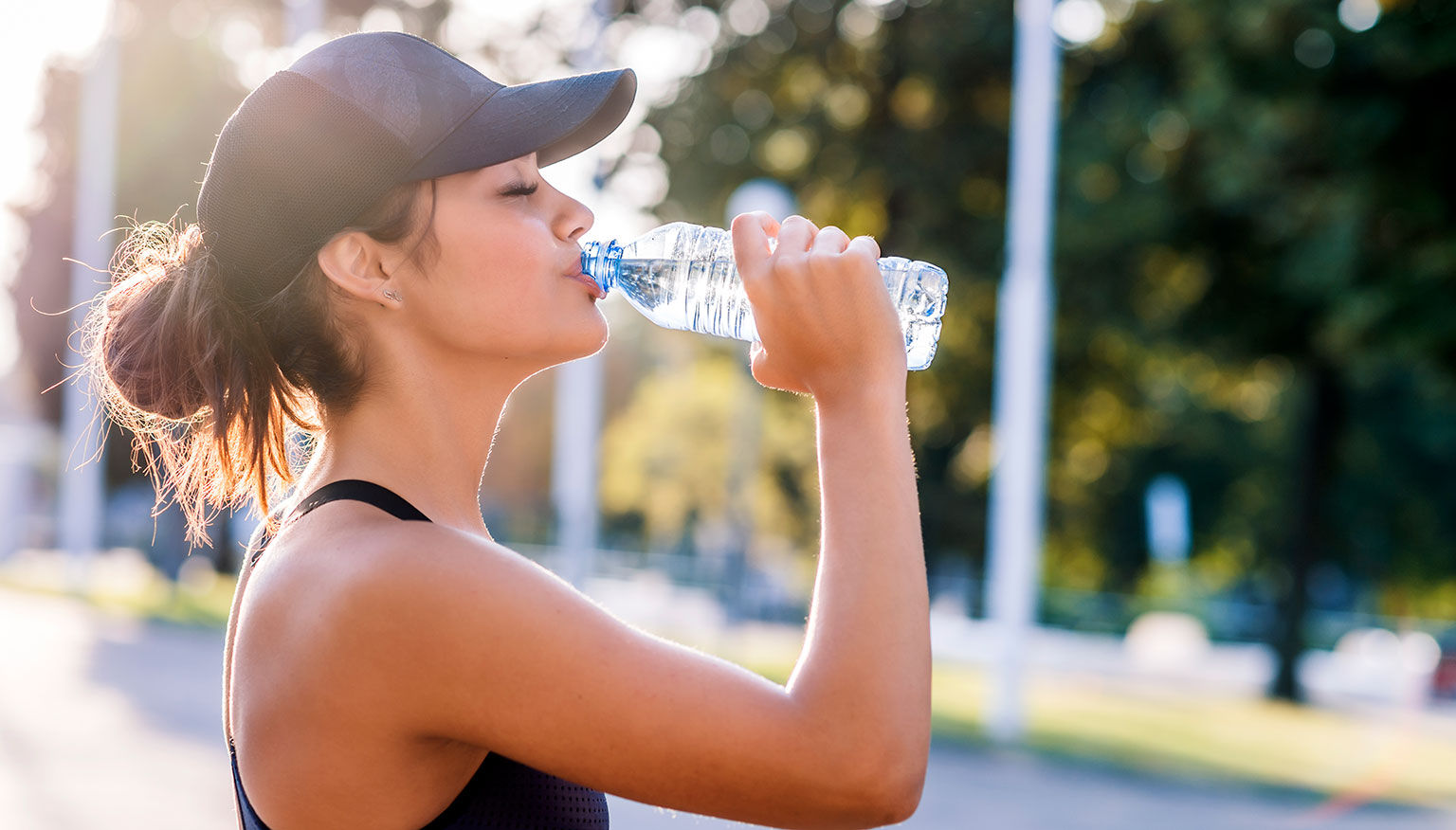
The signs of hypohydration are more noticeable than the signs of other nutrient deficiencies. Hypohydration is the uncompensated loss of water from the body, and this is when the body provides signals that fluid replenishment by drinking liquids is needed.
Hypohydration’s Impact on Focus, Mood and Memory
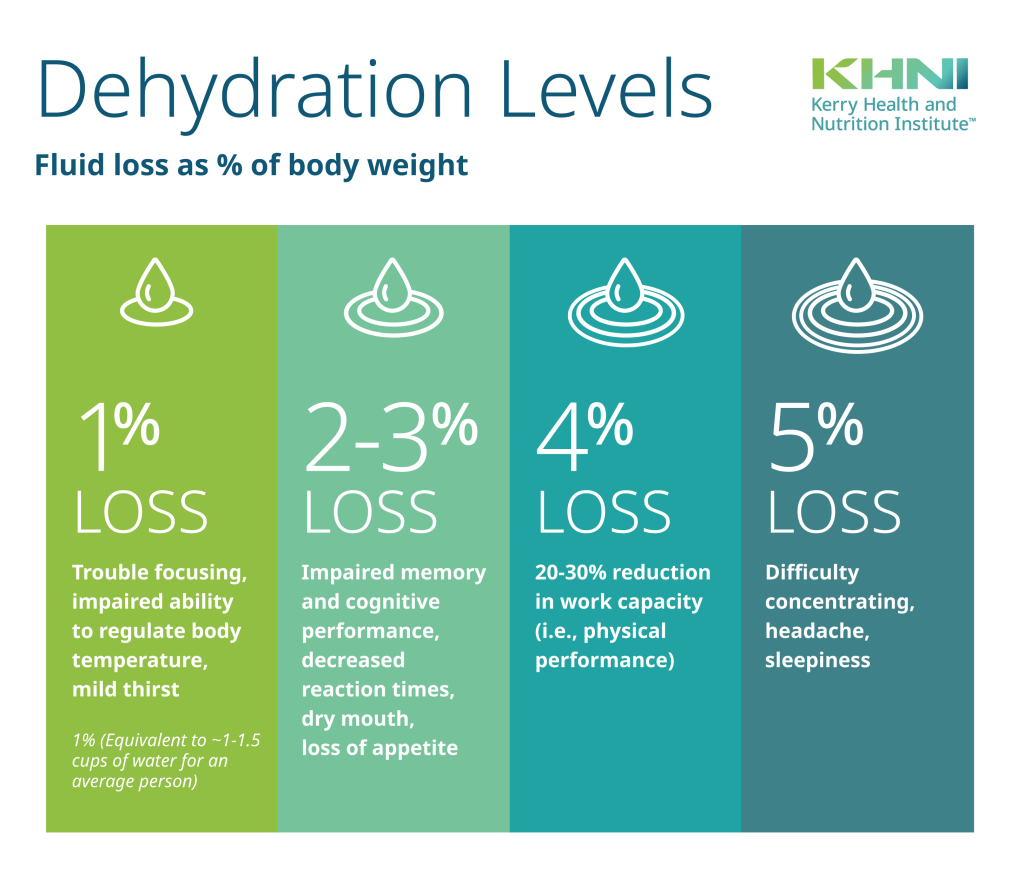
Even mildly hypohydrated individuals (1-2% fluid loss) have shown impairments in cognitive performance. This means not being fully hydrated can affect short-term memory, ability to focus on tasks or on mood5.
For example, a study conducted in school-age children found that children with better habitual hydration showed better cognitive flexibility than children who were less hydrated and providing a water intervention led to improved task-switching capabilities6,7.
Hydration and the Gut
Hydration status can also impact bowel movements. Bowel issues such as diarrhoea can cause our body to lose water via loose stools. Patients that suffer from chronic diarrhoea can also lose important electrolytes in the process.
When we are re-hydrating post-diarrhoea, electrolytes that have been lost must be replenished. The WHO have created an Oral Rehydration Formula containing different substances such as glucose and sodium to help with this, which is often used when children have diarrhoea8.
How the Body Hydrates Itself
The body always wants to be a constant state of physiological balance. This is known as homeostasis.
When the body senses that the fluid balance is off, a deficit for example, it moves stored water outside of the cells to regain an equilibrium.
Similarly, if the body feels that it is overhydrated, the opposite occurs and the kidneys help excrete the excess water. The kidneys play an important role in maintaining the fluid balance of the body by producing concentrated urine when we are dehydrated to conserve water (that is why we have dark urine when we are dehydrated).
The body also tries to re-hydrate itself by sending signals to the brain to indicate that feeling of thirst.
How Hydration Changes Through Ageing
Dehydration is the most common fluid complication amongst the elderly.
This is a result of a diminished thirst sensation, decreased muscle mass (therefore giving a decreased body fluid composition) and older adults have less of an ability to produce more concentrated urine to preserve low fluid levels in the body.
Along with have a reduced thirst sensation some older people have trouble swallowing, therefore thicker fluids may be required to hydrate themselves.
Many older adults with swallowing issues do not enjoy the texture of thickened liquids and this could contribute to a reduction in fluid consumption for these groups9-11.
Role of Electrolytes in Hydration
Electrolytes also play an important role in hydration and they can be found in foods and beverages, so nutrition can play a role in hydration status as well.
Electrolytes are substances that break down into positive or negative charges when dissolved in water. Some examples of electrolytes include sodium, potassium and chloride.
These electrolytes work together to create channels of communication within the body to conduct actions such as nerve impulses and muscle contraction12,13. Sodium and potassium have a positive charge whilst chloride has a negative charge.
Sodium and chloride are found in the fluid outside of cells and potassium is found in the fluid within cells. Chloride works hand in hand with sodium to transport substances in and out of cells.
As sodium is positive and chloride is negative, the charges cancel each other out to ensure that a neutral charge is maintained, this is known as charge neutrality14. Both sodium and chloride can often be found in savoury foods containing salt. The chemical name for salt is sodium chloride.
Often excess salt consumption is discouraged as it plays a role in high blood pressure, but sodium and chloride play crucial roles in fluid balance. This is because the regulation of salt and water balance in the body is highly inter-connected.
Water is known to follow salt; this can contribute to the regulation of blood pressure and thus fluid balance15.
Another nutrient that plays a role in fluid balance is potassium. Potassium is often found in fruits and leafy green vegetables.
Potassium and sodium work together to help us transport fluid where it is needed the most16.
Beverages to Help Hydration
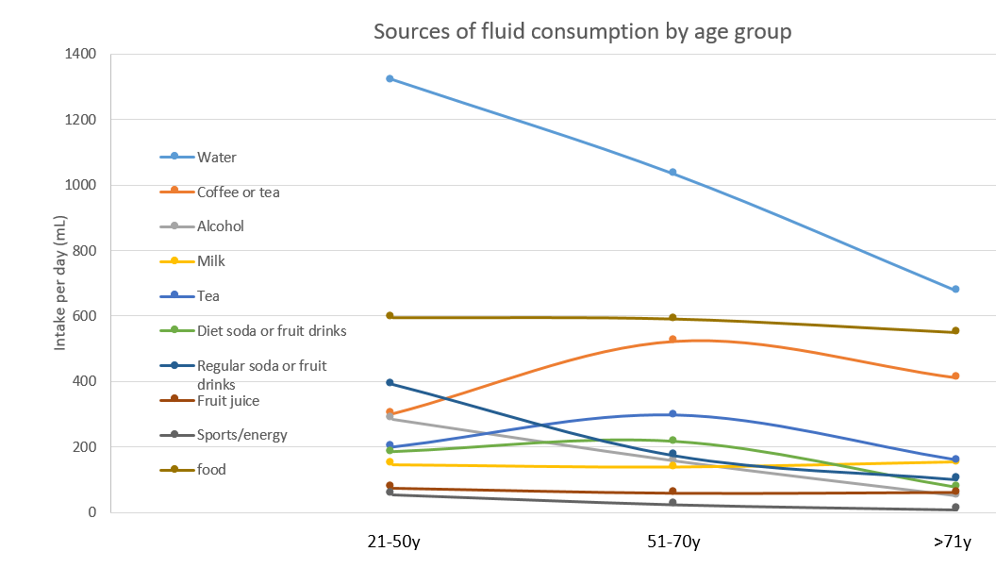
Recommendations are to drink approximately 6-8 glasses of water per day to maintain good hydration. Water is a solid choice to maintain hydration, but all beverage consumption can contribute to good hydration.
Teas and coffees can also help with hydration. Although previously thought to exacerbate dehydration because of the diuretic effect of caffeine, these alternative options have been shown to ultimately push toward a more hydrated state17.
Fortified milk can be useful as a hydrating solution as it contains vitamins and minerals such as Vitamin D and calcium.

Hydration and Activity
Also, to note that depending on the activity, more or less fluid may need to be taken. T hose that play soccer or rugby might have a higher risk of hypohydration as the alternate pauses can sometimes interfere with the opportunity to rehydrate.
When sweating a lot during activity, sports drinks may be a more suitable choice to rehydrate as the electrolytes within them can help the body retain fluid and give us energy.
Post activity, milk can also be a good rehydration choice as along with the hydration properties, the protein found in milk can contribute to building and retaining muscle. It is always important to continue to rehydrate yourself when carrying out physical activity18.
Conclusion
Staying hydrated is very important for overall health and well-being. Hydration is key to maintain all of the bodies process and we must not take it for granted.