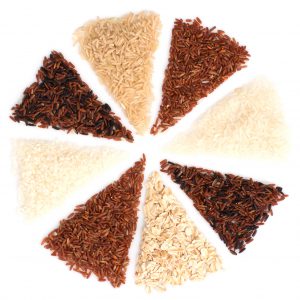
Whole grains are a staple of many global dietary recommendations, but most grains people consume are refined grains due to taste, texture, and ease of use in many applications.
A new study published in The British Medical Journal found that consuming a high number of refined grains, such as croissants and white bread, is associated with a higher risk of major cardiovascular disease, stroke and death.

The Prospective Urban Rural Epidemiology (PURE) study has been examining diets from diverse populations in low-, middle- and high-income countries around the world. Over 16 years of analysis of 137,130 participants in 21 countries, including Canada, the researchers found the intake of refined grains and added sugars have greatly increased over the years.
Grains were categorized into three groups: refined grains, whole grains and white rice.
Refined grains included goods made with refined (e.g. white) flour, including white bread, pasta/noodles, breakfast cereals, crackers, and bakery products/desserts containing refined grains.
Whole grains included whole grain flours (e.g. buckwheat) and intact or cracked whole grains (eg. steel cut oats).
The study found that having more than seven servings of refined grains, or over 350 grams, per day was associated with a 27 per cent greater risk for early death, 33 percent greater risk for heart disease and 47 per cent greater risk for stroke.
“This study re-affirms previous work indicating a healthy diet includes limiting overly processed and refined foods,” says Lear.
No significant adverse health effects were found with consuming whole grains or white rice.
Examples of Refined Grains
Refined grains were defined in the study as wheat grain products or flours that have been modified to remove the bran and germ from the grain. Refined grains are commonly found in the following foods:
- White bread
- Pasta/noodles
- Breakfast cereals
- Crackers
- Bakery products/desserts
- Tortillas
- Grits
Why is Refined Grain Intake Linked to Poorer Health?
Processing grains to remove the bran and germ layers removes the fibre, vitamins, minerals, and other components potentially linked to health from the grain.
This means that the numerous health benefits associated with whole grain intake, like heart health, digestive health, immunity, and weight management, are not found in foods made with refined grains.
The study suggests eating whole grain foods like brown rice and barley, and having fewer cereal grains and refined wheat products, can improve health. Reducing one’s overall consumption of refined grains and having better quality carbohydrates is essential for optimal health outcomes.
Currently, whole grain intake is much lower than recommendations globally – many people in developed countries consume less than 1 serving of whole grains per day.
How to Increase Whole Grain Intake
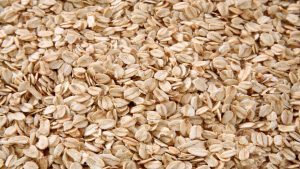
Replacing refined grains with whole grains in the foods people eat day-to-day is an important way the food and beverage industry can improve public health.
Major opportunities to replace refined grain with whole grains include:
- Burger buns, sandwich bread, and tortillas
- Desserts
- Pizza crust
- Savoury snacks
However, taste and texture are major barriers to whole grain consumption, so the solution is not necessarily to just replace a food like white bread with wheat bread.
Creative ways to get whole grain servings into foods people are already eating may be more successful. For example, oat-based dairy alternatives are becoming more common.
Using raw materials that do not remove the bran or germ from the oat can help deliver whole grain servings to people choosing oat-based dairy alternatives.
Other examples could be using a whole grain quinoa or amaranth as a base for snack foods, or incorporating a whole grain into a pizza crust.
Whole-grain consumption seems to have cardiovascular benefits in adults, but not as much is known about whole-grain benefits in children.

Most of us eat do not eat enough wholegrains to get the health benefits from the whole range of nutrients they contain such as fiber, B vitamins, essential fatty acids, protein, antioxidants and other micronutrients with health benefits. In a recent observational study, researchers measured associations between whole grain intake and health in children. The researchers found that higher whole grain consumption was associated with lower serum insulin (one of a few markers used to measure metabolic health) in the population of 8- to 11-y-old Danish children. Furthermore, whole grain oat intake was linked to improved measures of fat mass, systolic blood pressure, LDL cholesterol, and serum insulin. In other words, whole grain oat consumption may protect cardiovascular health and decrease diabetes risk in children.
There are many challenges in getting kids to eat whole grains, such as taste and texture. Identifying innovative ways to deliver whole grain servings in convenient, tasty ways to kids becomes increasingly important as the evidence for health benefits piles up. Parents can also help their kids eat healthier through modeling behavior, which is discussed in our blog Turning Fussy Young Eaters into Foodies.
Looking to protect your heart health? A new study published in the British Medical Journal found that a gluten-free diet is not the answer, assuming you do not have Coeliac Disease.
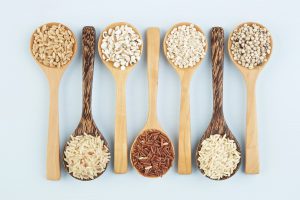
These days, gluten-free diets have become a popular trend. Although Coeliac Disease rates are not “on the up” (less than 1% of the population has the disease – read our Gluten-Free FAQ – Science Based Nutrition), the number of consumers eating gluten-free foods is continually increasing. However, what are the long-term effects of this trend? A recent study has highlighted that long term consumption of gluten is not associated with risk of heart disease. On the other hand, avoiding gluten in the diet could lower wholegrain intake which, in turn, could increase the risk of heart disease. Researchers concluded that the promotion of gluten-free diets among people who do not have coeliac disease should not be encouraged.
Although many consumers choose gluten-free diets for reasons other than heart health, this study shows that the gluten-free diet may not be the ‘magic bullet’ some proponents make it out to be. Whole grains are part of healthy diet recommendations worldwide. Whole grain versions of gluten-free ancient grains like quinoa, millet, and sorghum are an excellent way to deliver the health benefits of whole grain to those choosing gluten-free diets. By using these types of whole grain ingredients in gluten-free products, food manufacturers can help deliver the health benefits consumers may expect from gluten-free foods.
Ancient Grains are a group of grains from plants like quinoa, millet, and sorghum. Consumer demand for ancient grains has grown fast, in part, because of consumers’ perceived “sensitivities” to grains that contain gluten. According to new research in the International Journal of Food Sciences and Nutrition, eating bread made with ancient grains as part of a healthy diet could help reduce cholesterol and blood glucose levels, which are the main risk factors for cardiovascular disease (CVD). The study doesn’t prove that ancient grains prevent CVD, but that they may help reduce the risk factors.