The word ‘Kokumi’ combines the Japanese words koku (richness) and mi (taste) and it is a sensory concept that has long been recognised in Japanese cuisine.
While it is often described as a taste sensation, Kokumi differs from the five basic tastes—sweet, sour, salty, bitter and umami—because it does not deliver a distinct taste on its own. Instead, kokumi enhances existing flavours, increasing perceptions of richness, mouthfeel and overall flavour depth1.
Kokumi is commonly associated with foods such as aged cheeses, fermented products, yeast extracts, wine and slow-cooked dishes. These foods are often perceived as more satisfying and succulent due to the presence of kokumi-active compounds.

Interestingly, garlic has also been mentioned in early kokumi focused research as Ueda et al.2 reported that water extracts from garlic enhance umami taste intensity.
How food tastes is one of the most important aspects when it comes to consumer food choices and preferences. This may be a contributing factor to the increased fascination with taste modulators such as kokumi in recent years.
What is the Science of Kokumi?
Kokumi acts as a flavour enhancer and is unlike umami, which is a distinct taste perception by itself. Kokumi peptides amplify characteristics such as fullness, body and lasting flavour, working alongside umami, sweetness and saltiness to create a more rounded sensory experience1.
Research suggests that compounds such as glutathione and γ-glutamyl peptides contribute to kokumi perception1,3. These compounds are generated during ageing, fermentation and cooking processes, which helps explain why matured cheeses, fermented foods and slow-cooked stews develop greater flavour complexity over time.
At a physiological level, kokumi substances are believed to interact with calcium-sensing receptors (CaSR) on taste cells4, that transmit signals to our brain. Activation of these receptors enhances other taste signals, increasing perceptions of thickness, continuity and flavour intensity rather than creating a new taste quality.
Studies have shown that there is a correlation between the amount of calcium-sensing receptor activity and the intensity of richness associated with kokumi5,6.
Why Kokumi is Important for Food Innovation
Kokumi has attracted growing interest within the food industry because of its potential to improve taste while supporting both clean-label product development and sodium reduction strategies.
Product Application and Clean Label Solutions
The development of plant-based alternatives to animal-derived foods has accelerated in recent years, driven by sustainability and health considerations.
However, many plant-based products, including meat and dairy alternatives, often provide lower perceptions of taste continuity, flavour richness and overall mouthfeel compared with their animal-derived counterparts1. These sensory limitations can negatively affect consumer acceptance and repeat purchase.
As taste-modulating compounds, kokumi substances have attracted interest for their potential to enhance flavour complexity and positive sensory attributes, including mouthfeel and overall flavour intensity, thereby helping to more closely replicate the sensory characteristics associated with animal-based foods7,8.
Research has shown that γ-glutamyl peptides contribute to kokumi perception and are associated with increased CaSR activation in products such as dry-cured ham7,9,10.
In addition, plant-based meat analogues formulated from legumes may exhibit undesirable bitter notes and several kokumi-active compounds have been reported to suppress bitterness while enhancing overall flavour perception11,12.

Together, these properties suggest that kokumi ingredients could improve the sensory quality and consumer appeal of plant-based food products13.
Furthermore, the combination of kokumi compounds with appropriate flavour systems may help deliver savoury sensory characteristics comparable to those found in conventional meat products14.
However, the effects of kokumi substances are highly dependent on the food matrix in which they are incorporated. As flavour modulators rather than primary taste contributors, their impact on sensory perception can vary considerably between products, making their functionality difficult to predict across different food systems.
Further application-focused research is therefore needed to better understand and optimise their use in plant-based formulations.
Reformulation – Sodium Reduction
Because kokumi substances enhance taste intensity, they are considered useful for addressing public health issues such as reducing salt, fat and sugar intake1,15.
Given increasing consumer interest in healthier food choices, their application may help overcome key sensory barriers associated with reformulation and facilitate efforts to improve dietary health outcomes1.
The need to reduce sodium in food products while maintaining consumer-acceptable sensory quality has driven interest in taste-modulating peptides, especially kokumi15,16.
γ-Glutamyl peptides, a key class of kokumi-active compounds, have been shown to enhance saltiness perception17.
Growing evidence from application-focused studies suggests that the addition of kokumi-active and saltiness-enhancing peptides at low inclusion levels can partially offset reductions in salt while maintaining sensory acceptability and overall product palatability15.

As taste perception naturally declines with age, maintaining the palatability of foods becomes increasingly important to support adequate food intake and help reduce the risk of malnutrition.
Older adults often experience diminished sensitivity to taste, which can encourage the addition of extra salt to enhance flavour. Consequently, kokumi has the potential to reduce salt intakes in this population cohort, which may improve their heart health outcomes.
However, translation of these findings into food applications remains limited15. Published studies have predominantly evaluated kokumi ingredients in savoury liquid and semi-solid matrices, including broth-like systems, selected meat products, sweet beverages and reduced-fat foods1.
A more comprehensive understanding of the mechanisms through which kokumi peptides enhance saltiness perception is needed to inform the rational design of sodium-reduced foods.
In parallel, evaluation of their flavour interactions, stability during processing and safety in diverse food systems will be important to support wider commercial application.
On 30 April 2026, the Kerry Health & Nutrition Institute (KHNI) hosted an expert scientific webinar on Megatrends Shaping Tomorrow’s Food. The panel featured the KHNI Scientific Advisory Council: Professor Imed Gallouzi, Dr Lisa Ryan and Professor Martin Bloem.
A central theme was longevity—defined not simply as living longer, but as enabling people to remain cognitively sharp, physically active and independent throughout extended lifespans.
The panel highlighted key nutrients that contribute to healthy aging, and that approaches to longevity differ significantly across socio‑economic groups, influencing both affordability and access to nutritious foods. Therefore, equitable longevity solutions must consider these disparities.
With the rapid rise of GLP‑1 medications, the panel discussed both their benefits and emerging concerns. The panel outlined nutrients and food formats that may be particularly supportive for GLP‑1 users. This led to a broader conversation about food processing.
While often viewed negatively, processed foods remain a practical necessity and an essential source of nutrition for many populations.
The panel also examined how AI and emerging technologies—such as wearables and smart health systems—are reshaping personalised nutrition. These tools may help individuals monitor stress, understand their nutritional needs and tailor dietary choices to their lifestyles.
However, the speakers stressed that the value of these tools depends entirely on the quality, accuracy and representativeness of the data that underpins them. As technology accelerates, ensuring robust, high‑quality data will be critical for delivering meaningful health outcomes.
To close the webinar, just before the Q&A session, each member of the Scientific Advisory Council shared a final take‑home message for the audience.
Professor Martin Bloem emphasised the importance of simplicity—whether in health or nutrition, consumers need straightforward practical solutions to help them stay healthy.
Dr Lisa Ryan highlighted that optimal health relies on both good nutrition and regular physical activity.
Professor Imed Gallouzi underscored the potential of technology, noting that emerging tools can support better eating habits, healthier routines and improved overall lifestyle.
The KHNI Health and Nutrition Megatrends, now in its eighth edition, highlights the scientific, technological, and consumer-driven changes redefining global food systems.
Reformulation has become a vital strategy for companies striving to remain competitive while tackling diverse challenges.
It draws on science and innovation to reimagine product processing and composition, delivering healthier, more sustainable, and cost-efficient options that don’t compromise on taste or convenience.
With consumers expecting more from what they eat and keeping a closer eye on affordability, reformulation has become a non-negotiable strategy for food and beverage companies seeking to succeed in today’s complex and fast-moving market.

By prioritising cost efficiency, health-focused innovation, and waste reduction, businesses can better manage sourcing, supply chain, and trade challenges while delivering profitable, high-quality products that align with the expectations of health-conscious consumers.
As reformulation increasingly shifts from a competitive advantage to an industry requirement, manufacturers have a timely opportunity to act now and position themselves ahead of the curve.
To read more click on: The Future of Food: Reformulating for Sustainable Nutrition – Food Industry Executive
On October 15th, 2024 experts gathered for an informative webinar exploring Taste Modulation and how it can be used to support positive nutrition. You can watch this full webinar by clicking the video above!
David Deeley begins the webinar (at 1:29) highlighting the importance of the consumers’ needs and wants in an ever-evolving world of human nutrition. With upwards of 49% of consumers desiring science-backed ingredients, industry leaders need to create functional products that provide health benefits to the consumer.
Using the concept of “Vitality Unlocked” (at 8:18), David explains how consumer behaviour has evolved significantly.
He went on to explain the three categories that make up this concept as well as real-life industry examples:
- Blurred Lines (at 10:48)– how the line between dietary supplements and traditional food and beverage are increasingly blurred.
- Functional Pleasure (at 12:39)– how consumers are looking to implement functionality to indulgency.
- Personalised Therapy (at 14:57)– the need for instant gratification and on-demand functional therapy.
In today’s market, consumers are now less fearful of illness and are more price sensitive.
Despite this, they continue to purchase health and wellness products, often willing to trade up for quality over the lowest-priced options. Beyond the health benefits, 59% consumers also want products that taste good.
This poses a unique challenge for the industry: How can food, beverage, and supplement producers add the functionality without sacrificing on taste?
The answer is the science of Taste Modulation.
Dr. Alex Woo dives deeper (at 20:56) into what taste modulation is and how our bodies perceive taste. The technology is used to either increase, decrease, or modify taste detection at the receptor level or in the brain’s perception.
Dr. Woo highlights four main methods of taste modulation:
- Sweetness Modulation (at 23:44) – explaining how sweeteners bind to locations on receptors and influence perception. He also highlights seven key types of modulators.
- Salty, Umami, and Kokumi modulation (at 27:46) – explores saltiness and how to make product products taste saltier without adding more salt (negatively impacting nutrition).
- Supplements and Alcohol Modulation (at 30:31) – delves into how to utilise taste modulation for supplements that may cause off-odours, off-taste, and off-mouthfeel. Additionally, covering off on how to recreate the alcohol taste/feel for zero and low alcohol beverages.
- Bitterness Blockers (at 32:51) – which deep dives into how our body detects/perceives bitterness and what types of modulators can be used to block this.
Dr. Woo finishes his section (at 37:00) highlighting the importance of taste modulation for the future of the food industry and how scientists will need to utilise this to ensure foods, beverages, and supplements are delivering positive nutrition to consumers.
Katherine Fogerty closed out the webinar (at 38.45) discussing practical applications for the use of taste modulation.
Through her work she was able to discuss three successful case studies in which she was able to utilise different taste modulation techniques to enhance products nutritionally, as well as support the need for sustainable practices:
- Addressing salt enhancement through molecular techniques (at 40:33)
- Utilizing Waste Streams by repurposing spent coffee grounds to mask bitterness. (at 44:31)
- Mimicking Animal fat to create a sustainable, vegan, and regulatory friendly taste modulator (at 47:32)
Finally, ending the webinar was a lively Q&A session (at 51:42) where viewers were able to ask questions such as how consumer perceptions have changed over the years, specifics on taste modulation compounds, and further questions regarding the case study.
From this webinar, it’s clear that as consumer knowledge on nutrition continues to expand, the expectation for nutritious food with great taste and flavour also rises. At the same time, sustainability and market trends continue to drive innovation and set the stage for the future of nutrition, demonstrating the essential need for taste modulation.
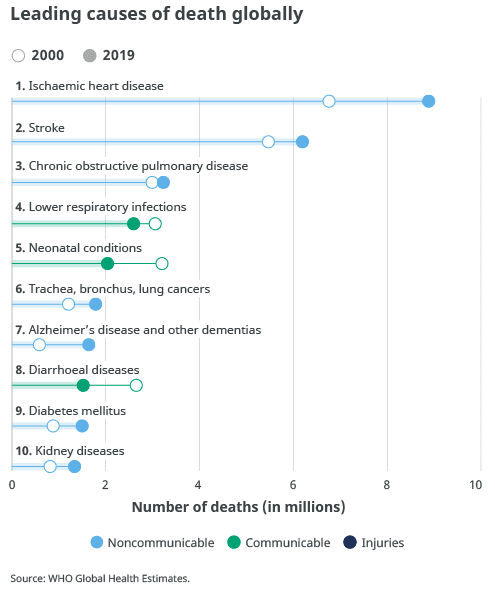
Diseases like heart disease, diabetes, cancer, and stroke are leading causes of death worldwide. Poor diet, including overconsumption of saturated fat, trans fat, sodium, and sugar, are linked to increased risk of these diseases. For example, one quarter of deaths in Europe are attributed to poor diet. Despite decades of effort to educate global populations on the link between poor diet and preventable death, these nutrients are still overconsumed in most developed countries.
One strategy to improve public health is to reformulate foods to be healthier, which can have an effect at a population-level and does not necessarily rely on individual behaviour change to improve health. This can be initiated voluntarily by the food and beverage industry. For example, some companies have set public goals for reducing a nutrient like sodium in their foods by a certain percentage over a time period. In some parts of the world, reformulation is mandated. Greater improvements in sodium intakes have been shown in countries where is it mandatory rather than voluntary.
A recent scientific review titled “What is the impact of food reformulation on individuals’ behaviour, nutrient intakes and health status? A systematic review of empirical evidence” summarises our existing knowledge of how effective food reformulation can be as a public health strategy by analysing results of 35 published studies.
Results from the review
The review analysed results from 35 published studies on food reformulation.
Consumers were accepting of reformulation of foods in the marketplace

A promising finding was that consumers still purchased reformulated products, meaning they didn’t specifically avoid foods formulated to be healthier. 22 different studies showed improvements in the nutrient content of the average consumer basket (total food purchased from a store).
81% of studies showed positive results for consumer acceptability of reformulated foods, based on comparing sales/purchases of the reformulated product before and after reformulation
Reformulation improved nutrient intake
73% of studies showed that reformulation improved nutrient intakes of consumers
Sodium reformulation led to a decrease in sodium intake between 4%-15% per year, depending on study population. Analysing studies from Europe and the US, the review found that daily population-wide salt intake after reformulation was 0.57g lower than before (equivalent to 221mg sodium), or equivalent to around 10% of the daily limit of 5 grams per day recommended by the World Health Organisation.
Trans fat reformulation led to decreased intakes of 38-85%. This value is much higher than sodium because mandated trans fat reformulation laws require drastic reductions due to its clear link to heart disease. Partially hydrogenated oils, which are the main source of artificial trans fat in the diet, are not considered safe for the food supply in the United States, for example. In Europe, there is a maximum limit of 2 grams of trans fat per 100 grams of total fat in a food.
Trans fat reformulation and decreased mortality
Of the 6 studies which measured the impact of nutrient intake on morbidity or mortality rates, 5 showed a positive effect on reducing mortality
Five of the studies measuring effects on health status looked at trans fat reformulation and found that reducing trans fat in the food supply led to a reduction in mortality of 4.3-6.2%.
Sodium reformulation led to an improvement in blood pressure measurements in the UK. These findings show promise for nutrient reformulations to affect public health in a positive way.
Challenges for nutrient reformulation
Taste
Reducing nutrients that contribute strongly to the taste of a food or beverage, like sodium or sugar, without reducing consumer liking is the main challenge when it comes to nutrient reformulation.
For sugar, low-calorie sweeteners can drastically reduce total sugar content of a food or beverage. However, these sweeteners have their own challenges. They have poor perception among many consumers, and also bring their own flavour off-notes with them. They are also not recommended as a long-term strategy for reducing sugar content in foods by authority publications like the Dietary Guidelines for Americans.
Sodium reduction faces similar challenges because alternatives to sodium, like potassium chloride, also have off-notes. Many companies will slowly decrease sodium content in foods over a period of years because sodium sensing is adaptive. In other words, the less sodium someone is used to tasting, the less they need in a food to stimulate the same salty sensations. Gradually reducing sodium over time will be unnoticed by many consumers, as a result.
Flavour modulation, which can enhance the inherent sweetness in sugar, mask off-notes, or enhance mouthfeel or saltiness, is a great tool for nutrient reformulation. This technology is one way to reduce sugar without requiring low-calorie sweeteners or to mask notes of sodium or sugar alternatives.
Functionality
Sugar, sodium, and certain fats have roles in food beyond taste. Both sugar and sodium can have roles in food safety, as well as important roles in chemical reactions for many baked foods. These nutrients also have roles in moisture migration, shelf life, etc. Finding ways to minimise the impact of nutrient reformulation requires a system-level approach and in-depth expertise in food science and applications.

Fibres are seeing some popularity in low-sugar foods and beverages because of their ability to contribute bulk and mouthfeel, as well as sweetness in the case of some fibres. Fibre is under-consumed in many populations, so this could have additional benefits to public health.
Consumer perception
Due to the taste and functionality challenges listed above, many consumers will associate nutrient reformulations with less taste.
“Consumer acceptance is a key driver of the effectiveness of reformulation in changing dietary intakes, in the absence of which unwarranted substitutions may take place.”
The review summarised in this article found that, despite having high consumer acceptance, compensation for the nutrient content of reformulated foods did occur. Some studies did not find a link between reformulation and decreased intakes, or smaller decreases than predicted.
This happened more often when reformulation was noticed by consumers, possibly due to it being advertised on a package. Silent reformulation is one strategy that could be used to reduce the effect of compensation.
The study’s findings encourage future reformulation efforts
“Given the challenges involved in changing behaviours and food choices, reformulation can provide the means to improve dietary intakes and health by changing the environment in which people make their food choices. Nonetheless, the success of reformulation as a public health strategy crucially depends on the breadth of products reformulated and the extent to which they are reformulated.”
The study did not address energy density or calorie reduction, which is another reformulation initiative that is important to address the global obesity issue. Developing knowledge in sensory science and food science is critical to the future of not only calorie reduction, but nutrient reformulation as a whole.