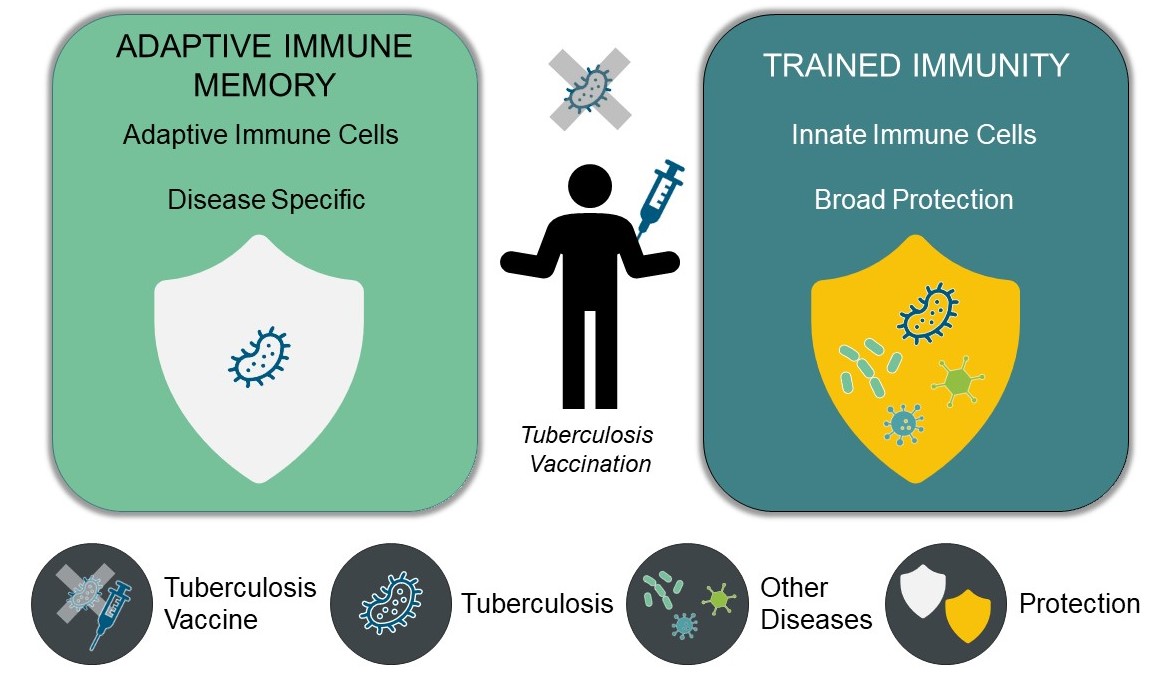
Almost 100 years ago when childhood mortality due to infectious disease was high, Dr. Carl Naslund noticed that Swedish children who received a tuberculosis vaccine not only were protected from tuberculosis but were three times less likely to succumb to any disease compared with children who were not vaccinated.
Decades later, this observation was noticed again, where vaccinated children in high-mortality areas of West Africa had a significantly lower mortality rate1.
In 2012, the mystery behind these observations was finally solved and a new type of immune protection was identified, which is now called trained immunity2.
The understanding of immune memory has been centred around the idea of targeted disease-specific approaches. The aim of a vaccine is to induce a disease specific memory in the adaptive immune system (memory T and B cells), which then can spring into action if an individual is exposed to that disease.
However, trained immunity research has been ground-breaking within the field of immunology due to its differences in immune memory.
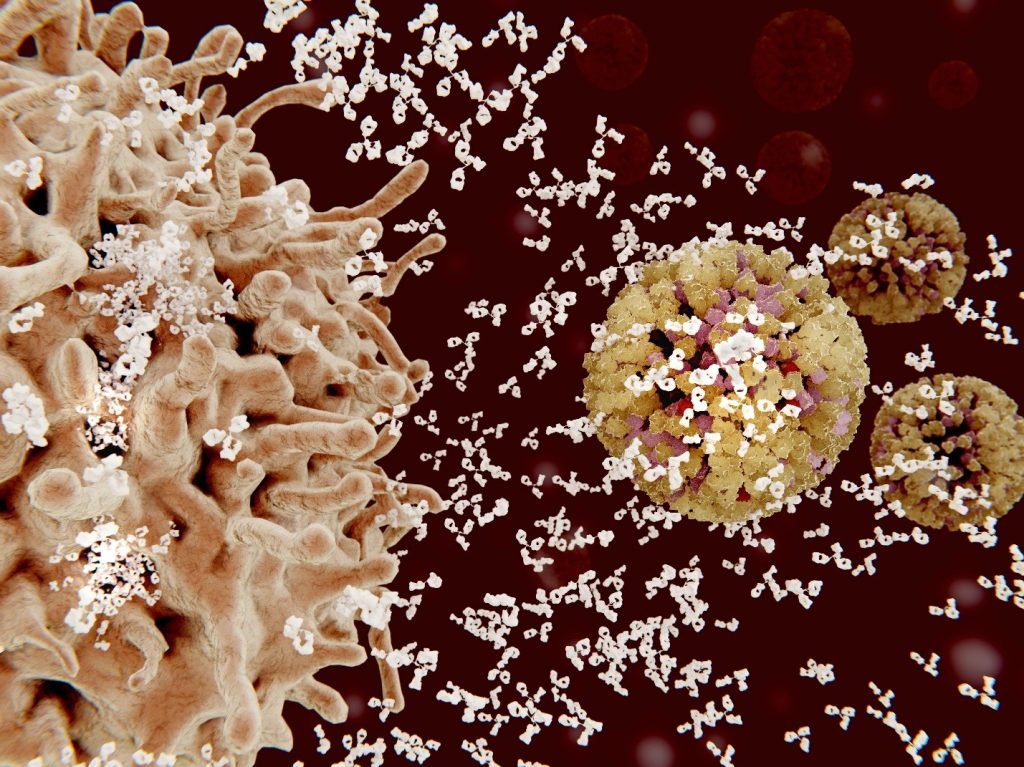
It revealed that cells of the innate immune system also have a kind of memory, although this memory works in a very different way and results in defence against a broad range of threats.
With the discovery of trained immunity, we now know that it is possible to also increase protection against multiple, unrelated diseases.
This important discovery has therefore presented new opportunities to bolster immune defences against a myriad of threats in a non-targeted manner; a new method to protect ourselves from future disease.
Moreover, research has recently shown that it is possible to induce trained immunity through food3.
How Does Innate Training Occur?
A growing body of research over the past decade has helped identify key mechanisms which explain how innate training occurs.
Innate training agents, such as the BCG vaccine2,4 and the adenoviral ChAdOx1 nCoV-19 vaccine5 are able to induce trained immunity via metabolic reprogramming and epigenetic modifications6.
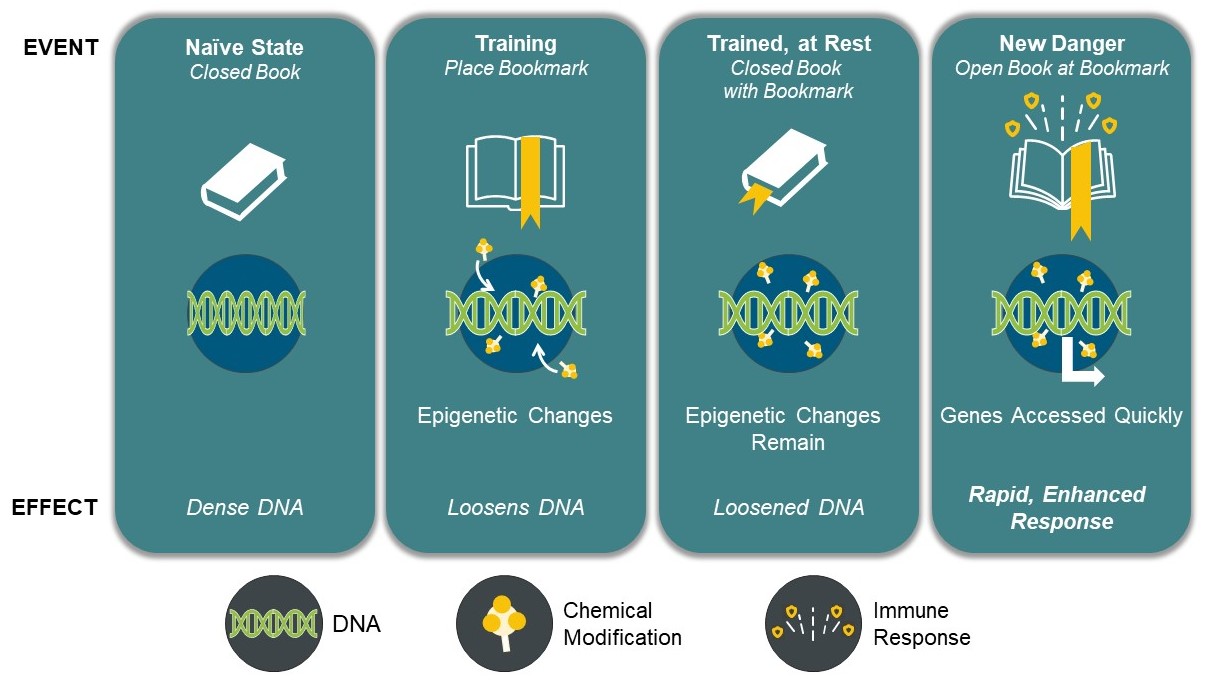
Epigenetic Changes – Placing a Bookmark
DNA contains instructions for making proteins, including proteins crucial for launching immune responses. However, DNA is a very tightly coiled structure where gaining access to the instructions required can take precious time.
Training stimuli, such as the BCG vaccine, in essence creates bookmarks in this instruction manual to be placed on crucial pages for launching immune responses.
This act of “placing the bookmark” is done via epigenetic changes; reversible chemical modifications to the DNA structure that loosen the DNA at certain sites, making the genes/instructions at those sites more easily accessible.
These epigenetic changes are made possible due to altered metabolism within the cell, which provides the materials for these chemical modifications to occur.
Consequently, when a subsequent danger is detected in future, the relevant pages/genes are more easily read, allowing an immune response that is more rapid and potent, compared with non-trained immune cells.
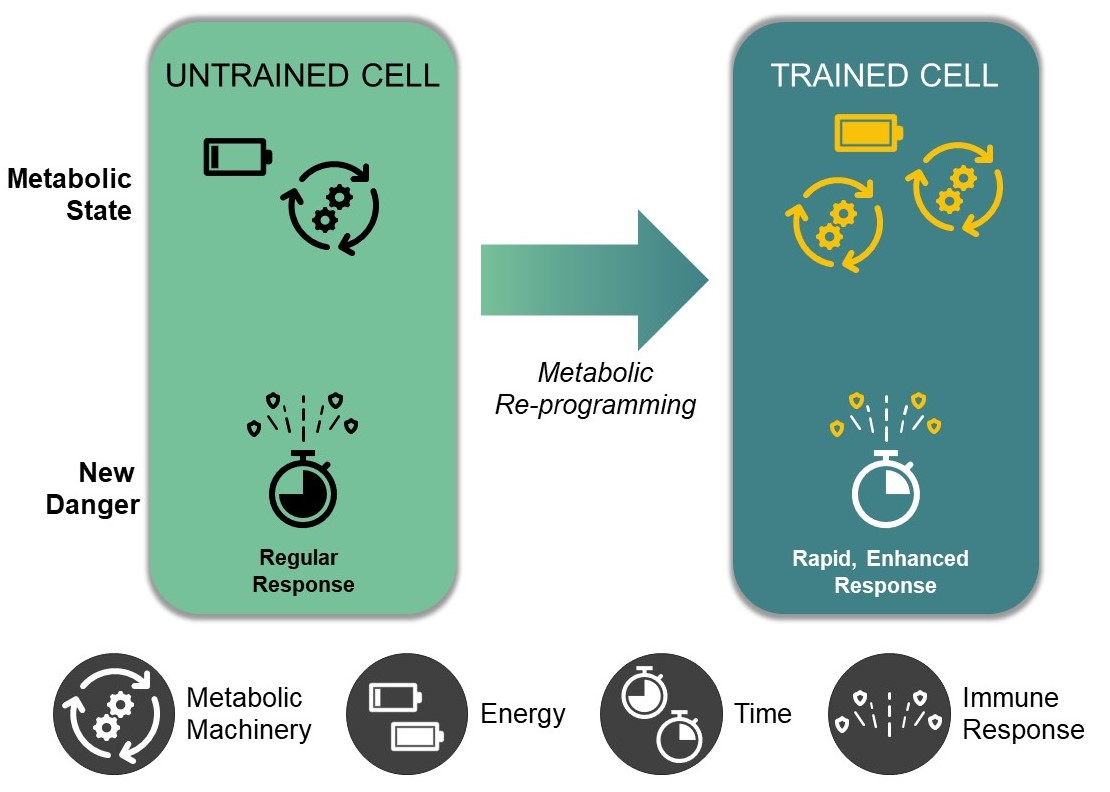
This more potent response is also possible due to metabolic reprogramming.
Metabolic Reprogramming – Meeting Energy Requirements
When an immune cell is activated as part of launching an immune response, processes engage which require a lot of energy and the production of numerous compounds, such as immune messenger signals.
These energy and production demands are met by metabolic machinery.
Innate training stimuli initiate metabolic reprogramming, which not only provides the necessary building blocks for epigenetic changes to occur to the DNA (“placing the bookmark”), but also increases the metabolic machinery available to the cell, to meet future energy and production requirements.
This could be seen as the trained cell building up its energy infrastructure to be better prepared for future challenges.
When a subsequent danger is detected, the innate immune cells can immediately spring into action, as this enhanced metabolic machinery is ready to meet the required energy and production needs, facilitating a rapid and robust immune response 7.
Is Trained Immunity Long Lasting?
A hallmark of the adaptive immune response is the induction of long-lived memory cells, which mobilise should a “memorised” danger appear again.
This is the type of memory targeted with a vaccine, to induce long-lived protection. Trained immunity has also been shown to last for several months, despite innate immune cells not living for very long.
Innate immune cells are replaced regularly, both by cell division and by influx of new cells, coming from hematopoietic stem cells in bone marrow.
These stem cells divide and mature into different types of immune cells, replenishing the body’s immune cells as needed.
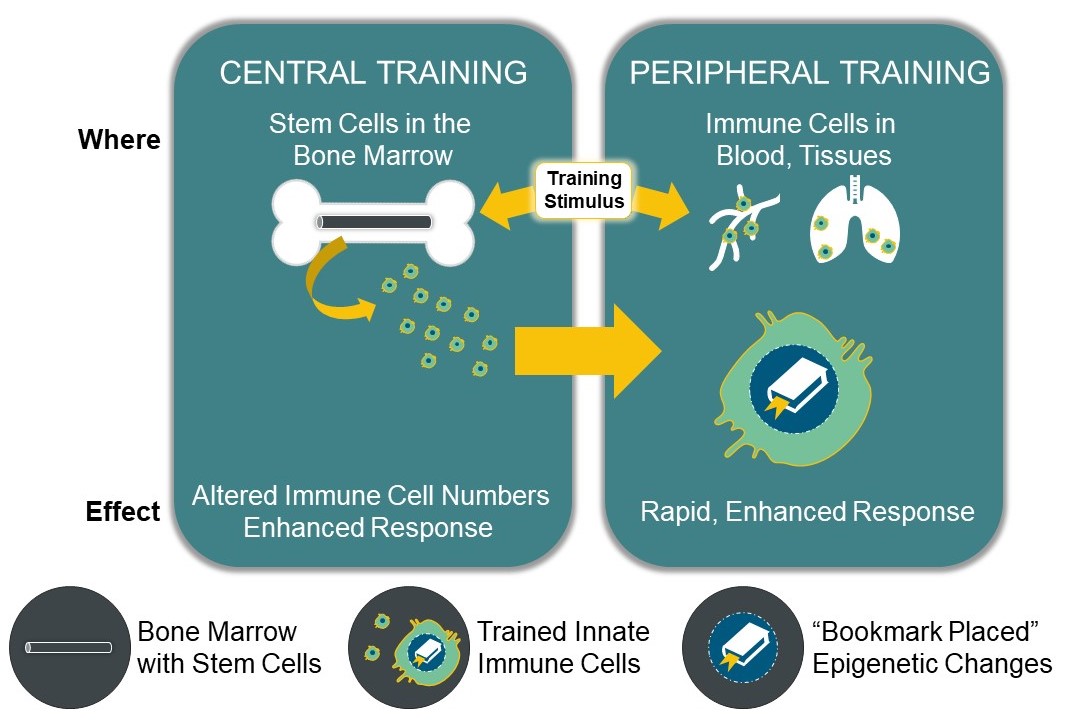
The explanation of innate training above has focused on individual innate immune cells coming across training stimuli and thus having a more efficient responses against subsequent dangers.
This type of trained immunity is known as peripheral trained immunity and is thought to be maintained, at least to a degree, by cell division – where epigenetic modifications (bookmarks) can be passed on to daughter cells8.
Although this is believed to contribute to the longevity of trained immunity, the core component is due to training of hematopoietic stem cells in the bone marrow, as identified by epigenetic changes therein. This is known as central trained immunity9.
How this training occurs is not fully understood, although certain immune messenger signals have been identified to contribute to this phenomenon.
It has also been postulated that stem cells may be able to detect danger signals, in a similar manner as innate immune cells, possibly leading to similar metabolic and epigenetic outcomes.
Because stem cells divide and become lots of different immune cells, their training can result in altered amounts of certain immune cells, as well as affect their responses.
For instance, central trained immunity induced by BCG vaccination, has been shown to result in a higher number of innate immune cells that are more effective at fighting off infections up to five months post vaccination, due to altered gene expression10.
Although studies have shown that innate training can be long lasting, there is an important aspect of this phenomenon that needs to be highlighted: it is reversible.
Epigenetic changes, placing bookmarks at relevant pages, are a core component of trained immunity, which are caused by chemical modification to the DNA.
However, these modifications can be reversed and the bookmarks consequently removed11,12. This is a highly dynamic feedback system, where the innate immune response is adapting to new information all the time.
Can The Immune Response Be Trained?
There are numerous substances and challenges that have been shown to cause trained immunity, such as the earlier mentioned BCG and adenovirus COVID-19 vaccines and more are being discovered all the time.
However, most identified innate trainers need to be either administered by medical staff or occur as the result of an infection/being sick, neither of which is ideal for day-to-day protection.
To both induce and maintain trained immunity, the most desirable approach is something an individual can eat or drink.
Fortunately, research suggests that certain functional/bioactive ingredients found in everyday food, beverages and dietary supplements may be able to induce and maintain this process of trained immunity.
For instance, food-safe whole beta glucan particles (WGPs) not only induce trained immunity in isolated innate immune cells (peripheral trained immunity) but also resulted in central trained immunity when ingested by mice3.
This discovery has opened new dietary possibilities to bolster defences against immune challenges.
Summary
There is growing enthusiasm in understanding the influence of diet and supplementation on the immune system.
These approaches include the use of probiotics to support balanced gut flora and the inclusion of essential nutrients, such as vitamin C, to maintain regular immune function.
What is exciting about the discovery of trained immunity and the possibility to induce it through diet, is that it enables next level immune protection.
As discussed herein, it is a recently discovered, natural enhancement of the innate immune defence, enabling the immune system to be at the ready for future challenges.