‘Fibremaxxing’ Unpacked
Anyone with a teenager is no stranger to the wave of curious trends that frequently emerge from social media, many of which revolve around the term ‘maxxing’. However, the latest term ‘fibremaxxing’ has caught the attention of social media followers and the food and nutrition community alike.
Protein has been such a huge trend that it has been difficult for other nutrients to get attention. But the world of social media moves quickly and within the last year there has been a wave of ‘fibremaxxing’ clips flooding social platforms, with influencers of all ages sharing their favourite ways to boost daily fibre intake.
As ever, these clips range from the sensible and inspiring through to the more extreme. Some engage in a type of ‘gamifying’ of fibre to ‘max out’ with the message becoming more about the game than health. But at its core, the message about fibre is grounded in evidence linking higher intakes to reduced risk of cardiovascular disease and several cancers1,2, especially colorectal cancer, as well as type 2 diabetes3.

The Good and Not-So-Good of ‘Fibremaxxing’
Table 1 summarises the pros and cons of ‘Fibremaxxing’. There is a significant gap between fibre recommendations and actual intakes in most western countries so any focus on increasing fibre through cereal-based wholegrain foods, fruit and vegetables, pulses, legumes, nuts, and seeds, is to be welcomed. However, if fibre intake is low, increasing consumption is best done gradually to avoid issues like bloating, cramping, constipation or diarrhoea.
Table 1. ‘Fibremaxxing’ Pros and Cons
Many types of insoluble fibre also bind water in the large intestine and an increase in fluid intake is needed for the fibre to do its work properly. Where dietitians and/or nutritionists have weighed in on this social media trend, these caveats are highlighted.
Counting fibre intake may initially help consumers identify their own fibre gap but this is best used short-term until healthy choices and habits become embedded. Getting caught up in obsessive tracking of fibre intake rather than enjoying a balanced diet is not the goal.
On the positive side, many ‘fibremaxxing’ posts are useful in calling out the benefits of fibre beyond ‘keeping you regular’. Previous research has shown that if individuals are regular in their bowel habits, they don’t feel the need to worry about fibre intake4, so it is important to clarify that regularity alone shouldn’t be the only goal. Inspiring social media posts that include tasty high fibre recipes can also help dispel the myth of fibre as ‘bland and boring’.
Some ‘maxxers’ attempt to ‘fix’ their fibre gap with the use of supplements. While supplements have their place, particularly if constipation is the issue5, the benefits observed from prospective cohort studies are based on consuming a diverse range of dietary fibres.
The good news is that ‘Fibremaxxing 2.0’ is on its way in 2026, according to Mintel, with consumers shifting from simply maximising intake to consuming a variety of fibres6. This is a positive progression of the trend, reflecting the science which shows that a diversity of sources is likely to be of most benefit.
How Much Fibre is Enough?
Fibre recommendations vary around the world but in general adults should aim for between 25-30g per day3,7,8, with fibre intakes for children and younger teens being lower and in proportion to their energy intakes. The US daily fibre recommendations from the Dietary Guidelines for Americans 2020-2025 are 22–28g for adult women and 28–34g for adult men, varying by age7.
Both the World Health Organisation3 and European Food Safety Authority (EFSA)8 recommend a minimum of 25g per day for adults based on normal laxation rather than a wider range of health benefits. In South Africa and India, recommended fibre intake ranges can be as high as 38-40g per day9. But conversations about “optimal” fibre intakes shouldn’t distract from the bigger issue: that most people aren’t getting enough in the first place and this needs to be addressed (Figure 1).
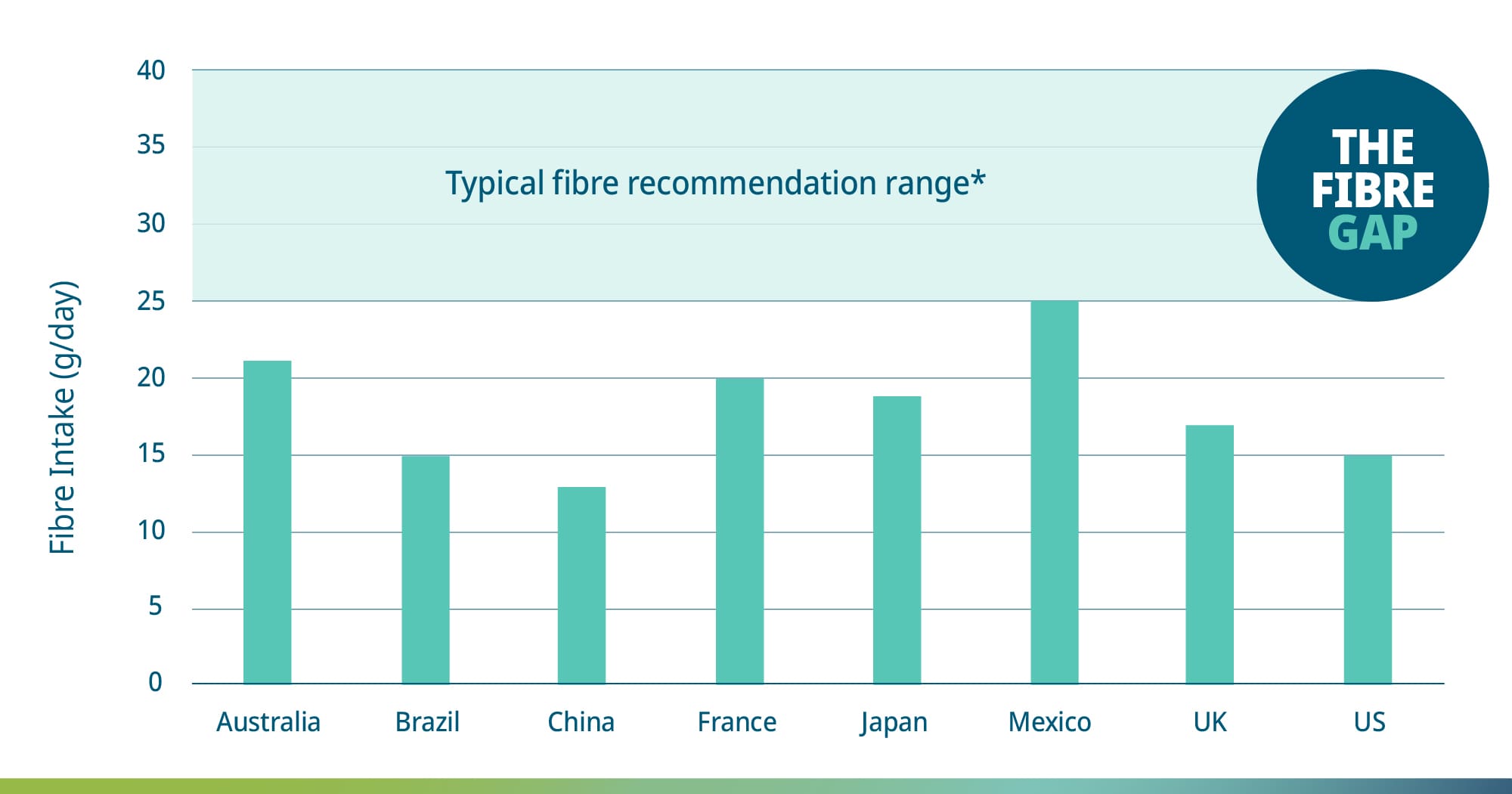
Figure 1. A fibre gap exists in many countries7,10-17
Diversity of Dietary Fibres
With its focus on a single fibre target, dietary recommendations may suggest that it is all about quantity, but the term dietary fibre covers a wide range of complex structures with different mechanisms of action. Fibres that are poorly fermentable, e.g. wheat bran fibre, help to decrease transit time in the gut promoting good bowel function18.
Fibres that are more fermentable act as a food source for the gut microbiota and produce metabolites which can be beneficial to health, e.g. short-chain fatty acids. Some fibres exert health benefits even before reaching the large intestine by slowing down the absorption of glucose19.
Emerging research shows that even small differences in the structure of the same fibre can create very different metabolic “fingerprints” in the gut20, which could one day help target health benefits, with more precise recommendations for different types of fibre. But for now, the smartest approach is simply to eat a wide variety of fibre containing foods21.
Harnessing the ‘Fibremaxxing’ Movement
Fibre Innovation for Food Industry
-
- Look at the overall nutritional profile when considering fibre fortification. With increasing nutrition literacy, consumers are savvy about products that offer a ‘health halo’ and question the levels of other less favourable nutrients including added sugars, saturated fat, and salt. Manufacturers aiming to make fibre claims should therefore also assess whether reformulation of other nutrients including saturated fat, sugars and/or salt is needed and/or address portion size offerings.
- Fibre can be leveraged to replace sugar or fat or to improve structure in gluten-free products and at 2 kcal/g (values may vary according to local regulations) it can contribute to a reduced energy value when replacing carbohydrates (4 kcal/g) or fat (9 kcal/g).
- Consider ‘upcycled’ sources of fibre that help reduce food waste, e.g. brewer’s grain. Any additional reasons to enrich with fibre, such as an improved environmental footprint or offering technical functions could offer an alternative way to justify any costs associated with fibre enrichment.
- Consider tolerance and format. Isolated dietary fibres are tolerated differently and have been well described22. Tolerance can also depend on the food format – whether the fibre is delivered in a drink, a solid food, or within a particular matrix – so consumer trials are often essential. Manufacturers face a real balancing act: adding a smaller, well-tolerated amount of fibre may only achieve a “source of fibre” claim, while adding enough to reach a “high in fibre” claim may risk digestive discomfort and reduce repeat purchase. In many cases, combining different fibres may offer a better solution by improving both tolerance and functionality. Clear communication of recommended serving sizes is also key to managing expectations and supporting a positive consumer experience.
- Check for any allergen considerations, e.g. wheat derived fibre.
Recommendations for Healthcare Professionals
-
- Fibre has been waiting a long time for its moment, and as interest in ‘Fibremaxxing’ grows, the responses from healthcare professionals need to be positive and constructive rather than focused on dismissing influencers – though some of the more extreme claims will inevitably need correction. When a patient is active on social media and their healthcare provider isn’t, recommending reputable suitably qualified dietitians or nutritionists online becomes especially important.
- Equally, it is worth bearing in mind that newer patients who are coming through with digestive complaints may well have been overdoing this trend and therefore worth exploring any recent changes in their diet.
- There is also a need for more effective public health messaging that offers clearer, more actionable guidance on the frequency, quantity, and quality of fibre-rich foods. For example, Australian researchers23 found that consumers responded better to specific recommendations – such as “consume legumes once per day” and “eat more than half of your grain foods from whole grain choices” versus more vague statements. The recent 2026 US Dietary Guidelines for Americans recommends prioritising fibre-rich whole grains (2 – 4 servings per day)24.
In Summary
‘Fibremaxxing’ may have emerged from yet another social media trend, but its value should not be ignored as it represents a long-overdue shift toward recognising the essential role fibre plays in long-term health.
The excitement surrounding high-fibre recipes and inspiring food swaps can be a powerful driver of dietary change, but the trend works best when twinned with evidence-based guidance, gradual increases in intake, and a focus on fibre variety.
For consumers, this moment offers an opportunity to rethink what fibre looks like in everyday eating – not as a bland add-on, but as a naturally rich element of wholegrains, legumes, nuts and seeds, fruits, vegetables, that can support health far beyond regularity.
For industry and healthcare professionals, it is a reminder that meeting people where they are, with clear messaging and products that prioritise both nutrition and enjoyment, will be key to closing the persistent fibre gap.
If the ‘Fibremaxxing’ trend continues to evolve towards a more balanced perspective, rather than extremes and quick wins – it has the potential to do what few nutrition fads achieve: create meaningful, sustainable improvements in public health.
Disclaimer: This article should not be considered as medical advice. For personalised health guidance, consult a qualified healthcare professional.
Contributor:
Yvonne Finnegan, PhD
Director of FINNE Nutrition & Regulatory Consultancy
 Dr Yvonne Finnegan helps companies navigate the complex areas of nutrition, health claims, sustainable diets, and food regulation within a commercial environment.
-
References
- Scientific Advisory Committee on Nutrition (2015). Carbohydrates and health. London TSO. Carbohydrates and Health.
- Veronese N, Gianfredi V, Solmi M, et al. (2025). The impact of dietary fibre consumption on human health: An umbrella review of evidence from 17,155,277 individuals. Clin Nutr 51: 325–333. DOI: 10.1016/j.clnu.2025.06.021.
- World Health Organisation (2023). Carbohydrate intake for adults and children: WHO guideline. Geneva: World Health Organisation. Licence: CC BY-NC-SA 3.0 IGO.
- Quagliani D, Felt-Gunderson P (2016). Closing America’s Fibre Intake Gap: Communication Strategies From a Food and Fibre Summit. Am J Lifestyle Med 11: 80–85. DOI: 10.1177/1559827615588079.
- Dimidi E, van der Schoot A, Barrett K, et al. (2025). British Dietetic Association Guidelines for the Dietary Management of Chronic Constipation in Adults. J Hum Nutr Dietet 38: e70133. DOI: 10.1111/jhn.70133. [Last accessed January 12, 2025]
- Mintel Announces 2026 Food and Drink Predictions.
- Department of Agriculture and U.S. (2020). Department of Health and Human Services. Dietary Guidelines for Americans, 2020-2025. 9th Edition.
- European Food Safety Authority (2010). Scientific Opinion on Dietary Reference Values for carbohydrates and dietary fibre. EFSA J 8: 1462. DOI: https://doi.org/10.2903/j.efsa.2010.1462.
- Miller KB (2020). Review of whole grain and dietary fibre recommendations and intake levels in different countries. Nutr Rev 78; 29–36. DOI: 10.1093/nutrit/nuz052.
- Office for Health Improvement and Disparities (2023). National Diet and Nutrition Survey 2019 to 2023 report https://www.gov.uk/government/statistics/national-diet-and-nutrition-survey-2019-to-2023/national-diet-and-nutrition-survey-2019-to-2023-report#executive-summary.
- Teh T, Ying Y, Schnor NPP, et al. (2024). Modelling the public health benefits of fibre fortification in the Chinese population through food reformulation. BMJ Open 14: e079924. DOI: 10.1136/bmjopen-2023-079924.
- Fayet-Moore F, Cassettari T, Tuck K, et al. (2018). Dietary Fibre Intake in Australia. Paper I: Associations with Demographic, Socio-Economic, and Anthropometric Factors. Nutrients 10: 599. DOI: 10.3390/nu10050599
- EU Commission (2021) Overview of dietary fibre intake across European countries.
- López-Olmedo N, Carriquiry AL, Rodríguez-Ramírez S, et al. (2016). Usual Intake of Added Sugars and Saturated Fats Is High while Dietary Fibre Is Low in the Mexican Population. J Nutr 146: 1856S–65S. DOI: 10.3945/jn.115.218214.
- Japanese Ministry of Health, Labour and Welfare (2019). The National Health and Nutrition Survey, Japan. https://www.nibn.go.jp/eiken/kenkounippon21/download_files/eiyouchousa/2019.pdf.
- Silva GMD, Assumpção D, Barros MBA, et al. (2021). Low intake of dietary fibres among the elderly: 2014/2015 ISACAMP population-based study. Ciencia & Saude Coletiva, 26: 3865–3874. DOI: 10.1590/1413-81232021269.2.28252019.
- Sardinha AN, Canella DS, Martins AP, et al. (2014). Dietary sources of fibre intake in Brazil. Appetite 79: 134–138. DOI: 10.1016/j.appet.2014.04.018.
- EFSA Panel on Dietetic Products, Nutrition and Allergies (2010). Scientific Opinion on the substantiation of health claims related to wheat bran fibre and increase in faecal bulk (ID 3066), reduction in intestinal transit time (ID 828, 839, 3067, 4699) and contribution to the maintenance or achievement of a normal body weight (ID 829) pursuant to Article 13(1) of Regulation (EC) No 1924/2006. EFSA J: 8: 1817. DOI: 10.2903/j.efsa.2010.1817.
- EFSA Panel on Dietetic Products, Nutrition and Allergies (2011). Scientific Opinion on the substantiation of health claims related to beta-glucans from oats and barley and maintenance of normal blood LDL-cholesterol concentrations (ID 1236, 1299), increase in satiety leading to a reduction in energy intake (ID 851, 852),reduction of post-prandial glycaemic responses (ID 821, 824), and “digestive function” (ID 850) pursuant to Article 13(1) of Regulation (EC) No 1924/2006. EFSA J 9 :2207. DOI: https://www.efsa.europa.eu/en/efsajournal/pub/2207.
- Piccolo BD, Chen MH, Lan RS, et al. (2025). Xenometabolomics reveals metabolic functional guilds unique to specific inulin subtypes in human gut microbiota cultures. mSystems 10: e0103125. DOI: 10.1128/msystems.01031-25.
- Whelan K, Staudacher HM(2022). Fibre is good for the microbiome: but what is the evidence? Lancet; Gastro & Hepatol 7: 988. DOI: 10.1016/S2468-1253(22)00310-7
- Mysonhimer AR, Holscher HD (2022). Gastrointestinal Effects and Tolerance of Nondigestible Carbohydrate Consumption. Adv Nutr 13: 2237–2276. DOI: 10.1093/advances/nmac094.
- Reyneke G, Hughes J, Grafenauer S. (2022). Consumer Understanding of the Australian Dietary Guidelines: Recommendations for Legumes and Whole Grains. Nutrients 14: 1753. DOI: 10.3390/nu14091753
- Department of Agriculture and US. (2026). Dietary Guidelines for Americans.