In the article “Active Ageing – Why is Protein So Important?”, we showed how greater protein intakes at ages 50+ can fight the natural loss of muscle mass that comes with ageing, helping people keep active lifestyles later into life than if they didn’t consume adequate protein. Although plant proteins are seen as key to the future of the planet, they may have some limitations for supporting muscle health as we age. How can we improve plant proteins to maximize benefits for healthy ageing?
A study by Houston et al. (2008) showed that ageing adults who had a daily protein intake of 1.1 grams of protein per kilogram of body weight (around 88g per day for an 80kg male) lost 40% less muscle over the course of three years when compared to those who were consuming 0.8g/kg BW (around 64g per day for an 80kg male).
Let’s look at the science of plant proteins and muscle health, and how plant proteins could be optimised for active ageing.

Not all proteins are the same when it comes to healthy ageing
Plant proteins are often missing important amino acids or can be harder to digest
Most plant-based proteins are lower in certain essential amino acids than animal-based proteins and can also be harder to digest. This is reflected in the figure below, which uses a score called PDCAAS to represent the amino acid content of different proteins relative to the needs of the human body. Protein quality can also be measured using a score called DIAAS, which measures the amount of amino acids absorbed by the small intestine after protein is consumed.
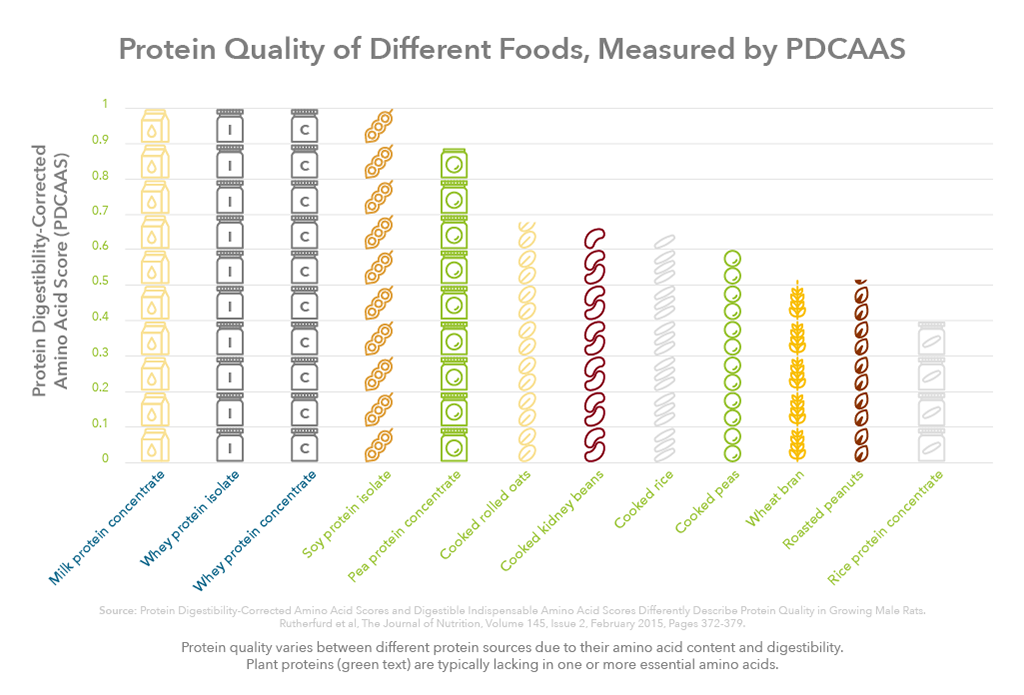
What this chart shows is that consuming the same amount of whey protein compared to wheat protein will not result in the same amount of amino acids being absorbed into the body. In this example, the whey protein would provide all of the necessary amino acids for adequate muscle maintenance, whereas consuming the same amount of wheat protein would result in a lack of some of the amino acids the body needs.
When it comes to active ageing, this means plant proteins may be less efficient at activating muscle growth and repair and this must be considered when making recommendations for active ageing. For example, this article discusses the importance of leucine in activating muscle growth and repair. However, wheat protein has 37% less leucine than the same amount of whey protein (Herreman et al., 2020).
Plant proteins can be limited in their ability to stimulate muscle growth and repair in older individuals
The limited effectiveness of plant proteins to stimulate the muscle protein synthesis system, when compared to animal-derived protein, was shown by Gorissen et al. (2016) in a study where the ability of 35g of whey, casein, or wheat protein to stimulate muscle protein synthesis was measured in 60 healthy older men (70 -72 years old).
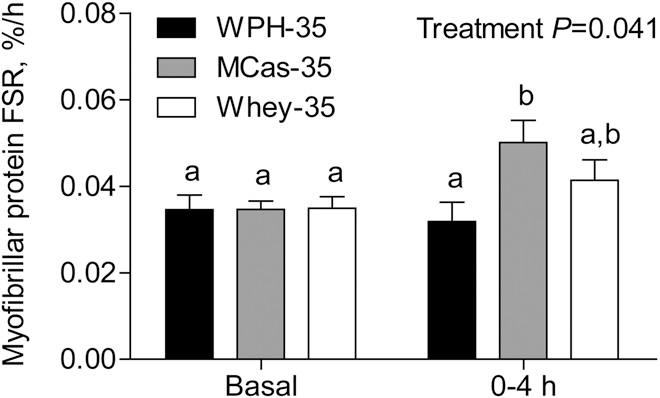
The results from the study, shown in the figure above, show that 35g of wheat protein had little to no impact on muscle protein synthesis beyond the baseline rate (i.e., resting rate before a meal).The subjects who consumed whey or casein proteins (which are animal derived) showed an increase in muscle synthetic response. The higher response to the consumption of the animal-derived whey and casein proteins is attributable to the greater content of essential amino acids, and higher overall digestibility which is reflected directly in their protein quality values: wheat=0.48, whey=0.85 and casein=1.17, as measured by DIAAS (Herreman et al., 2020).
The participants needed to eat almost twice as much wheat protein (60g) to see the same response in muscle protein synthesis as 35g of whey or casein. This would be a difficult amount of protein to eat in one sitting, especially in older individuals where diminished appetite is common. Another consideration is the environmental impact of growing the quantity of plant protein required to maintain this increased level of consumption which could counteract some of the benefits attributed to switching from animal protein to plant protein.
How can we improve the ability of plant proteins to support muscle health during ageing?
Choose the right protein source
Plant proteins with high protein quality scores are a good place to start when it comes to active ageing. Soy protein has a DIAAS value of 0.9, which is higher than most other plant sources. Soy protein has been shown to efficiently meet the body’s need to form new muscle but some negative perceptions around soy’s role in health, many of which are unwarranted, has led some consumers to stop consuming soy protein and search for other alternatives.
Pea protein (DIAAS value of 0.71) and rice protein (DIAAS value of 0.47) have become more prevalent and application of these ingredients is increasing over recent years. Emerging plant proteins of nutritional interest also include potato (DIAAS value of 1), pseudo-cereals (such as quinoa, amaranth and buckwheat), legumes (lentils, chickpeas and lupin) and oilseeds (canola, rapeseed and hemp) due to their levels of essential amino acids (Herreman et al., 2020; Martínez-Villaluenga et al., 2020). Mostly, methionine, cysteine, lysine and leucine are four essential amino acids that cause low DIAAS values for plant proteins and, therefore, limit their nutritional quality (Lonnie et al., 2018). Much scientific research has been conducted in this area to identify plant protein sources that are more nutritionally complete and have similar levels of these essential amino acids to that of soy and animal-derived proteins.
An alternative to finding a single source of plant protein which can act as complete source of nutrition for the healthy growth and maintenance of muscle in ageing individuals is to modify the physical, chemical or functional nature of plant proteins to optimise the effect they have on muscle growth and repair.
Improve digestibility via processing
One of the major limitations preventing plant proteins from having a high protein quality score is their limited digestibility and bioavailability. Within plants, proteins are usually encased in fibre-rich husks or layers that are very difficult for the body to digest, limiting our access to the protein when we eat it. Additionally, plants contain a range of bio-compounds, termed phytochemicals, which slow or inhibit protein digestion (Lonnie et al., 2018).
Physical processes such as cooking (i.e. heating), extrusion, drying, and enzymatic hydrolysis have all been shown to increase the digestibility of numerous plant proteins (Sá et al., 2019). For example, processing a soy flour into a soy protein isolate increases the PDCAAS score from 0.86 to 1.0. These processes can degrade the bio-compounds that limit digestibility or change the structure of the proteins to make them more accessible to the digestive enzymes in the intestine. These physical processing treatments (i.e. heating, wet fractionation, dry fractionation, drying, etc.,) are commonly used in the enrichment and isolation of plant proteins to produce protein-rich flours (e.g. protein concentrates or isolates), which results in the a large improvement in digestibility.
Blend different plant proteins together to improve amino acid profiles
Since many plant proteins are lacking in just a few essential amino acids, such as cereals being low in lysine and legumes being low in methionine, different plant protein sources can be blended to account for the other’s “amino acid weakness” so to speak. The right blend of rice and pea protein will have sufficient amounts of both lysine and methionine, creating a “complete” protein that is more efficient, gram for gram, at delivering amino acids to our muscles than either protein alone.
Plant-animal protein blends are also a possibility, since the plant-based market has expanded beyond vegans and vegetarians to flexitarians or those just looking to eat more plant-based foods. Blends of plant and animal proteins have already seen some use to enhance the functionality (e.g. solubility, taste, texture) of plant proteins in foods and beverages. A series of studies have tested the ability of milk protein, soy protein and a milk-soy protein blend to stimulate protein synthesis after exercise in both older men and young adults. Results from these studies showed that the muscle protein synthesis rates were higher and remained higher for a longer period of time for the milk-soy protein blend (Borack et al., 2016; Reidy et al., 2014, 2013), suggesting possible health benefits in consuming a plant-animal blend of protein. More research would be needed to fully understand how different protein blends interact and their potential health benefits.
Increase leucine content of plant protein
As mentioned earlier, the amino acid leucine has an important role in activating muscle growth and repair. Many plant proteins contain around 20-30% less leucine than animal proteins, although there are a few plants high in leucine, such as corn, soy, and potato (Herreman et al., 2020). It stands to reason, then, that adding leucine to plant proteins or breeding plants to contain higher levels of leucine might improve their ability to promote active ageing.
A study by Wall et al. (2013) found that the addition of crystalline leucine (2.5g) to a 20g serving of casein had a greater effect on protein synthesis compared to the consumption of 20g of casein alone. Although this study used animal-sourced protein, it shows that addition of leucine can help overcome the reduced sensitivity of the mTOR system (responsible for initiating muscle growth and repair) that is seen during ageing. A study done in mice found that adding leucine to a wheat protein to match the leucine content typically found in whey protein led to a similar ability to stimulate muscle growth compared to whey (Norton et al., 2012).
Conclusion
To promote active ageing it is key that not only the right quantity of protein is consumed but the quality of the protein should also be considered. There are actionable strategies such as processing, protein blending, or targeting leucine content that can improve the ability of plant proteins to promote active ageing while also addressing growing concerns over the environmental impact of animal proteins.
Read Part 2 of this article: Active Ageing – How Can We Optimise Plant Proteins?
Although the average global life expectancy is now over 70 years, the focus for many people today is not “how old can I live to be?” Instead, the most important question has become “will I be able to do the things I want to do when I am older?” Retaining muscle mass is key for active ageing because it allows us to do the day-to-day activities we want to do, as well as protects us from falls and the associated injuries that can result.

Protein’s role in muscle health might be more than you think
Leucine and insulin are “switches” that activate protein synthesis
Most people think of protein, or the amino acids in protein, as the “building blocks” that our body uses to make muscle, but some amino acids have unique roles in metabolism. Scientists have shown that there is a metabolic “switch”, called mTOR, that signals new muscle production when it’s activated. Think of it as the body’s way to regulate creation or upkeep of muscle by promoting growth mainly when fuel or building blocks are plentiful (protein-rich food), or when the body senses an external need for muscle growth or repair (exercise).
Leucine, an essential amino acid that we must get through our diet, plays an important role in turning this “switch” on. When present alongside insulin, which is a hormone that has a key role in telling the body that fuel is plentiful, leucine will activate the mTOR “switch” to allow for creation of new and upkeep of existing muscle protein (Columbus et al., 2015; Ham et al., 2014).
Our ability to activate muscle growth and repair decreases as we age, leading to a loss in strength and ability to perform physical activities
It has been shown that as we age, our ability to stimulate this mTOR complex is reduced which, in turn, reduces our ability to repair and replace protein in muscle tissue. This is thought to be because of a concept called anabolic resistance, which refers to a decreased sensitivity to insulin throughout the body as we get older (Yoon, 2017).
This helps explain why muscle mass gradually starts to decrease as we get older. After the age of 50, approximately 1% of muscle mass is lost annually.
We lose up to 40% of the cross-sectional area of our muscles between the ages of 20 and 60 years; this continues each year thereafter as a result of developing resistance to protein synthesis stimulation (Vandervoot 2002).
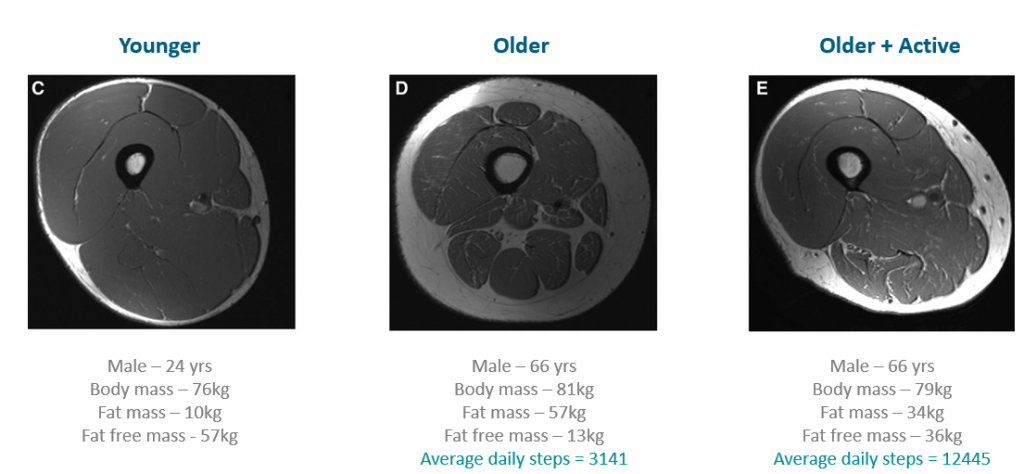
A loss of between 30-50% of our total muscle mass by the age of 80 often translates into a severely reduced ability to perform day-to-day activities like climbing stairs, standing, or walking.
Increased protein intake can counteract age-related muscle loss
Increased protein intake may be able to counteract this decreased insulin sensitivity that comes with ageing, which is called anabolic resistance. For young children and adults (< 30 years), the mTOR complex is mostly stimulated by insulin, meaning less leucine (and thus protein) is required to be consumed in each meal (approx. 1g leucine per meal). As individuals age, the sensitivity of the mTOR complex to insulin reduces and this means that more leucine (2.5g per meal) is required to sufficiently stimulate muscle protein synthesis. This means older adults need to consume more protein than younger adults and children to maintain muscle mass (Yoon, 2017). According to a study by Moore et al. in 2014, older adults need 68% more protein to maximize protein synthesis (i.e. activate mTOR).
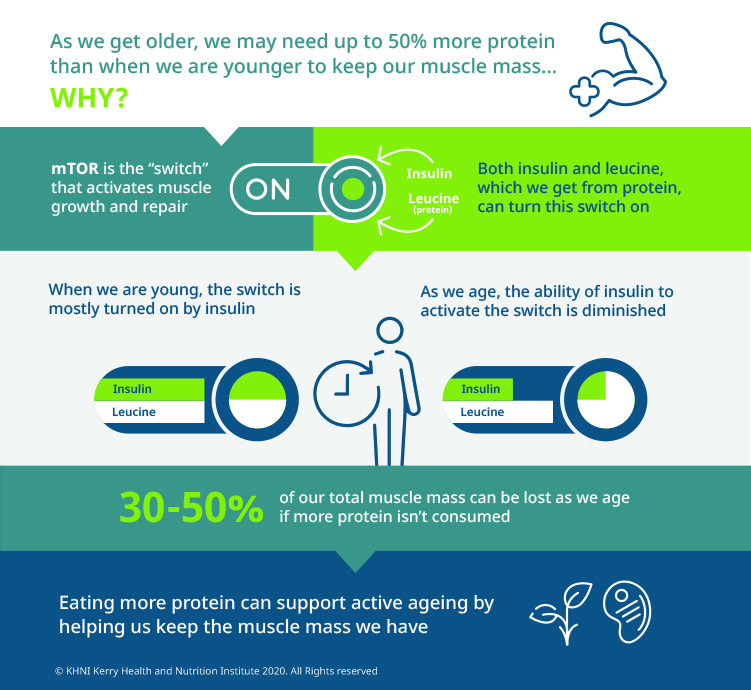
The dietary recommendation for protein intake from the World Health Organisation is 0.8g per kilogram of body weight (BW) per day, which is equivalent to around 64g per day for the average male and 55g per day for the average female. This amount is thought to meet the requirements of healthy adults, but there is scientific debate about whether this recommendation should be greater in older adults.
In a study by Campbell et al. (2001), 10 healthy male individuals, aged between 55-70, were fed the Recommended Daily Allowance (RDA) for protein (0.8g/kg BW) over a 14 week period and the results showed that all subjects, bar one, displayed a loss of muscle in their mid-thigh muscle zones. It was concluded that the RDA may not be adequate for the metabolic and physiological need of virtually all ageing people.
How much more protein is needed?
As a result of studies like the one mentioned, groups such as the European Society for Clinical Nutrition and Metabolism (ESPEN) and the International PROT-AGE Study Group have proposed new recommended requirements for protein intake (Bauer et al., 2013; Deutz et al., 2014). They concluded that for healthy individuals over the age of 65 the recommended dietary protein intake should be increased to 1.0 – 1.2g protein/kg BW.
This would be an increase of 25-50% in the total amount of protein needed in a day for older adults, equivalent to daily intakes 80-93g per day for the average male and 69-83g per day for the average female.
Results from clinical studies have supported these higher recommendations with one such study by Houston et al. (2008) showing that ageing adults who had a daily protein intake of 1.1g protein/kg BW lost 40% less muscle over the course of three years when compared to those who were consuming the RDA value of 0.8g/kg BW.
Opportunity: increase both protein intake and frequency
Despite needing more protein at ages 50+, people generally tend to consume less protein as they age. For example, in the United States, men over 70 years old tend to eat around 20% less protein per day than males who are 19-50 years old.
To help people stay active and independent as they age there’s an opportunity for the food and beverage industry to find ways to add protein into the diets of healthy agers. The amount of leucine needed to activate muscle growth and repair is thought to be equivalent to around 25-30g of high quality protein at a single eating occasion.
This means planning meals, or creating foods and beverages, with 25-30g of protein if they are meant to be consumed alone (e.g. meal replacement beverages), or 10-15g of protein if they are intended to be consumed at a meal or with other foods, is one way to improve muscle health. Choosing flavors and language that appeal specifically to active agers is also important.
Turn the “switch” on multiple times per day – opportunities for breakfast, snacks, and lunch
The more times the mTOR “switch” is activated per day via consuming protein, the more likely we are to grow or retain our muscle mass (Layman 2009). Many people consume low amounts of protein early in the day, such as at breakfast, mid-morning, and lunch, and consume a protein-heavy evening meal. This means that muscle growth is likely to be only activated once per day. By shifting protein toward the early parts of the day, we can activate this “switch” more times per day, leading to a greater retention of muscle through diet alone.
For some people, this doesn’t necessarily mean consuming more total protein in a day is required. Instead, it can be effective to redistribute protein intake to be more equal across the dayparts. Adding protein to breakfast foods and mid-morning snacks is a great way to promote more protein intake throughout the day. This could include fortifying common breakfast foods like oatmeal, cereals, yoghurts, etc., or creating new foods or beverages to consume alongside a meal.
This article is the first in a 3-part series covering the impact of social isolation on older adults, addressing the key challenges with solutions for maintaining holistic well-being.
‘Deconditioning’ and the Potential of Muscle Mass Loss
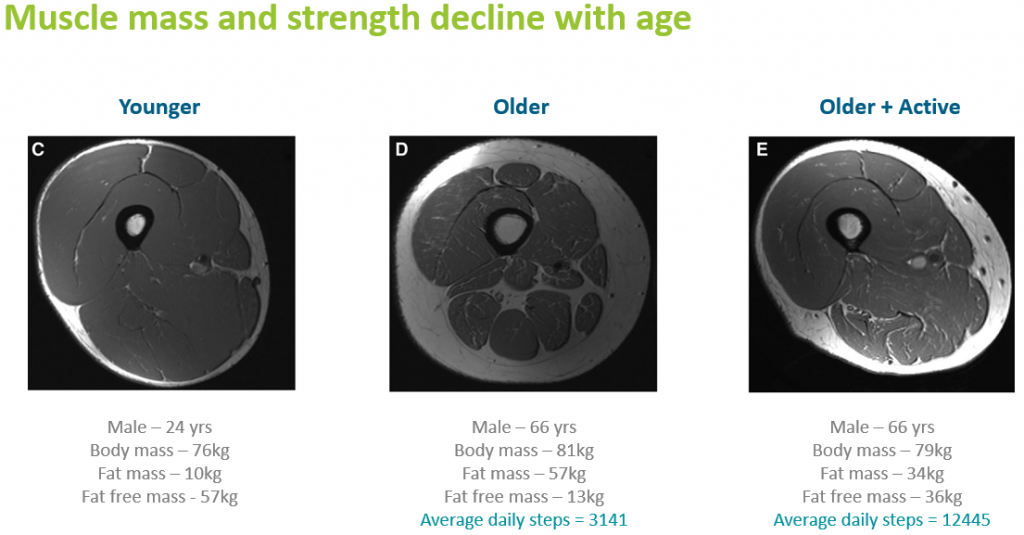
For many people, staying at home may lead to a reduction in time spent walking and engaging in other physical activities. Even relatively short periods (~2 weeks) of very low physical activity / low daily step count (<2,000 – 3,000 steps per day) are known to adversely affect skeletal muscle health (1, 2).
This is of particular concern among older adults who are already at high risk of muscle mass and strength loss.
Unlike younger adults who “bounce back” relatively easily from transient periods of inactivity, recovery in older adults is slow and may be incomplete (1, 2).
As such, these periods of inactivity may have long lasting negative effects on physical function and mobility. Fortunately, simple measures can be taken to minimise the deterioration in muscle health.
Nutrition and Maintaining Muscle Mass for Older Adults
What we eat can help us to maintain our muscle health while remaining at home, especially when combined with resistance exercise.
Protein-rich foods combined with a balanced diet of whole grains, fruits, and vegetables can be an important part of staying healthy and maintaining mobility.
Protein Power
Compared to younger adults, older adults are less efficient at using the protein they eat (found in foods like milk, yoghurt, fish, eggs, meat, beans, nuts) to build new muscle (3). This means that older adults need more protein in their diets than younger ones and not eating enough protein can contribute to muscle loss.

Expert groups recommend that healthy older adults should consume 1.0 – 1.2 g of protein per kilogram of body weight per day to help preserve muscle (4, 5).
It is particularly important to ensure that older adults continue to consume adequate amounts of protein while isolating.
Some tips include:
- Prioritise protein – as physical activity levels fall during social distancing, the number of calories we burn per day decreases and appetite may also decline. Prioritising protein-rich foods can help maintain a similar protein intake as before social distancing was introduced.
- Choose high quality sources – higher quality protein sources (e.g. milk, yoghurt, fish, eggs, meat, poultry) are better at stimulating muscle growth compared to lower quality protein sources (6). Getting a moderate-size serving of high quality protein (25-30 grams) at each meal can improve muscle retention.
- Boost breakfast – breakfast tends to be low in protein, so breakfast foods are an opportunity to boost daily protein intake. Making porridge with milk rather than water, adding Greek yoghurt to muesli or a smoothie, making an omelette or scrambled eggs, or drinking a glass of milk alongside your meal are all common ways of boosting protein at breakfast.
- Pair protein with exercise – the exercise will make muscles more efficient at using the protein from the meal to build new muscle (7).
- Pre-bed protein – consume a protein-rich snack (e.g. Greek yogurt, cottage cheese) before bed to boost muscle building rates overnight (8).
Calories Count
Studies indicate that consuming either too few or too many calories over several weeks can worsen muscle loss during periods of inactivity (9, 10).
It is normal for people to have a slightly lower appetite when they are less active than usual at home. However, if appetite drops considerably and results in weight loss, this may accelerate muscle loss.
 Small, nourishing snacks frequently throughout the day to give a constant source of protein (e.g. milky drinks, yoghurts, crackers and cheese, custard) and add extra calories to meals (e.g. add milk, skimmed milk powder or cream to soups and mashed potatoes, use full fat dairy products) are two ways to prevent appetite-related weight and muscle loss.
Alternatively, some people may find that, despite decreased activity levels, they are eating more than usual due to boredom or stress. In this case, eating plenty of fruit and vegetables which are low in calories and high in fibre can people stay full.
Prioritising protein-rich foods as discussed above and reducing intake of high-calorie, low protein foods (e.g. biscuits, chocolate, crisps, sweets, butter) can help reduce risk of weight gain.
Physical Activity to Maintain Muscle Mass
Use it or Lose it
The best way to protect muscles against the adverse effects of inactivity is to keep using them.
Resistance exercise, defined as exercising muscles against an external force (e.g. weights, resistance bands, our own body weight), is by far the most potent strategy to maintain muscle mass and strength.
Research has shown that incorporating resistance exercise during periods of reduced activity can attenuate or even abolish the decline in muscle mass (11, 12) and strength (12, 13).
Importantly, even relatively low amounts of resistance exercise appear to be effective once performed regularly (e.g. every other day) (12).
Although most older people may not have access to resistance training equipment at home, body weight exercises can be performed (e.g. sit-to-stands, wall push ups, leg extensions from a chair).
It is important for people to check with their doctor to find out if they have any contra-indications to exercise or if there are any reasons to modify their workout.
Reduce Sedentary Time – Exercise “Snacks”
Engaging in physical tasks around the house each day like gardening, active chores (e.g. sweeping, hoovering) or even walking around while on the telephone can help to minimise inactivity while staying at home, thus reducing the detrimental effect on muscle.
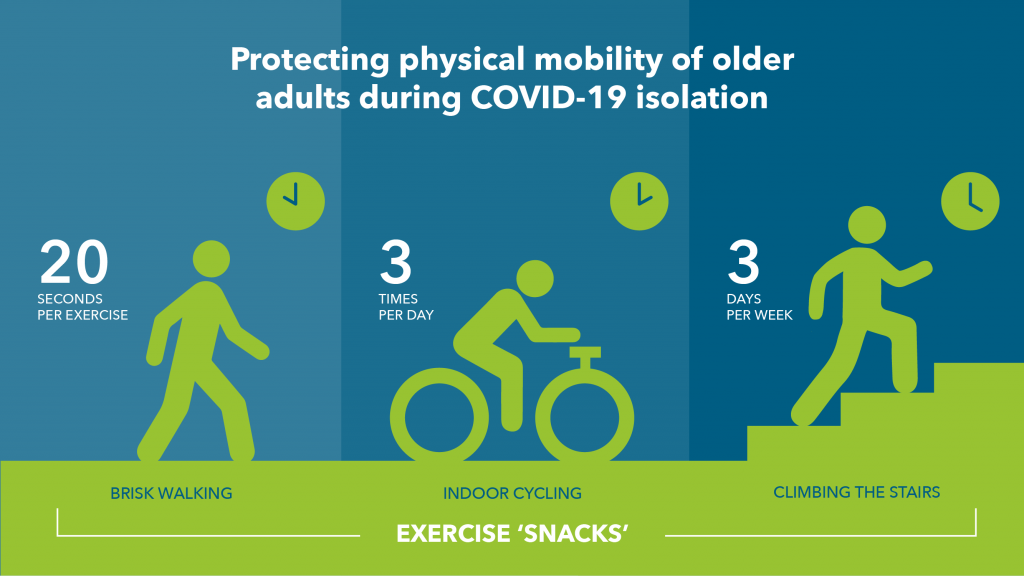
People can also break up prolonged periods of sitting with “exercise snacks”.
Exercise snacks are short bursts of exercise spread throughout the day (e.g. briskly climbing the stairs during ad breaks on TV).
A recent study reported that performing brisk stair climbing (approximately 20 seconds of climbing per “snack”) three times per day, three days per week, improved fitness and leg power in sedentary people (14).
Therefore, exercise snacks like these may help to reduce declines in fitness that occur during periods of inactivity.
Stay on Track
Staying motivated can be difficult, especially when we are isolated at home and separated from loved ones.
To maintain muscle health it is important to keep up the exercise and healthy eating for the duration of isolation. Some tips to help stay motivated include:
- Set goals about when and where to do the exercise (15)
- Choose activities you enjoy (16)
- Monitor your exercise using diaries or apps or ask a friend or family member to monitor you (15)
- Plan your protein-rich meals for the week ahead and make a shopping list
- Keep a stock of protein-rich foods (e.g. tinned fish, freeze extra poultry, meat and fish)
- Experiment with new protein-rich recipes to keep things interesting

In one of the largest microbiota studies conducted, researchers suggest a potential link between healthy aging and a healthy gut. The results showed a direct correlation between health and the microbes in the intestine. The overall microbiota composition of the healthy elderly group was similar to that of people decades younger, and the gut microbiota differed little between individuals from the ages of 30 to over 100. The researchers suggests that maintaining diversity of gut microbiota as one ages maybe a biomarker of healthy aging.
Digestive health is one of the top nutrition trends in 2017, and studies like this one show that it is not going anywhere any time soon. For more information on digestive health, head to our blogs:
Digestive Health Part I – What Does Digestive Health Really Mean? by Barbra Hopkins, MMSc, RD, LD
Digestive Health Part II – Consumers Take Control by Caroline Cummins, MS, RNutr