These changes, which include stricter limits on added sugars and sodium and an emphasis on whole grains and locally sourced foods, require manufacturers to adapt their product formulations to meet these new standards.
The decisions made by the USDA on Child Nutrition Programs focus on improving child health through nutritious school meals and addressing challenges such as added sugars, sodium levels, whole grains and procurement of American-grown foods.
Added Sugars and Sodium Limits
USDA has introduced a gradual, multi-year approach to limit added sugars in high-sugar products like grain-based desserts, breakfast cereals, yogurt and flavoured milk.
By School Year (SY) 2027-2028, the limit will ensure that no more than 10% of calories per meal come from added sugars.
Sodium limits will also be gradually reduced over several years, with a focus being packaged meats and meals. By SY 2027-2028, schools will implement a 10% reduction for breakfast and a 15% reduction for lunch1,2.
Whole Grains and Flavoured Milk
Schools are required to ensure that 80% of weekly grains are primarily whole grain, but they can occasionally offer non-whole, enriched grain foods.
Flavoured milk is allowed for all K-12 grades, with proposed changes that may limit it to certain grade levels. USDA is seeking public input on this matter3.
Flexible Meal Planning and Traditional Foods
The proposed rule allows more flexibility at breakfast by including meats and meat alternates such as yogurt, eggs or tofu. It also supports more culturally inclusive meals, including traditional Indigenous foods.
A significant financial investment in the Healthy Meals Incentives initiative, with $100 million dedicated to improving the nutritional quality of school meals, is also part of the changes1,4.
Supporting Local Foods and Schools
The USDA is providing nearly $1 billion to support schools in purchasing American-grown foods for their meal programs, aiming to ease procurement challenges and encourage the use of locally grown products.
The Keep Kids Fed Act, which was signed into law, also provides extra resources to schools, summer meal sites and childcare food programs to address high food costs and supply chain disruptions4.

Why Are These Changes Happening?
These updates to school nutrition standards aim to align with international practices by limiting added sugars and reducing sodium content.
For instance, the new regulations will cap added sugars at 10% of total caloric intake by 2027 and implement a 10% reduction in sodium for breakfast and 15% for lunch by the same year.
These standards resemble approaches in countries like the UK and Canada, where similar limits on sugars and sodium have been implemented to combat rising concerns about childhood obesity and health1,4.
In the UK, the School Food Standards require that high-quality meat, poultry, or oily fish are provided and limits are set on the amount of sugar and fats available in school meals.
Meanwhile, Canada’s guidelines focus on providing meals rich in fruits, vegetables and whole grains while minimising processed sugars and sodium, aiming to foster healthier eating habits among children5.
These international approaches underline a common global trend towards enhancing children’s health through better nutrition standards in schools, emphasising reduced sugar and sodium while promoting whole grains and locally sourced foods.
This convergence suggests a growing recognition of the importance of healthy school meals as a foundation for lifelong healthy eating habits.
What Does This Mean For Industry?
For food manufacturers, these changes mean investing in research and development to reduce the sugar and sodium content of their products without compromising taste or texture.
For example, the new rules set limits on added sugars in flavoured milks, a popular item in school cafeterias, which will push dairy processors to innovate lower-sugar formulations that still appeal to children1.
Similarly, with sodium reduction targets set for the coming years, manufacturers of processed foods products such as bread rolls, meats, packaged products, etc. typically used in school meals will need to find ways to maintain flavour while reducing salt content.
Additionally, the emphasis on locally sourced and unprocessed agricultural products opens new markets for local farmers and producers but poses challenges for larger, national manufacturers who may need to adjust their supply chains to meet local sourcing requirements.
This could mean forming new partnerships with local farmers or investing in local production facilities1,4.
These changes not only reflect an increased focus on health and nutrition in school meals but also represent a growing consumer demand for healthier, locally sourced foods across the market.
Food manufacturers who successfully adapt to these standards can not only continue to serve the school meals market but also leverage their innovations to cater to broader consumer trends towards healthier eating.
We all have sweet childhood memories about treats. I remember when I was a child I always spent Saturday evening at my grandma’s house.
She had a sweet jar behind the television and always gave me two little hard candies, only two, but that just made my day.
The world changes so fast. Nowadays, there are shops everywhere and treat foods are available and affordable. With increased accessibility and frequency, you may wonder if a treat is still a ‘real’ treat for today’s children.
Very recently, a scientific study published in the journal Appetite mapped adults’ treat food provision to children. This study surveyed over 1,000 adults, including not only parents, but also grandparents, school and pre-school teachers, and private child minders; almost everyone involved in child rearing, to answer the question what is considered a treat for today’s children?

What is a Treat to Children from Adults’ Perspectives?
So what is a treat?
According to the dictionary, a treat is “an event or item that is out of the ordinary and gives great pleasure”. This definition mentions two key elements: low frequency and pleasure.
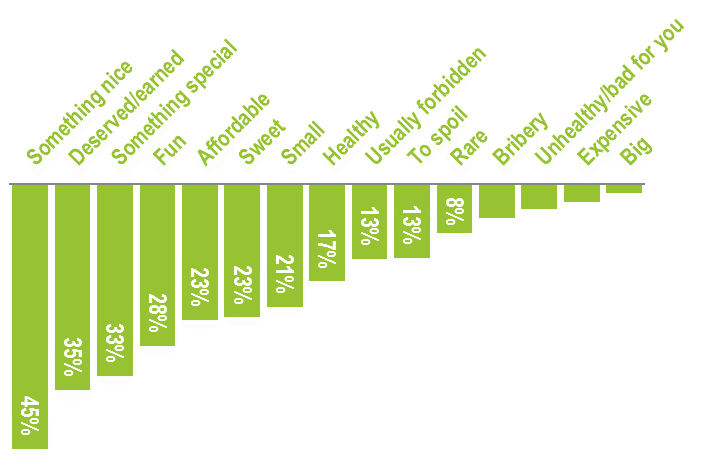
According to the study, adults’ definition of treats for children is slightly different. They think treats for children are primarily something ‘nice’ (45.2%), ‘deserved/earned’ (35.1%) and ‘special’ (32.7%). It is worth noting that 17% of adults think that treats for children must be ‘healthy’.
When do Adults Give Treat Foods to Children?
The study shows that nearly all adults (92.0%) would provide treat foods to children at celebrations. Just think about those celebrative occasions, Easter, Halloween, Christmas, birthdays, weddings, the last day of school, the end of a sports season, the anniversary of a pet joining the family… the list goes on. It is easy to imagine that the totality of all these occasions can be huge for some children. Therefore, as some scholars suggest, the health impact of treat foods consumed at celebration should be well recognised.
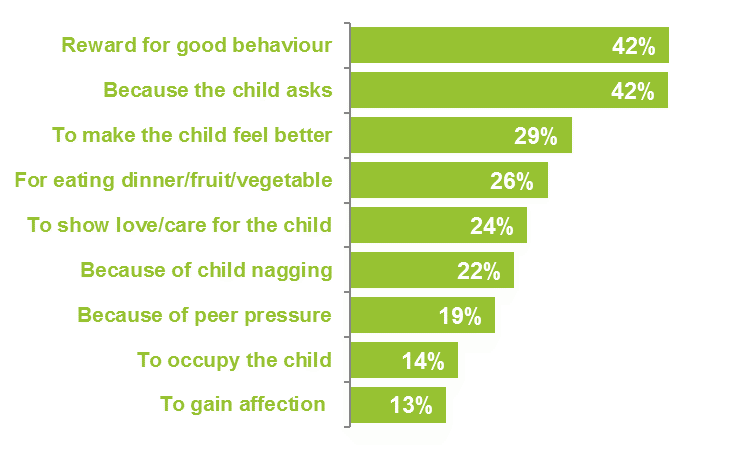
In addition, around two thirds of the adults, especially parents, have routinized daily or weekly treat foods for children. It could be after-school treats, after-dinner treats, Friday treats, weekend treats and so on. Adults also provide treats for some particular reasons (see the figure below). Rewarding good behaviour and child’s requests are the two biggest triggers.
What Kind of Foods do Adults Use as Treats for Children?
In general, adults’ treat foods for children are dominated by less healthy options that come to mind when thinking of the word ‘treat’.
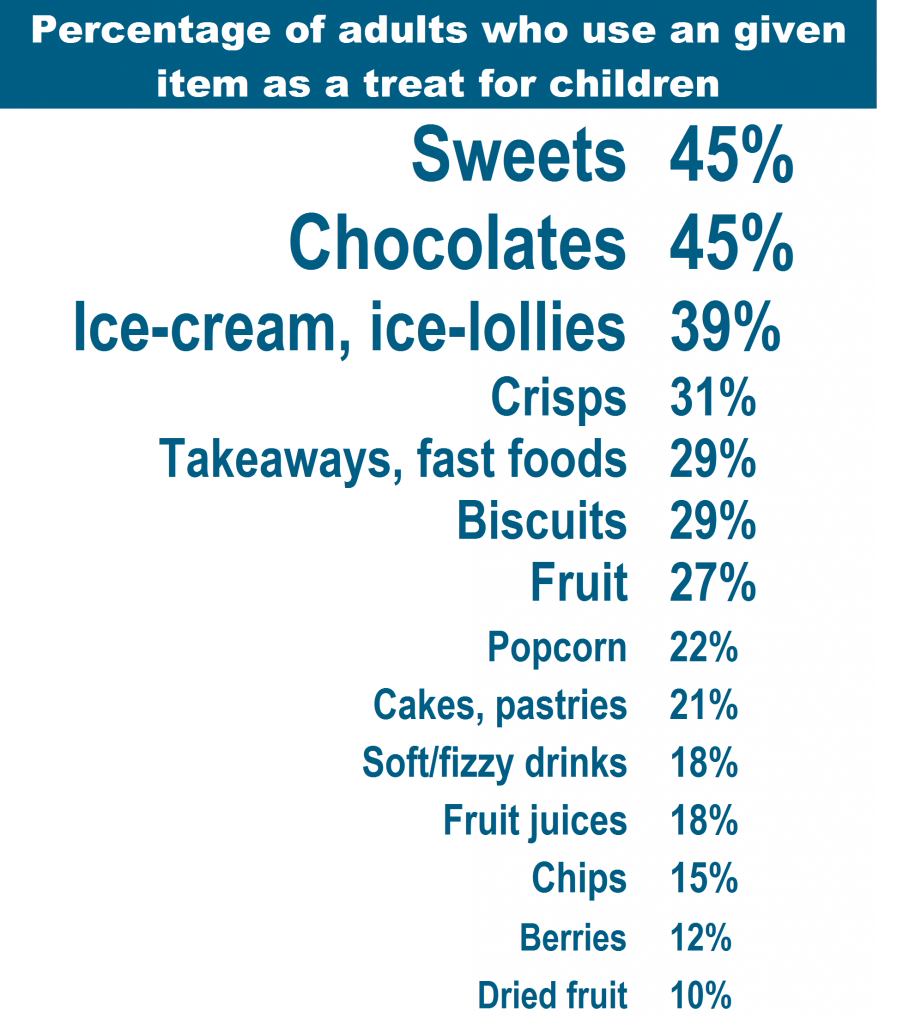
Sweets, chocolates, and ice cream/ice lollies are the most popular treats. In comparison, some healthy foods including fruits, fruit juice, berries, and dried fruit are less likely used as treats for children.
For details of this study, please visit https://www.sciencedirect.com/science/article/pii/S019566631830535X
What Does This Study Mean?
From a consumer science and public health science point of view, this study leaves me with these key takeaways:
- For today’s children, treat foods have become normalised into their lives and are frequently included in their diets. It is not the same treat that previous generations would think of when they hear the word. It would be naïve to think, in modern society, that the use of treat foods can be avoided or dramatically reduced. Thus children related public health initiatives should not ignore treat foods.
- The popularity of ‘unhealthy’ foods as treats for children echoes a trend for indulgence observed at the IFT’s Food Expo: in some situations, consumers are not willing to give up the sensory pleasure for healthy purposes. Treat food occasions are such situations where for parents, and other child care providers, indulgence is more important than health concerns. Can a healthier alternative to sweets and chocolate become as appealing a treat to children? This is a good question that food innovators can possibly address.
- Since treat frequency seems to be increasing, it becomes more important to produce healthy treats to improve the health of children. This can include incorporating fruit and vegetable servings into treats, marketing healthier foods with a ‘treat’ perspective to improve perception of these foods, and reducing total calories and sugar in treat foods.